First, choose a nozzle and hose that can reach beneath your benches, taking account of the available clearance and depth; a high wattage alone doesn’t prove that a vacuum will clean better, as the Federation of German Consumer Organisations explains. Then decide whether you prefer a bag or a dust container for disposal and maintenance. For shared spaces, compare the stated noise level and the reach you’ll need.
Who this vacuum is suited to
People with hard-to-reach spaces beneath benches
If you want to remove dry crumbs from low or deep gaps, check the shape of the crevice nozzle and how easily the hose and tube can be manoeuvred. Measure your bench too: accessory details alone won’t tell you whether the nozzle will actually fit underneath.
People who care about dust disposal
If you’d prefer to handle collected dust without emptying an open container, compare the bag, emptying mechanism and filter maintenance for each model. Kärcher says the full bag can be removed from the VC 2 without direct contact with dirt. This is a manufacturer’s claim, not an independent emptying test.
People who share cleaning duties
If several people will use and maintain the vacuum, its accessories, reach and stated noise level should suit your shared spaces. You should also agree who will change the bag or maintain the dust container and filters according to the instructions.
What to consider when buying
For dry crumbs under benches, reaching the area is the first priority. Next, consider how you’ll dispose of dust and whether the maintenance and usage routine is practical for a shared home.
| What matters when buying |
What to look for |
Who it matters most to |
| Access beneath the bench |
Measure the clearance and depth; check the crevice nozzle’s shape and hose flexibility for the exact model. |
If I need to reach dry crumbs beneath a low or deep bench, I’ll measure the space before buying. Around 29% of consumers put access to hard-to-reach spaces beneath benches first. |
| Controlled dust disposal |
Compare the bag closure or emptying mechanism, as well as the filter and cleaning instructions. |
If I want to handle collected dust without emptying an open container, I’ll check exactly how it’s emptied. Around 23% of consumers prioritise keeping dust disposal as controlled as possible. |
| Noise in shared spaces |
Compare the stated sound power in dB(A) for each model and agree suitable times for vacuuming. |
If I vacuum shared spaces, I want to take the impact on other residents into account. Around 18% of consumers put low noise levels first. |
| Shared vacuum maintenance |
Agree in advance on the right bags or filters, emptying steps and who is responsible. |
If several residents use the vacuum, I want a maintenance and emptying routine that everyone understands. Around 18% of consumers prioritise straightforward shared maintenance. |
| Reach and floor types |
Check the distance to sockets, the stated operating radius and the floor nozzles supplied against your floor types. |
If I vacuum other rooms or different floor types as well as the area beneath the bench, I want to avoid having to stop and change sockets wherever possible. Around 12% of consumers put reach and switching between floor types first. |
Avoid common buying mistakes
-
Assuming wattage equals cleaning performance
A high electrical power rating doesn’t prove that a vacuum will pick up dirt more effectively beneath your bench. According to the German Environment Agency, performance depends on a combination of factors, including the appliance, suction tube, nozzle design and airflow path.
Compare how well the nozzle and airflow path suit your needs, rather than using wattage as your only measure.
An unsuitable vacuum or attachment can mean extra work when cleaning the area again.
-
Assuming a crevice nozzle will fit
The supports, clearance and depth beneath benches all vary. So a crevice nozzle supplied with the vacuum doesn’t guarantee that you’ll be able to reach the area you want to clean.
Measure the bench and check the nozzle and what’s included against the full model number.
-
Assuming bagless means maintenance-free
With a bagless vacuum, you’ll need to empty the dust container and maintain the filter as instructed for that model. Bagged vacuums, on the other hand, need compatible replacement bags.
Before you buy, agree who will take care of each task and check the maintenance instructions for the exact model.
Maintenance takes time; if you choose a bagged vacuum, you’ll need to keep compatible replacement bags handy.
-
Using an old vacuum cleaner energy label as a current comparison
The European Commission has withdrawn the former EU energy label for vacuum cleaners. Older energy-efficiency ratings are therefore not a current basis for comparison.
Instead, compare only information and cleaning results that relate to the specific model and use a suitable basis for comparison.
Key brands to consider
Siemens
For its Q5.0 VSQ5X1230 bagged model, Siemens lists integrated crevice and upholstery nozzles, along with a 13 m operating radius. This may be useful if you also vacuum larger shared spaces as well as the area beneath the bench.
- The VSQ5X1230 is listed as having an integrated crevice nozzle and upholstery nozzle.
- These details apply to this model, not the entire range. Siemens states a sound power level of 72 dB(A); compatible bags must be used. The manufacturer’s information doesn’t prove that the nozzle will fit beneath every bench.
Bosch
Bosch lists both the bagged BGD38RD1H and the bagless BGC41XSIL, each with a crevice nozzle. Bosch states that both models have an operating radius of 10 m.
- Comparing these two models gives you a choice of dust-handling options, with a crevice nozzle listed for both.
- Bosch states a sound power level of 79 dB(A) for the BGD38RD1H and 68 dB(A) for the BGC41XSIL. The bagless model requires the dust container and filter to be maintained; these model details don’t apply to other Bosch vacuums.
Kärcher
Kärcher describes the compact VC 2 bagged vacuum as coming with a crevice nozzle and furniture brush for narrow gaps. Its stated operating radius is 7.5 m.
- Kärcher specifically lists the crevice nozzle as an accessory for cleaning narrow gaps.
- You’ll still need replacement bags. The claim that a full bag can be removed without direct contact with dirt comes from the manufacturer and isn’t an independent emptying test.
Miele
Miele lists a flexible crevice nozzle for hard-to-reach areas on the Guard M1 Flex. For the Guard L1 Silence, Miele states a sound power level of 62 dB(A).
- The features of these individual models may be useful for reaching gaps or for shared spaces where noise is a concern.
- The flexible crevice nozzle and noise rating apply to different models. Check your bench measurements and the details for the exact version.
Philips
For its bagless FC9332/09, Philips lists a crevice nozzle, a 1.5 l dust container and an operating radius of 9 m.
- Philips says the crevice nozzle is included with the specified model.
- The dust container and filter need to be maintained. Philips’ stated fine-dust filtration doesn’t prove that emptying is dust-free. Don’t assume the same features apply to similarly named versions.
Joybuy products for cleaning under benches
The models below include bagless and bagged cylinder vacuum cleaners for picking up dry crumbs beneath benches and cleaning shared spaces.
 No image available
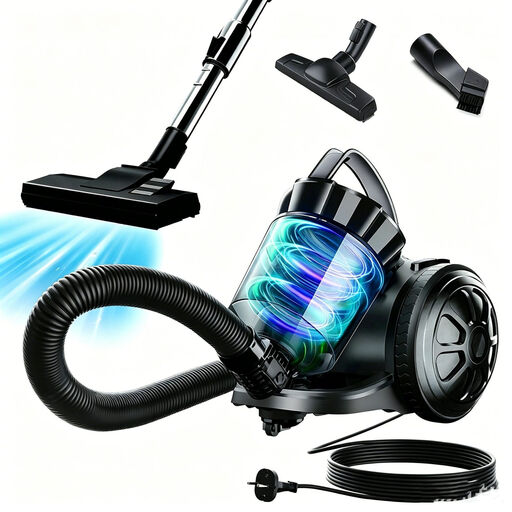
Bagless cylinder vacuum cleaner with 2-in-1 crevice tool
The integrated 2-in-1 crevice tool described is useful for narrow gaps; check the measurements to make sure it will fit beneath your bench.
Bagless dust container; 5 m cable; telescopic tube and floor nozzle.
The dust container needs to be emptied.
Joybuy
 No image available
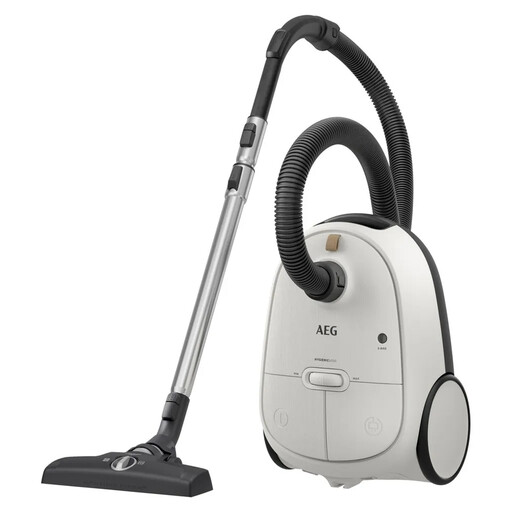
AEG AB61H6SW
The flexible XL crevice nozzle described is useful for hard-to-reach areas; check that it suits the clearance and depth beneath your bench.
Bagged; flexible XL crevice nozzle; stated operating radius of 12 m; 73 dB; 850 W.
Compatible dust bags need to be replaced.
Joybuy
 No image available
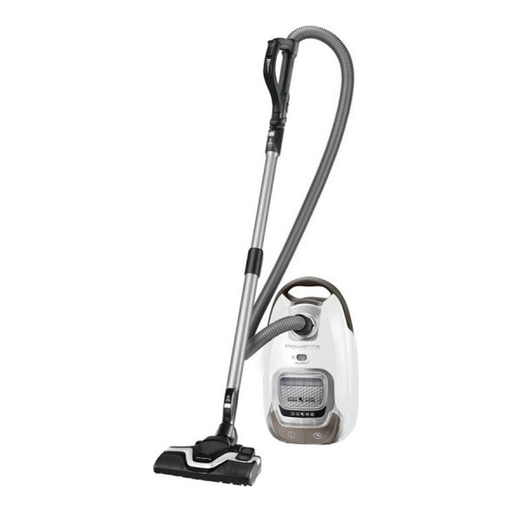
Rowenta Silence Force Allergy+ RO7485EA
The bagged design and the described closure flap may be useful for handling dust. The product details don’t list a crevice nozzle; check what’s included if you need one for your bench.
400 W; stated noise level of 58 dB(A); 4.5 l bag capacity; automatic closure flap on the Hygiene+ bag.
Dust bags need to be purchased separately and replaced.
Joybuy
 No image available
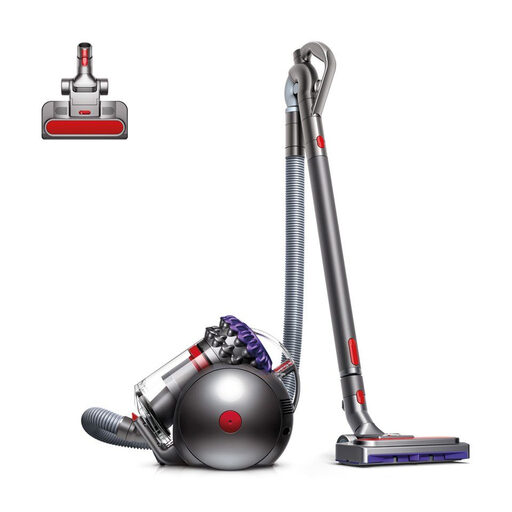
Dyson Big Ball Parquet 2
The description lists a combination nozzle for gaps. Whether it will fit beneath your bench depends on the bench’s measurements and how you can manoeuvre the tube and hose.
Bagless, removable 1.5 l dust container; 600 W; stated noise level of 80 dB; operating radius of 9.7 m.
The dust container needs to be emptied.
Joybuy
 No image available
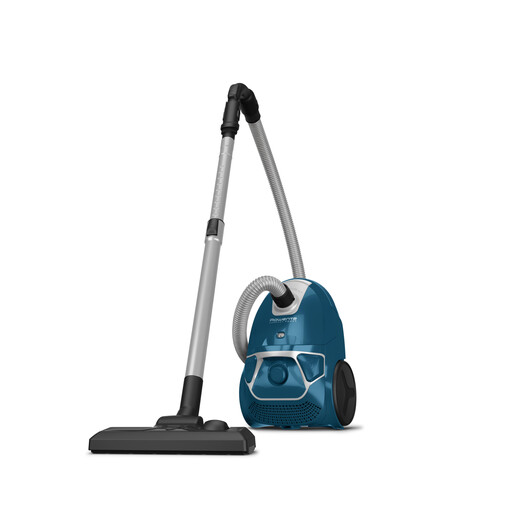
Rowenta Compact Power RO3950EA
The crevice nozzle described is useful for narrow spaces. Check the attachment’s shape and your bench measurements before assuming it will reach underneath.
Bagged; 900 W; stated noise level of 79 dB; operating radius of 8.8 m; crevice nozzle and parquet nozzle included.
Compatible dust bags need to be replaced.
Joybuy
Frequently asked questions
How can I check whether the nozzle will fit beneath our bench?
Measure the clearance and depth to the area you want to clean. Compare these measurements with the shape of the nozzle actually supplied, and check that you can manoeuvre the hose and tube into the right position. A crevice nozzle alone doesn’t guarantee a good fit.
What maintenance do bagged and bagless vacuums need?
With a bagged vacuum, replace the bags with compatible ones; with a bagless model, empty the dust container and maintain the filter as instructed. Whether a filter should be washed or replaced depends on the exact model.
Can an ordinary dry vacuum pick up spilt liquids?
Only if the instructions specifically state that the particular appliance is suitable for liquids. Bosch warns against using a vacuum that isn’t designed for water to pick it up; a wet-cleaning function isn’t necessary for dry crumbs beneath a bench.
How should I compare noise levels for a shared home?
Compare the stated sound power levels for the specific models and consider when shared spaces are in use. A manufacturer’s rating alone can’t predict how loud an appliance will seem in every room.
Are older EU energy-efficiency ratings for vacuum cleaners still a current basis for comparison?
No. The European Commission has withdrawn the former EU regulation on energy labelling for vacuum cleaners. This should be distinguished from the ecodesign requirements that still apply within their respective scopes.


