Homes with low benches
If you want to clear dry crumbs and dust from beneath a bench, the clearance and a suitable nozzle are crucial. The size of the vacuum body alone won’t tell you whether the floorhead will fit underneath.


First, measure the clearance beneath your bench and check that the specific floorhead, including its joint, will fit underneath. A crevice tool can help with narrow edges, but it isn’t a substitute for a suitable floorhead on larger areas. Then consider storage and emptying: a bagged vacuum means you won’t have to empty a dust container in the open, while a bagless model saves you buying replacement bags but requires you to maintain the container and filters.
If you want to clear dry crumbs and dust from beneath a bench, the clearance and a suitable nozzle are crucial. The size of the vacuum body alone won’t tell you whether the floorhead will fit underneath.
You’re looking for a vacuum whose body, hose, tube and accessories will fit in your chosen storage space. Also check whether the attachments need to be stored separately.
Both the filtration system while you vacuum and your exposure to dust when emptying the vacuum matter. Bags and open containers differ in how you handle the dirt they collect.
First, measure the lowest clearance beneath the bench and compare it with the dimensions and manoeuvrability of the floorhead supplied with the vacuum.
| Consideration | What to look for when buying | Who prioritises this? |
|---|---|---|
| Access beneath benches | Check the clearance, as well as the height and joint of the specific floorhead; a crevice tool may be suitable for narrow edges. | If I need to reach dry crumbs beneath a low bench, the actual clearance and a suitable floorhead are what matter to me. Around 36% of consumers prioritise access beneath benches. |
| Storage space at home | Compare the vacuum’s dimensions with the space available and check whether the tube and accessories can be stored on the vacuum or need to be put away separately. | In a small flat, I want to store the body, tube and accessories without leaving loose parts in the way. Around 29% of consumers prioritise available storage space. |
| Emptying and maintenance | Check which bags or filters are compatible and read the care instructions for the specific model; a container also needs to be emptied regularly. | When weighing up ongoing maintenance and consumables, I want to know whether I’d prefer changing the bag or maintaining the container and filters. Around 21% of consumers focus mainly on emptying and ongoing costs. |
| Dust containment | Check the filtration system and maintenance requirements for the exact model, and factor in how it is emptied. | If I’m sensitive to dust, I want to consider both filtration and contact with dust when emptying the vacuum. Around 14% of consumers prioritise dust containment. |
A low-profile or compact vacuum body doesn’t guarantee that the supplied floorhead, including its joint, will fit beneath your bench.
Measure the lowest clearance and check the dimensions and manoeuvrability of the specific attachment before you buy.
A bagless vacuum saves you buying replacement bags, but you’ll still need to empty its container and maintain the filter as instructed for that model. With a bagged vacuum, you’ll need to buy compatible bags instead.
Decide which emptying routine suits your day-to-day life, and check which consumables are compatible with the model.
Electrical power consumption alone doesn’t show how well a vacuum will pick up crumbs from your floor.
Assess whether the floorhead suits your floor separately from the wattage, and consult independent tests if they’re relevant to how you’ll use the vacuum.
The BGBS2RD1 bagged vacuum provides a useful reference point for comparing body dimensions and storage requirements.
The AB51C1SW and AB61C1OKO represent different feature sets within AEG’s range of bagged vacuums.
The bagless Compact Power Cyclonic RO3725EA is an option if you want to avoid buying replacement bags.
The XD1142/10 bagged vacuum is worth considering when comparing storage options, thanks to the compact storage design described by the manufacturer.
According to the manufacturer, the BC 7047 comes with a bag, a HEPA-13 filter, a parquet floorhead and a crevice tool.
This selection includes corded cylinder vacuums with either a bag or a dust container. Before you buy, check that the specific floorhead will fit beneath your bench.
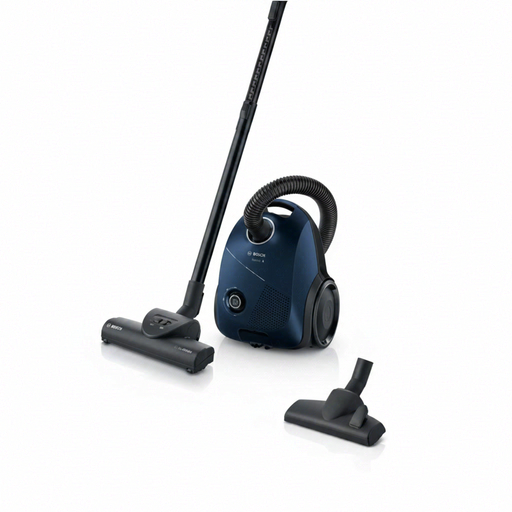 No image available
A bagless cylinder vacuum to consider if you want to avoid replacement bags; check the floorhead dimensions to see whether it will fit beneath your bench.
Listed in the product name: 850 W and 3,5 l.
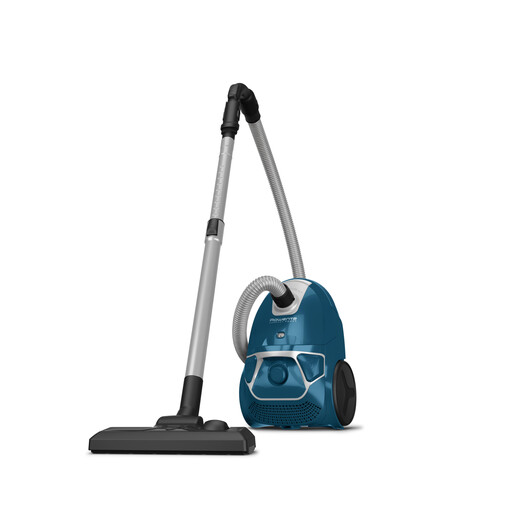 No image available
A bagged cylinder vacuum to consider if you’d rather not empty an open dust container. Check that the specific floorhead, including its joint, will fit beneath your bench.
First, measure the clearance and compare it with the height of the specific floorhead, including its joint. A crevice tool may work for narrow edges; the height of the vacuum body won’t tell you whether an attachment will fit.
Change the bag or empty the container regularly, and clean or replace the filters as instructed for your model. The European Commission notes that a bag or container that’s too full can affect performance.
No. According to the Verbraucherzentrale, a higher wattage doesn’t automatically mean better cleaning performance. So check whether the floorhead suits your floor separately from the vacuum’s electrical power consumption.
For a distance sale from a business seller, you generally have 14 days from delivery to cancel your purchase; exceptions and possible return costs may apply. If goods are faulty, you also have a statutory right to a minimum of two years’ guarantee from the seller. The European Union distinguishes these rights from a voluntary manufacturer’s warranty.
The European Commission lists the former Regulation (EU) No 665/2013 on energy labelling for vacuum cleaners as repealed. So don’t base your buying decision on an old vacuum cleaner energy label; ecodesign requirements are separate.