Quiet music listeners at home
You want to listen to a music station at a low room volume and be able to adjust the sound easily. The wattage alone won’t tell you how precisely you can turn a radio down.


First, check whether you can receive your preferred station via DAB+ where you plan to listen. Then choose between an easy-to-use tabletop radio, a mains-powered model or a portable option. A high rated output alone won’t tell you how smoothly a radio can be adjusted to your preferred low volume, or how it will sound.
You want to listen to a music station at a low room volume and be able to adjust the sound easily. The wattage alone won’t tell you how precisely you can turn a radio down.
You’re buying mainly to listen to a particular station, so check that it’s available on DAB+ and that you can receive it where you plan to listen. The Digital Radio Office Germany provides a coverage checker for stations and locations.
You want to listen to your station in different places. Portability, power supply and reception in each location all play a part.
Base your choice on what matters most to you when listening at a low volume.
| What you need | What to check when buying | Who will find this especially important? |
|---|---|---|
| Listen to music quietly | Try the volume at your usual listening distance, adjusting it in small steps; check for a headphone socket if you need one. | If I want to listen at a low room volume, I need to be able to set the volume comfortably. Around 36% of consumers put quiet playback first. |
| Receive your preferred station | Check the station and indoor reception at the intended location; if it’s a DAB+ station, make sure the radio explicitly supports DAB+. | If I mainly want to listen to a particular station, reception where I’ll be listening matters most. Around 29% of consumers prioritise reception of their preferred station. |
| Listen without disturbing others | If you need one, check for a clearly specified headphone socket; Bluetooth alone doesn’t confirm that the radio can transmit audio to headphones. | If I’m listening at night or in a shared room, I don’t want to disturb anyone else. Around 21% of consumers prioritise listening without disturbing others. |
| Easy operation | Try the button labels, station selection and volume control in person. | If I want to change stations and volume without navigating complicated menus, easy-to-reach controls are important. Around 14% of consumers put ease of use first. |
Power ratings don’t show how precisely you can adjust the volume at the lower end, or how a model sounds when played quietly.
If possible, try the radio from your usual listening distance and at your preferred volume. Don’t base your decision on the wattage alone.
The Digital Radio Office Germany’s coverage checker may not reflect actual indoor reception, which can vary with local conditions.
Check your preferred station for your location and test the radio where you intend to place it.
A Bluetooth specification alone doesn’t tell you which way audio is transmitted. Roberts Radio notes that its Bluetooth radios need a separate transmitter to work with Bluetooth headphones.
Check the specific model for an explicitly stated transmitter function, or choose one with a documented wired headphone socket.
The DR2002BT is a tabletop radio for anyone who values easy-to-reach controls and a clear display.
The DigitRadio 4 is a mains-powered option with two speakers and a wired headphone connection.
The Classic H4 is a compact radio with DAB+, one speaker and a sleep timer, making it a good fit for a set spot in the kitchen or bedroom.
The nuGo! ONE+ is a portable DAB+ option with a rechargeable battery and carrying handle, designed for listening in different places.
Roberts’ German model pages feature portable DAB+ radios, including an alarm clock option in the Revival Petite 2.
This selection includes both portable and mains-powered radio options. If your preferred station broadcasts on DAB+, check that the specific model explicitly supports DAB+.
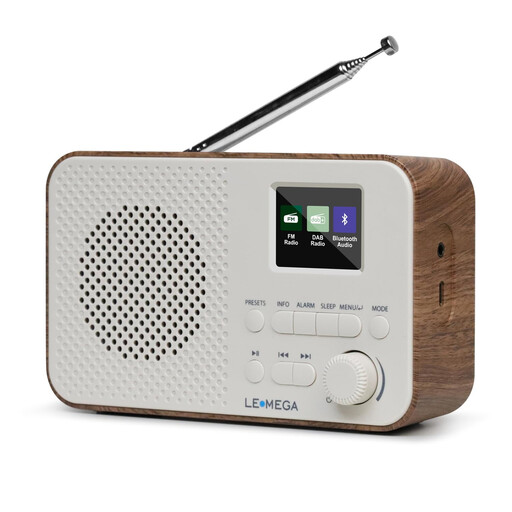 No image available
For listening in different places or in private: the product name lists DAB+/FM, a rechargeable battery and a headphone socket.
2200-mAh battery, USB-C charging and 40 presets.
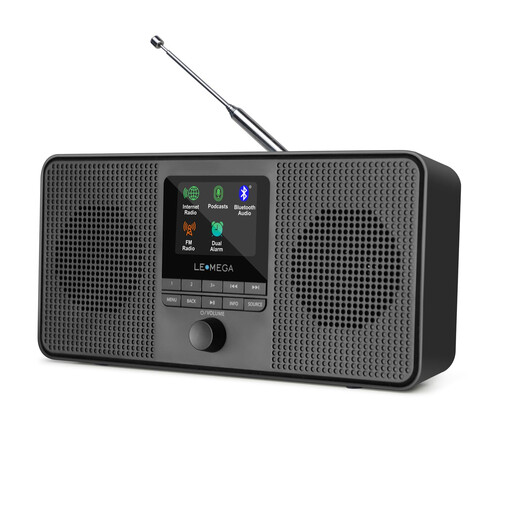 No image available
A mains-powered stereo option. The product name lists DAB and FM, but doesn’t explicitly confirm DAB+ support. Check before buying if your station uses DAB+.
Stereo and Bluetooth, according to the product name.
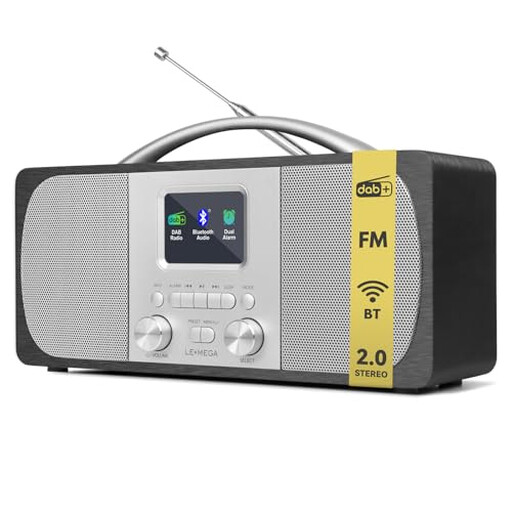 No image available
For a fixed listening spot, with stereo speakers. The product name lists DAB and FM; check explicitly for DAB+ support if your preferred station uses DAB+.
Mains-powered, with 40 presets and a sleep timer, according to the product name.
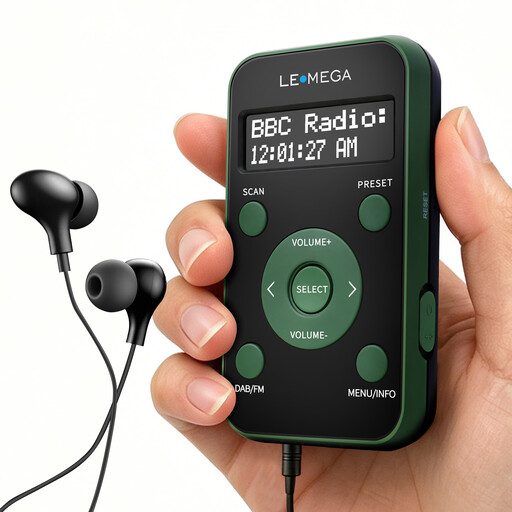 No image available
For listening on the go: the product name lists DAB/DAB+, FM, a rechargeable battery and earphones.
20 presets and an LCD display, according to the product name.
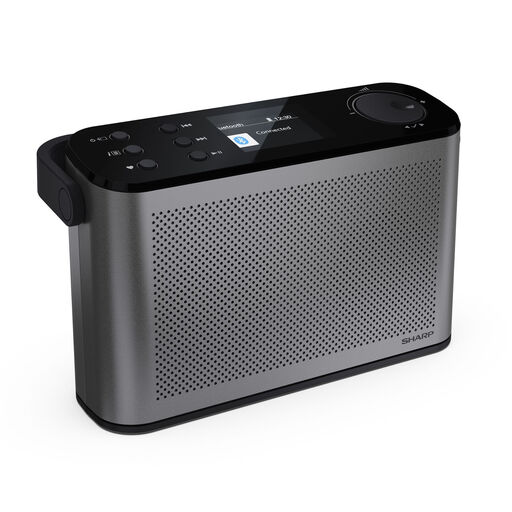 No image available
For portable DAB+ listening: the product name lists DAB+/FM, rechargeable battery and USB-C operation.
Up to 12 hours of battery life, 120 station presets and a 2.4-inch colour display, according to the product name.
Not necessarily. The Digital Radio Office Germany’s DAB+ coverage checker distinguishes between indoor and mobile reception, among other things, and local conditions may differ from the predicted results. Check your station for your location and test the radio where you plan to listen.
Adjust the aerial and run a new station scan if needed. Nubert recommends these steps in the nuGo! ONE+ manual after moving the radio; controls may differ on other models.
Not without checking that the radio can transmit audio. Roberts Radio explains that its Bluetooth radios receive Bluetooth audio and need a separate Bluetooth transmitter to send audio to headphones. For other models, check that TX functionality is explicitly documented.
When monitoring the market, Germany’s Federal Network Agency checks criteria for relevant electronic devices including correct CE marking, identifiable manufacturer details and German-language instructions containing the required usage and safety warnings. These checks don’t assess sound quality or confirm the features of a specific listing.