
Lieferung heute & morgen

Qualitätsgarantie

Willkommens-Angebote freischalten: KOSTENLOSE Lieferung | Bis zu 80 % RABATT | Kostenlose 30-Tage-JoyPlus-Testphase
App herunterladen
A DAB radio with Bluetooth combines traditional radio reception with the option to play music, podcasts or audiobooks from your smartphone. For the kitchen, bedroom, garden or when you’re out and about, this initially sounds like a versatile solution. In practice, however, some misleading product descriptions can lead buyers to choose a device that does not suit their everyday needs.
A DAB+ radio receives digital terrestrial stations via its aerial. No Wi-Fi connection or mobile data is required. An internet radio, on the other hand, accesses stations and podcasts via Wi-Fi. The two technologies have different requirements:
The term ‘digital’ alone therefore does not indicate which reception methods are actually supported. Check the listed tuner technologies before buying.
Claims such as ‘up to 15 or 20 hours’ generally refer to specific volume levels and usage conditions. With a radio with a battery, you should also check whether the battery is built in, how it is charged and whether mains operation is possible.
A built-in battery is convenient, but cannot be replaced easily. Models with AA batteries can offer flexibility when you’re out and about, but involve ongoing costs and require replacement batteries. For continuous use in the kitchen or bedroom, a supplied mains adapter is practical.
A retro radio can fit in well visually in a living room or bedroom. However, clearly readable displays, logically arranged buttons and a sufficient number of preset stations remain important. For the kitchen or bedside table, a headphone socket, alarm clock and sleep timer are also more useful than elaborate casing design.
None of the models mentioned here is described as waterproof. A radio used in the bathroom should therefore not be placed near splashing water or high humidity.
For everyday radio use, DAB/DAB+ and FM provide a versatile combination. An automatic station scan makes setup easier. Depending on the model, there are 40 or 60 preset slots. This is useful if several people in the household listen to different stations.
With internet radio, the sheer number of stations is less important than ease of use. Search functions by genre, location or station name make navigation easier. A claim such as ‘over 30,000 internet radio stations’ describes the available platform, but does not guarantee that every station will always be accessible.
With a Bluetooth radio, it should be clear which devices can be paired. Smartphones, tablets and laptops are intended as playback devices for the LEMEGA models mentioned. Bluetooth is particularly useful when you want to play local music files, streaming apps or podcasts from a mobile device.
Spotify Connect is different: with the LEMEGA IR4S, playback is controlled via the Wi-Fi network. A compatible Spotify account is required. If you only occasionally want to play music from your smartphone, this function is not essential.
For a portable DAB radio, weight, dimensions and power supply are important selection criteria. An integrated battery can make the device less dependent on power sockets. With a model using AA batteries, check the contents carefully, as batteries are not always included.
A radio with an alarm clock should ideally offer two separate alarms, weekday or weekend modes, a snooze function and a sleep timer. A clearly readable display and a headphone socket are also useful in the bedroom. In households with children, set the volume carefully to avoid placing unnecessary strain on their hearing.
The following recommendations categorise the devices according to specific requirements. The technical details correspond to the product data provided; the stated battery life should be understood as the manufacturer’s ‘up to’ figure.
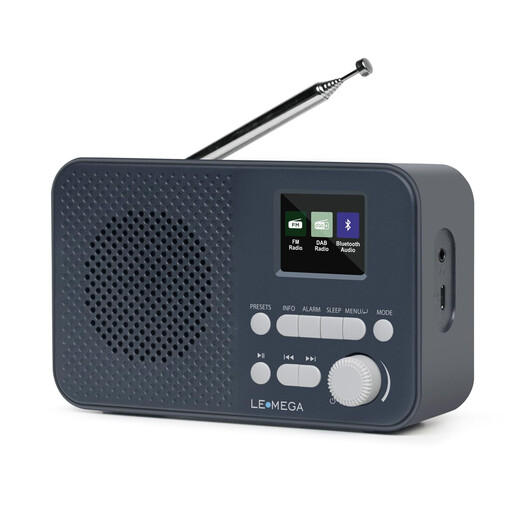
Why this product suits this profile: Weighing 375 g, this compact device supports DAB, DAB+ and FM, making it suitable for the kitchen, bedroom or occasional use in the garden.
The DAB+/FM combination avoids limiting you to just one reception method. The integrated battery charges via USB-C, and a mains adapter for continuous use is also included.
Up to 15 hours of battery life according to the product description, 40 preset slots, colour display, Bluetooth and dual alarm.
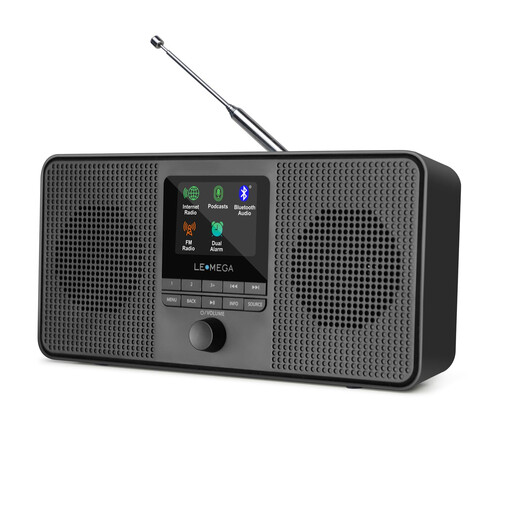
Why this product suits this profile: If you want internet radio, podcasts, Bluetooth and Spotify Connect in one device, this mains-powered solution can also run on batteries, making it suitable for different rooms.
The reception options are clearly designed for internet radio and FM. Wi-Fi is required for the internet functions; when you’re out and about, the device can run on four AA batteries.
Two 2.5-inch speakers for 2.0 stereo, over 30,000 internet radio stations according to the product description, Spotify Connect, podcasts and dual alarm.
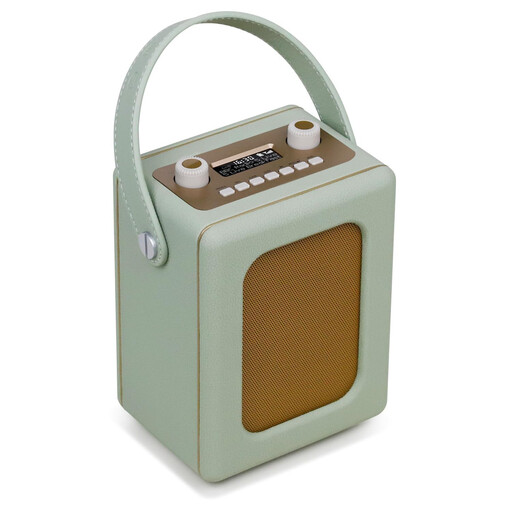
Why this product suits this profile: The larger casing, 5-watt speaker output and power supplied via a mains adapter or AA batteries make it well suited to frequent use in the living room, kitchen or garden.
The power supply is not limited to a built-in battery. If the batteries run out, mains operation is possible; 60 preset slots are available for DAB+ and FM.
Up to 20 hours of battery operation according to the product description, 60 preset slots, Bluetooth, headphone socket, dual alarm and sleep timer.
We have put together a complete, regularly updated list of products that fully meet these strict selection criteria and the safety regulations applicable in the EU.
First, fully extend the aerial. Then start the automatic station scan and save your preferred programmes to the available preset slots. To use Bluetooth, activate the function on your smartphone, select the radio from the device list and confirm pairing. With an internet radio, you also need to connect it to Wi-Fi.
Battery life depends on factors including volume, display brightness and reception method. Depending on the model, the devices mentioned offer up to 15 or 20 hours. These figures are guidelines under specific conditions. With a model featuring a built-in battery, pay attention to the charging port and ensure you have suitable replacement cables. AA batteries, on the other hand, involve regular ongoing costs.
A DAB+ or FM radio does not need the internet for reception and normally does not incur additional data costs. An internet radio uses Wi-Fi; with an existing internet plan, simply using the radio usually does not result in separately charged fees. If you use a smartphone hotspot when you’re out and about, data usage may depend on your mobile phone tariff.