
Lieferung heute & morgen

Qualitätsgarantie

Willkommens-Angebote freischalten: KOSTENLOSE Lieferung | Bis zu 80 % RABATT | Kostenlose 30-Tage-JoyPlus-Testphase
App herunterladen
A DAB+ radio can serve many purposes in everyday life: as a kitchen radio, a bedside alarm clock, a digital radio in the living room or a portable radio for the garden and on the go. However, the range can be confusing. Many models boast a large number of presets, long battery life or a wide range of features, while important details are easy to overlook.
As a Joybuy Product Recommendation Officer, I focus on the details that can be assessed against clear criteria. What matters isn’t the longest list of features, but whether a DAB/FM radio suits your habits, rooms and reception conditions.
Claims such as ‘up to 15 or 20 hours’ refer to specific usage conditions. Actual battery life can depend on factors including volume, reception and connected features. You should also check whether a radio with a rechargeable battery really charges via USB-C or simply runs on replaceable AA batteries.
An integrated battery is handy when you’re out and about. For a kitchen radio that stays in one place, mains power may be more important. Check whether a mains adapter is included, too.
Digital radio needs a sufficiently strong signal. A model with automatic station scanning will only find the stations available where you are. Signal quality may vary in basements, buildings with thick walls and remote areas.
That’s why having FM as an additional way to receive stations is useful. On compact devices, the headphone cable can also act as an aerial. The LEMEGA PR1 Pocket Radio uses the supplied earphones for reception. You may not be able to use it properly unless the earphones are connected correctly.
At first, 40 or 60 presets might sound impressive. In everyday use, easy-to-reach buttons, a clear display and straightforward station scanning matter more. If you often switch between the news, music and local stations, look for a clear menu system.
A very small display may be fine when you’re out and about, but impractical by the bed or in the kitchen. For an alarm clock radio, a clearly visible time display, alarm modes, snooze function and, where relevant, a sleep timer are also important.
Check that the radio supports DAB, DAB+ and FM. DAB+ is the digital standard, while FM remains useful as an additional way to receive stations. Automatic scanning makes set-up easier. The number of presets should suit your needs; 20 to 40 saved stations is enough for many households.
A portable DAB+ radio should be more than just lightweight: it should also suit the way you plan to use it.
Compare the weight and dimensions, too. A pocket radio weighing 65 g is ideal for walks, while a larger model with two speakers is better suited to filling a room with sound.
A radio with Bluetooth can do more than receive radio stations: it can also play music from your smartphone, tablet or laptop. A 3.5 mm headphone socket is useful for private listening. To assess sound objectively, look at details such as the number and size of the speakers and the output power.
Important: ‘Stereo’ describes the playback format, but on its own it doesn’t tell you how loud the radio is or how it will sound to you. EQ modes such as ‘Speech’ can help make spoken content clearer, while a music mode may be more suitable for listening to music.
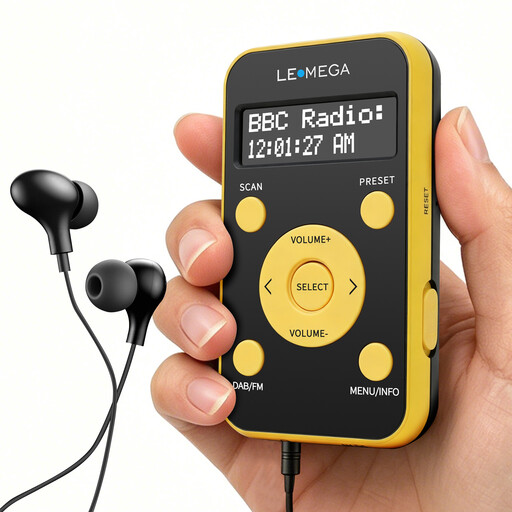
Why it’s a good fit: This compact portable radio weighs 65 g and offers DAB/DAB+ and FM, as well as an integrated 1,000-mAh battery with a stated life of up to 12 hours.
The specifications clearly list the battery, USB-C charging, automatic station scanning and 40 presets. That makes it easier to know what to expect when using it on the go.
Weighs 65 g, adjustable LCD brightness, button lock and supplied earphones that double as an aerial.
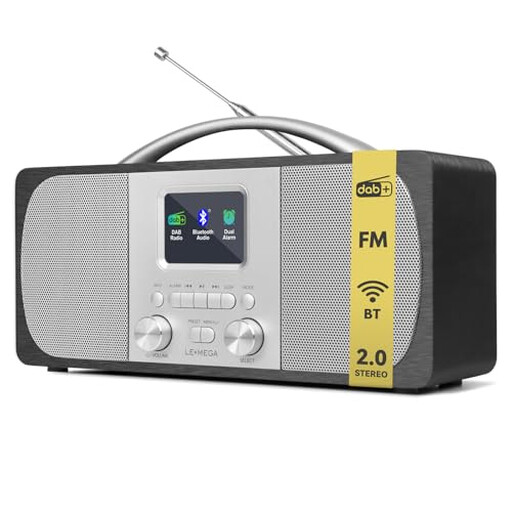
Why it’s a good fit: Two 2.5-inch speakers, a wooden cabinet, Bluetooth and the option to use mains power or batteries make this a good choice for a living room, bedroom or kitchen.
The sound system is described in concrete terms: 2.0 stereo, 6 watts of output power and two speakers, rather than vague claims about sound quality.
40 presets, colour display, Bluetooth, headphone socket and two independent alarms with a snooze function.
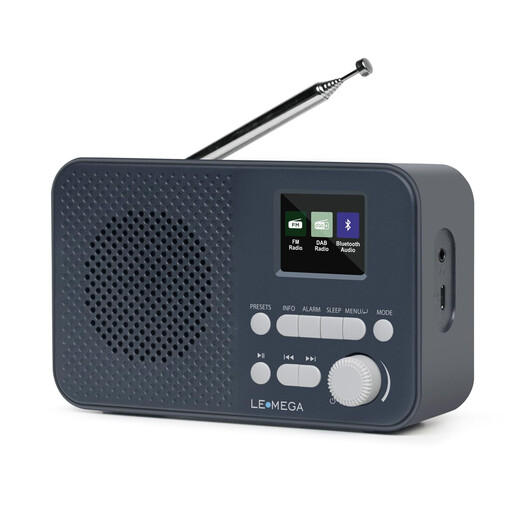
Why it’s a good fit: This battery-powered radio is designed for use in the kitchen, garden, bedroom or on the go. It offers up to 15 hours of battery life, as well as mains power.
Flexible power options mean the radio isn’t restricted to one place. DAB+/FM, USB-C and the mains adapter are all clearly listed.
2,200-mAh battery, 40 presets, Bluetooth, colour display, dual alarm, sleep timer and EQ modes.
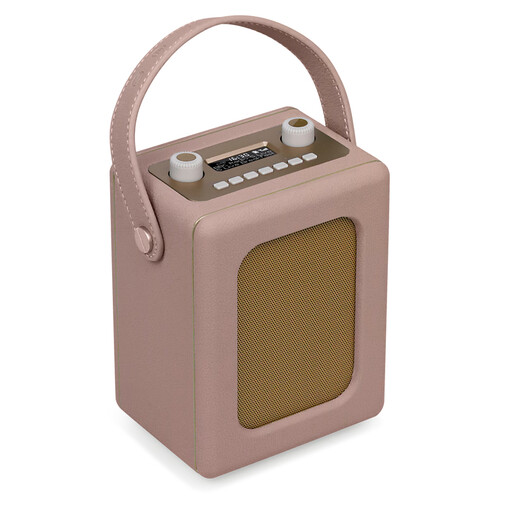
Why it’s a good fit: This model can be used as a kitchen radio, alarm clock radio or portable radio, and supports both mains power and four AA batteries.
The power options are clearly set out: AA batteries are required but not included, while a mains adapter comes with the radio. This makes it easier to work out what you’ll need before buying.
Stated battery life of up to 20 hours, Bluetooth, 3.5 mm socket, dual alarm and sleep timer.
We’ve put together a complete, regularly updated list of products that meet these strict selection criteria and fully comply with the safety regulations in force in the EU.
First, place the radio somewhere the aerial has as much clear space as possible. Then start the automatic station scan. If a station isn’t found, try moving the radio to see whether reception improves. With a pocket radio, make sure the supplied headphone cable is fully connected if it acts as the aerial.
Follow the manufacturer’s safety instructions. These models are not listed as waterproof, so avoid using them in direct contact with water or in areas of high humidity. Do not open or damage lithium-ion batteries, or expose them to high temperatures.
DAB+ and FM have different features. DAB+ provides digital station lists and often displays additional programme information. FM can be a useful fallback if DAB+ reception is too weak where you are. A DAB/FM radio combines both reception options.
It depends on the model and how you use it. Product information gives a battery life of up to 12 hours for the LEMEGA PR1 and up to 15 hours for the LEMEGA DAB Go, for example. Actual battery life may vary depending on the volume and reception.
Bluetooth is useful if you also want to play content from your smartphone, tablet or laptop. If you only listen to radio stations, you don’t necessarily need this feature. However, it can make a kitchen radio, living room radio or portable radio more versatile.