
Lieferung heute & morgen

Qualitätsgarantie

Willkommens-Angebote freischalten: KOSTENLOSE Lieferung | Bis zu 80 % RABATT | Kostenlose 30-Tage-JoyPlus-Testphase
App herunterladen
A DAB radio can offer noticeable differences compared to a traditional FM radio when it comes to reception, ease of use and station selection. At the same time, some product claims can lead to disappointing purchases: a long battery life doesn't automatically apply to every mode of operation, Bluetooth doesn't replace radio reception, and a flashy retro radio isn't necessarily right for every location.
This buying guide explains which technical specifications matter before you make a purchase, and which model might suit your kitchen, bedroom, garden or on-the-go lifestyle.
DAB+ is the digital radio standard widely used in Germany. A device that supports DAB and DAB+ can receive digital stations, while FM remains a useful analogue fallback. So check that the technical specifications actually list DAB+ and FM. A device that only supports FM is not a DAB+ radio.
Local reception conditions also matter. The range of available stations depends on your location and signal strength. An automatic station search makes setup easier, but it doesn't replace proper placement or a suitable aerial.
Claims like "up to 20 hours" are maximum values taken from product information. Actual runtime can vary depending on volume, reception, display brightness and battery condition. With a battery-powered radio, you should also clarify:
A portable DAB radio with a built-in rechargeable battery is practical for regular trips. AA batteries, on the other hand, can be swapped out quickly when you're out and about, but they incur ongoing costs and create extra disposal effort.
Bluetooth lets you stream audio from a smartphone or tablet. However, it doesn't automatically give the radio access to additional radio stations. An internet radio needs a Wi-Fi connection and accesses online stations or podcasts. For standard DAB+ use, no internet connection is required.
Look for DAB/DAB+, FM and an automatic station search. Preset memory slots are useful if you frequently switch between local stations. On compact devices, 20 DAB and 20 FM presets may be sufficient. Larger models often offer more presets and easier navigation.
On some pocket radios, the attached headphone cable acts as the aerial. This is by design and should be taken into account before you buy. A radio with a headphone socket can also allow for quiet listening in the bedroom or on the move.
For a radio in the kitchen or bedroom, a mains adapter is often sufficient. If you want to use the device in the garden, on the balcony or while travelling, pay attention to weight, charging port and battery life. A built-in rechargeable battery with USB-C is easy to top up in daily use. Devices that run on 4 AA batteries, on the other hand, offer replaceable power.
Also note the ingress protection rating: according to product information, the models featured here are not waterproof. So they should not be used in the rain, in damp rooms or near water.
Speaker size, the number of speakers and output power give you a first indication. A model with two speakers and a true 2.0 stereo system is better suited for room-filling sound than a very small pocket radio.
For the bedroom, a radio with alarm clock, dual alarm, snooze function and sleep timer may be relevant. In the kitchen, a clear display and large control buttons are practical. Bluetooth, equaliser modes and a headphone socket expand the radio's uses, but aren't essential for every buyer.
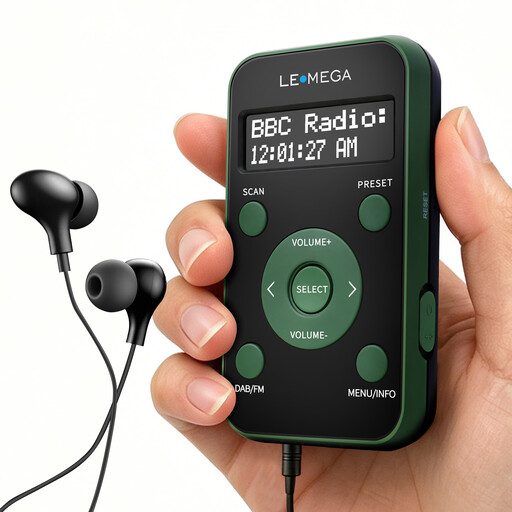
Why this product fits the profile: Weighing just 65 g, this pocket radio is ideal for commutes, walks or exercise, and offers DAB+, DAB and FM in a compact casing.
The battery life is stated as up to 12 hours, and headphones with a built-in aerial are included. This makes the reception and battery characteristics clear and easy to understand.
40 presets, USB-C charging port, adjustable LCD brightness and key lock, all in a 90 × 51 × 16 mm package.
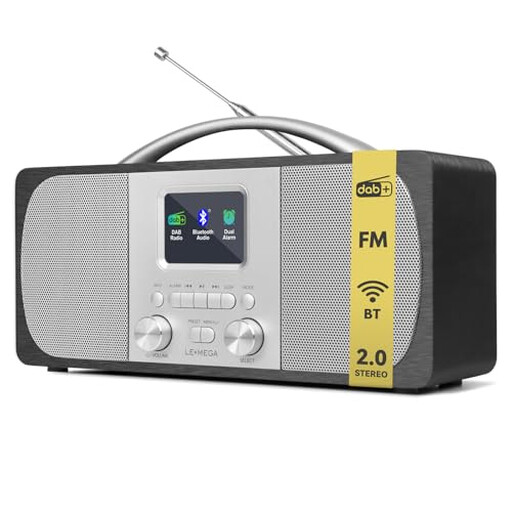
Why this product fits the profile: Two 2.5-inch speakers, a wooden cabinet and a 2.0 stereo system make this model a great choice for the living room, kitchen and bedroom.
The audio specification is clearly stated as two speakers with 6 watts of output power, rather than relying on vague sound promises.
DAB+, DAB and FM, 40 presets, Bluetooth, headphone socket, plus dual alarm and sleep timer.
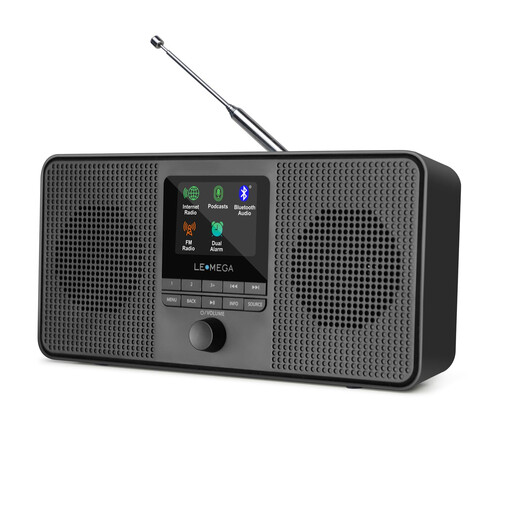
Why this product fits the profile: If you want internet radio, podcasts and Spotify Connect alongside DAB and FM, this network-capable alternative is ideal for home use.
The product information clearly separates FM, internet radio and Bluetooth. However, internet functions do require a Wi-Fi connection.
Over 30,000 listed internet radio stations, podcasts, stereo speakers, dual alarm and headphone socket.
We've put together a full, regularly updated list of products that fully meet these strict selection criteria and the safety regulations in force in the EU.
DAB+ and FM are different types of reception. Depending on the region, DAB+ can offer a wider selection of digital stations, while FM remains useful as an analogue reception method. A combined device with both standards gives you more flexibility.
Plug in the mains adapter or charge the battery, extend the aerial or headphone cable, and start the automatic station search. You can then save available stations to the presets. With internet radios, you'll also need to connect to Wi-Fi.
When running on mains power, electricity costs depend on usage and consumption. A rechargeable battery radio needs regular charging. Models that use AA batteries incur extra costs for replacements. So check the power supply that best suits your usage profile.