
Lieferung heute & morgen

Qualitätsgarantie

Willkommens-Angebote freischalten: KOSTENLOSE Lieferung | Bis zu 80 % RABATT | Kostenlose 30-Tage-JoyPlus-Testphase
App herunterladen
A DAB radio can complement FM radio, giving you access to digital stations, saved favourites and extra convenient features. In German homes, it might be used as a kitchen radio, a tabletop radio, a bedroom alarm clock or a portable DAB radio for the balcony or garden. However, your choice shouldn’t be based solely on design, the number of presets or marketing claims.
DAB+ is a digital broadcasting standard, but reception quality still depends on your location, the insulation in your building and the position of the aerial. So a device won’t necessarily get equally good reception everywhere. In Germany, your radio should support DAB/DAB+ and FM. FM is a practical fallback if digital reception is weaker in a particular location.
Also look for an automatic station scan and a clear display of the available stations. A large number of presets is only useful if the controls are easy to navigate.
Manufacturer claims such as ‘up to 15 or 20 hours’ are based on specific conditions. According to the product information, actual battery life can be affected by volume, reception, Bluetooth use and the condition of the battery. If you’re buying a radio with a battery, check the following:
A built-in lithium-ion battery is convenient, but when it wears out it must be handled professionally and disposed of in accordance with applicable WEEE requirements. With a battery-powered model, you can replace flat batteries straight away, but this means ongoing costs.
‘Stereo’ doesn’t mean the same thing on every radio. A true stereo radio has two separate speaker channels. A single full-range speaker can save space, but offers a different listening experience. If you want to stream music via a radio with Bluetooth, also check how it pairs, the speaker configuration and whether it has a headphone socket.
Display brightness, a sleep timer and an easy-to-reach volume control are also useful in the kitchen or bedroom. A device without a stated splash-proof rating shouldn’t be used next to the sink or in the bathroom.
A suitable DAB+ radio should support DAB/DAB+ and FM. An automatic scan makes setup easier. Depending on how you’ll use it, you might want 40 presets split between DAB and FM, or 60 station presets. The number isn’t the only thing that matters: you should also be able to access your favourite stations directly using buttons or a clear menu.
For occasional use in different rooms, choose a portable radio with a rechargeable battery or replaceable batteries. A built-in battery with a USB-C charging port is handy when you’re out and about, and can be charged using a power adapter, laptop or power bank. If you’re buying a radio with an alarm clock, check whether the time and alarm remain available when using mains or battery power.
Also consider the radio’s size and weight. A pocket radio weighing 65 g is suited to walks in a different way from a tabletop radio with a wooden casing that weighs around 960 g.
A high-contrast LCD, LED or TFT display can make it easier to choose stations and set the alarm. For a bedside table, a dimmable display, two alarm times, snooze and a sleep timer are useful. Bluetooth is handy for streaming from your smartphone, but it doesn’t automatically replace radio reception.
If you want to listen to stations from other countries or podcasts, you could consider an internet radio with Wi-Fi. You’ll need a stable network connection to use it. Without Wi-Fi, DAB+ and FM are the simpler ways to listen.
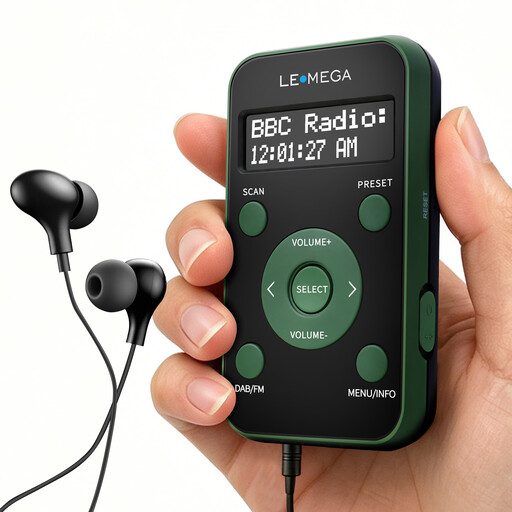
Why this product suits this profile: According to the product information, this compact pocket radio weighs 65 g, supports DAB+/DAB and FM, and comes with headphones. It’s suited to listening on the go, provided you use the headphones as the aerial.
Battery life is clearly stated as up to 12 hours. You also get 20 DAB and 20 FM presets, plus USB-C charging.
65 g weight, 1,000-mAh battery, 3.5-mm socket, sleep timer and button lock.
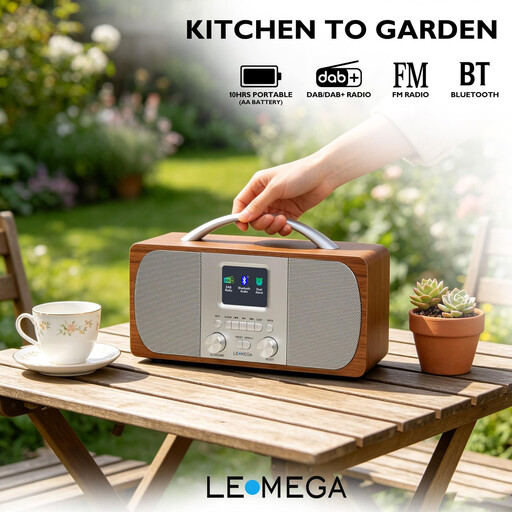
Why this product suits this profile: Two 2.5-inch drivers make up the stated 2.0 stereo system. The wooden casing and brushed metal front make it a good fit for a living room, kitchen or bedroom.
The stereo setup is confirmed by the two speakers. It also offers DAB/DAB+, FM, Bluetooth and a headphone socket.
6-watt speaker system, 40 presets, two alarm times, snooze, sleep timer and mains or AA battery power.
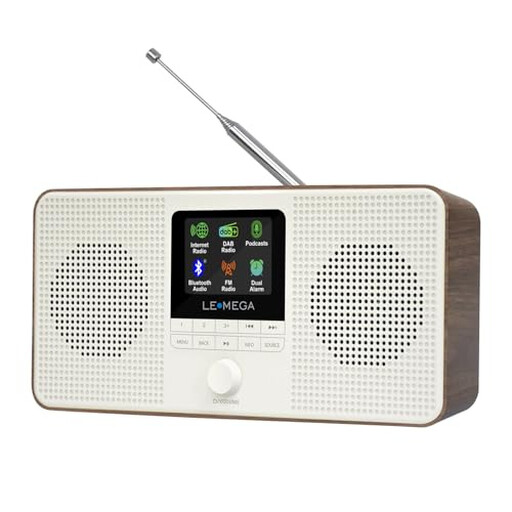
Why this product suits this profile: This model combines internet radio, FM, Bluetooth and podcasts. According to the product information, Wi-Fi gives you access to more than 30,000 internet stations. It can also run from a power adapter or four AA batteries.
The reception options are clearly set out: internet radio and FM are available. This lets you check before buying whether there’s Wi-Fi where you plan to use it.
2.0 stereo with two 2.5-inch drivers, Wi-Fi, Bluetooth, headphone socket, Spotify Connect and two alarm times.
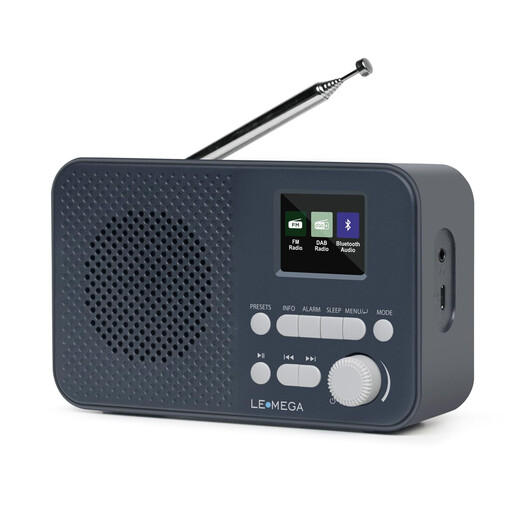
Why this product suits this profile: This portable model offers DAB+/FM, Bluetooth, a colour display, an alarm clock and a built-in battery. Weighing 375 g, it’s easy to move between the kitchen, bedroom and garden.
The power options are listed as a 2,200-mAh battery, USB-C and a power adapter. The display can show station information and the time.
Up to 15 hours according to the product information, 40 presets, two alarms, snooze, sleep timer and headphone socket.
We’ve put together a complete, regularly updated list of products that meet these strict selection criteria and fully comply with the safety regulations in force in the EU.
If you’re using a pocket radio with a headphone aerial, make sure the supplied or compatible headphones are connected for reception to work as intended.
Yes. DAB+ and FM receive their signals over the air and don’t need a Wi-Fi connection. Internet radio and streaming features, on the other hand, need a network connection.
It depends on the model and how you use it. The product information available gives battery life of up to 12 hours for the LEMEGA PR1 and up to 15 hours for the DAB Go. Actual battery life may vary with volume, reception and Bluetooth use.
Power consumption when plugged into the mains varies by model. A battery-powered model can be used away from a socket, but you’ll need to account for charging or replacement battery costs. For regular use, look for a radio with USB-C charging or mains power.