
Lieferung heute & morgen

Qualitätsgarantie

Willkommens-Angebote freischalten: KOSTENLOSE Lieferung | Bis zu 80 % RABATT | Kostenlose 30-Tage-JoyPlus-Testphase
App herunterladen
A DAB radio can offer advantages over a radio with FM only when it comes to reception, station choice and ease of use. However, the term ‘digital radio’ alone does not protect you from making the wrong choice. The key factors are the features, power supply, connection options and where you plan to use it.
Anyone looking for a portable DAB radio for their commute will need different features from someone buying a radio alarm clock for the bedroom or a retro radio for the kitchen. Our selection shows which technical details are important before you buy and which models suit different usage profiles.
DAB+ uses digital transmission. However, reception quality still depends on your location, network coverage and the aerial. Reception can be limited inside buildings, in basements or in remote areas. A DAB+ radio with additional FM radio therefore provides a practical alternative.
With pocket radios, the headphone cable often acts as the aerial. If this is not clearly stated, using the radio without connected headphones may be restricted.
Statements such as ‘up to 12 or 20 hours’ refer to specific conditions. According to the product information, volume, reception type, display brightness and battery condition can affect the actual runtime. With devices powered by AA batteries, usage time also depends on their capacity and quality.
When choosing a battery-powered radio, you should therefore check not only the runtime but also the charging connection. A DAB radio with USB-C, for example, can be charged while you are out and about using a suitable power adapter, laptop or power bank.
Bluetooth connects a radio to a smartphone, tablet or laptop. It does not automatically allow the radio to receive stations from the internet. An internet radio generally requires a Wi-Fi connection and, depending on the model, provides access to online stations, podcasts or streaming services.
For use in Germany, a device with DAB+ and FM is a sensible choice. DAB+ enables you to receive digital programmes, while FM provides an alternative reception method. An automatic station scan makes setup easier. Depending on the model, you may have, for example, 40 presets for DAB and FM, or separate presets for each reception type.
Having plenty of stored stations is particularly useful when several people use the radio or when you frequently switch between news, music and regional programmes.
For a radio to use on the go, weight, dimensions and power supply are important. According to the product information, the LEMEGA PR1 weighs 65 grams and measures 90 × 51 × 16 millimetres. Its integrated battery has a capacity of 1,000 mAh, with a stated playback time of up to 12 hours.
Larger devices, on the other hand, can be powered from the mains or by batteries. This is practical in the kitchen, garden or bedroom if the radio is mainly kept in one place but occasionally needs to be moved. Also check whether batteries are included.
A DAB radio with a headphone socket is suitable for the bedroom, public transport or focused listening. A 3.5 mm connection should not be confused with Bluetooth: it requires a cable, but works without pairing or an additional wireless connection.
An easy-to-read LCD or colour display can help when selecting stations. For older users, clear buttons, high contrast and an intuitive menu are often more important than a large number of additional functions. A button lock prevents accidental inputs when a pocket radio is carried in a jacket or sports bag.
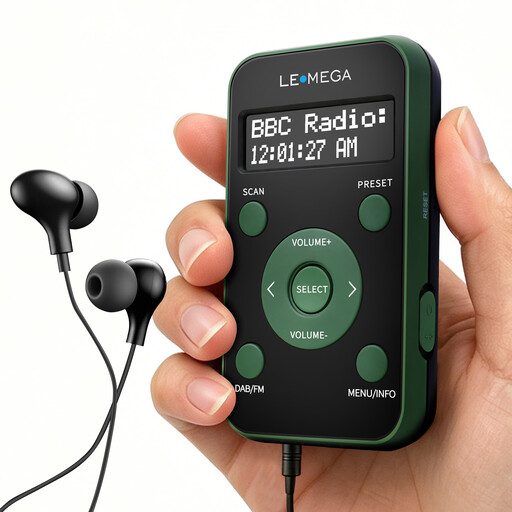
Why this product suits this profile: This compact pocket radio is designed for mobile use and is ideal for commuters, walks or sports activities.
DAB/DAB+ and FM are both available. The button lock reduces accidental inputs, while the headphones act as the aerial.
A weight of 65 grams, 40 station presets, a USB-C connection and a stated battery life of up to 12 hours.
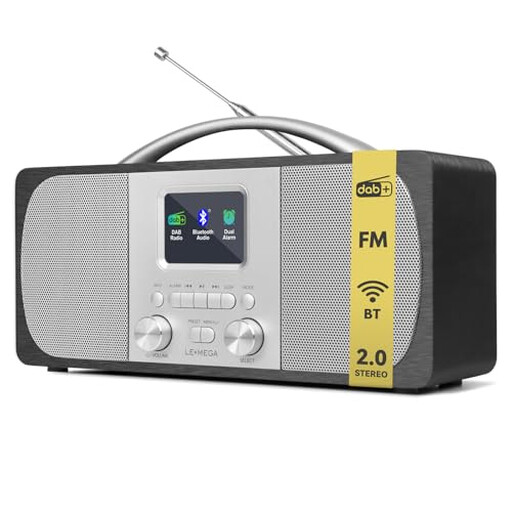
Why this product suits this profile: Designed for the living room, kitchen or bedroom, this device combines DAB+, FM, Bluetooth and stereo speakers.
The combination of two reception types and 40 presets avoids relying solely on DAB+ reception.
Two 2.5-inch speakers, 6 watts of output according to the product information, Bluetooth, a headphone socket and a dual alarm clock.
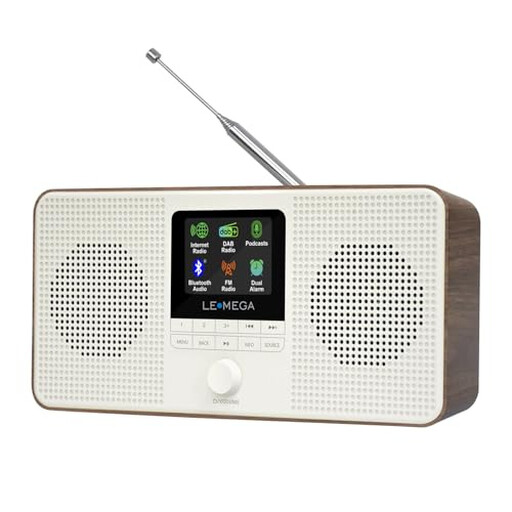
Why this product suits this profile: For users with Wi-Fi at the intended location, this model expands the choice to include internet radio, podcasts and Spotify Connect.
The product information explicitly lists Wi-Fi, FM and internet radio. This means Bluetooth is not the only way to play content from a smartphone.
Two 2.5-inch drivers, a 3.5 mm headphone socket, dual alarm clock and, according to the product information, more than 30,000 internet radio stations.
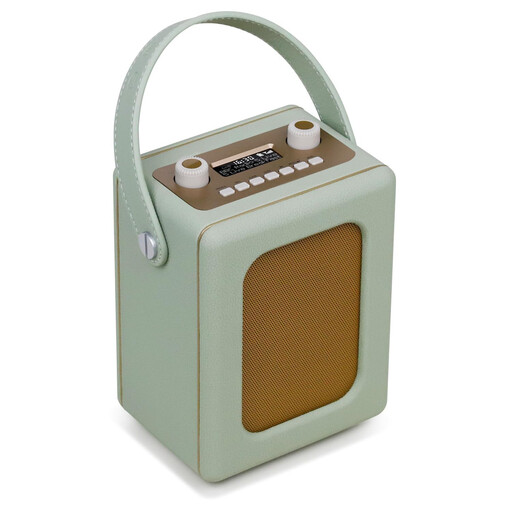
Why this product suits this profile: Its portable design and classic styling make it a good fit for a bedside table, kitchen worktop or garden table.
FM is integrated alongside DAB+. According to the product description, the large display elements show station information and the time.
60 presets, Bluetooth, a headphone socket, two alarm times and mains or battery operation using four AA batteries.
We have put together a complete, regularly updated list of products that fully meet these strict selection criteria and the safety regulations applicable in the EU.
After switching it on, you should first run an automatic station scan. If reception is weak indoors, position the radio as close to a window as possible. With a pocket radio that uses the headphone cable as an aerial, the cable must be fully connected and should not be tightly coiled.
For Bluetooth, the usual steps are:
A DAB radio is not automatically waterproof. According to the product information, the models mentioned are not water-resistant. They should therefore be protected from rain, high humidity and splashing water when used in the garden, on a balcony or while camping.
DAB+ and FM use different transmission methods. DAB+ offers a digital choice of stations and often provides additional programme information. FM can be useful when DAB+ reception is weak or in areas with limited coverage. A combined device is therefore more flexible for many households than a radio with just one reception type.
The service life of an integrated battery depends on charging cycles, usage, storage and temperature. Playback time per charge varies by model and is usually stated as an ‘up to’ figure. If you regularly listen while out and about, look for USB-C, a sufficient capacity rating and an alternative power supply.
An internet radio requires an active Wi-Fi or internet connection and transmits audio data. DAB+ and FM receive the signal without a home internet connection. If your data allowance is limited, a conventional DAB+ or FM radio may therefore be more suitable. You should also check whether an internet radio can be used at all without Wi-Fi.