
Lieferung heute & morgen

Qualitätsgarantie

Willkommens-Angebote freischalten: KOSTENLOSE Lieferung | Bis zu 80 % RABATT | Kostenlose 30-Tage-JoyPlus-Testphase
App herunterladen
A DAB radio should work reliably in everyday situations: in the kitchen, beside the bed, in the garden or when you are out and about. However, product descriptions often list numerous features without explaining their practical limitations. What matters is not the greatest possible number of buzzwords, but the right combination of reception, power supply, controls and design.
A DAB+ radio receives digital stations as long as there is a sufficiently strong signal at the location in question. Buildings, basements, remote areas and certain rooms can affect reception. A device with an additional FM tuner provides a second reception option in these situations. Also check whether the radio has a telescopic aerial or, in the case of pocket radios, whether the headphone cable is intended to act as the aerial.
Claims such as “up to 15 hours” or “up to 20 hours” depend on factors including volume, reception type and battery condition. With a battery-powered radio, you should therefore also check the battery capacity and charging connection. If you mainly use the device at home, mains operation is an additional benefit. For models with replaceable batteries, suitable AA batteries are generally not included.
A portable radio for the bathroom, garden or balcony is not automatically protected against water. Unless a specified IP rating is provided, the device should be protected from splashes, high humidity and rain. According to the product information, the models featured in this selection are not water-resistant.
Pay attention to the specific bands the radio supports:
For an internet radio, Wi-Fi, clear station navigation and, where applicable, podcast or streaming support are also important. Reception then depends on a stable internet connection.
A portable radio can run on mains power, an integrated battery or AA batteries. An integrated battery saves you from buying batteries regularly, but it needs charging and cannot be replaced by the user in many devices. You should therefore check:
A pocket radio should be as light as possible. For stationary use, a larger display, more powerful speakers and a sturdier casing may be more important than minimal weight.
A radio with an LCD display usually shows the station name, time and programme information. Adjustable brightness is useful beside the bed. With a radio with an alarm clock, useful features include two separate alarm times, weekday or weekend modes, a snooze function and a sleep timer.
Bluetooth also turns a digital radio into a Bluetooth radio for playing music from a smartphone or tablet. However, it does not automatically provide access to internet radio: Bluetooth transfers content from a paired device, whereas an internet radio receives stations via Wi-Fi.
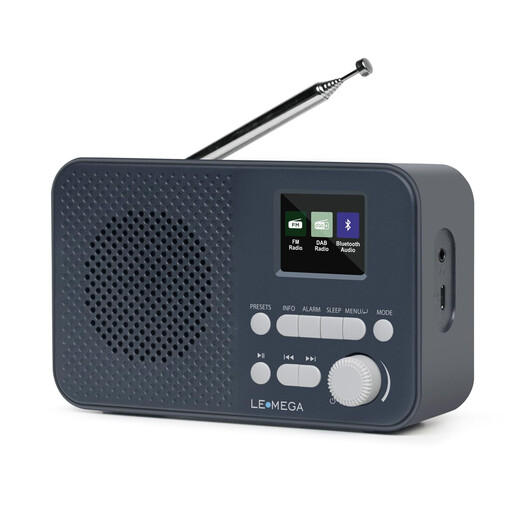
Why this product suits the profile: This compact model combines DAB/DAB+, FM and Bluetooth with an integrated battery. It is suitable for the kitchen, bedroom or occasional use in the garden, provided it stays dry.
The product information specifies both battery and mains operation, and explicitly states that there is no water protection. This makes it easier to plan how and where to use it.
2200-mAh battery with a stated runtime of up to 15 hours, 40 station presets, 1.77-inch colour display and USB-C connection.
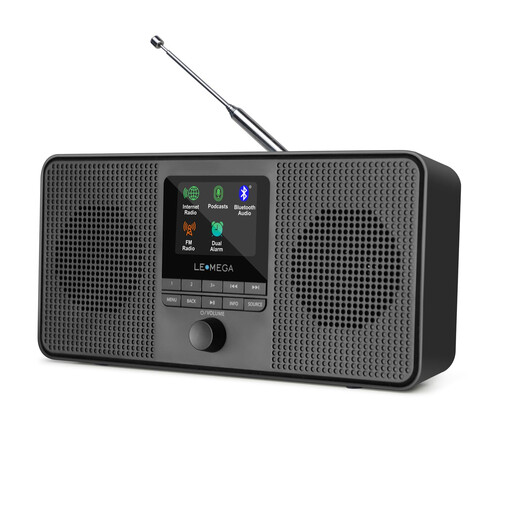
Why this product suits the profile: This model combines internet radio, podcasts, FM, Bluetooth and Spotify Connect. It is aimed at users who want to enjoy online content as well as traditional stations.
The reception methods are clearly separated: Wi-Fi for internet radio and podcasts, and FM for traditional reception. Four AA batteries are required for mobile use.
More than 30,000 stated internet radio stations, 40 internet and 20 FM presets, stereo speakers, plus mains or AA battery operation.
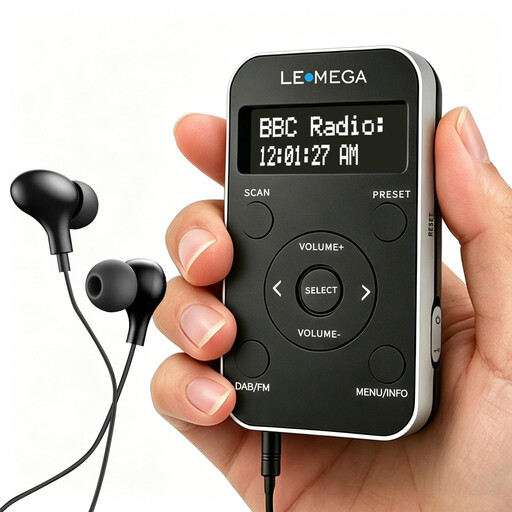
Why this product suits the profile: This pocket radio is designed for walks, commuting or sport. Weighing 65 g and measuring 90 × 51 × 16 mm, it fits into many pockets.
The product details list the required earphones as part of the package and explain that they serve as the aerial. A key lock is provided for sport and transport.
Integrated 1000-mAh battery with a stated runtime of up to 12 hours, USB-C charging, 40 presets and dimmable LCD.
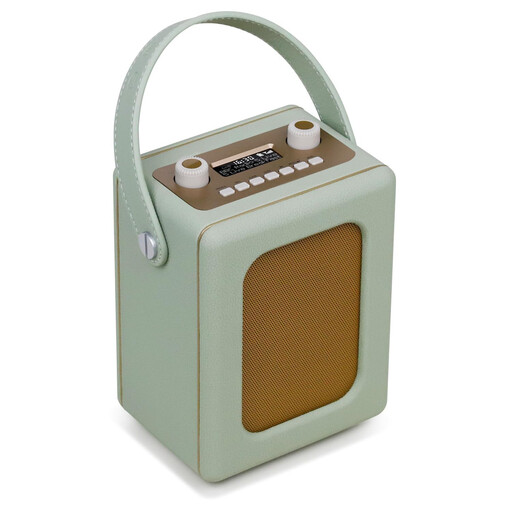
Why this product suits the profile: This retro radio combines a classic casing with DAB+, FM, Bluetooth and alarm functions. It is better suited to a permanent spot than to being carried in light luggage.
The weight of 960 g and operation with four AA batteries are clearly stated. The lack of water protection clearly limits outdoor use.
Stated battery life of up to 20 hours, 60 presets, 5-watt speaker output, Bluetooth and dual alarm.
We have compiled a complete, regularly updated list of products that fully meet these strict selection criteria and the safety regulations applicable in the EU.
When you switch the radio on, the automatic station scan starts first. Fully extend the aerial, then choose a location with as little interference as possible from thick walls or metal surfaces. You can then save important stations to the preset buttons.
For Bluetooth, put the radio into pairing mode, activate Bluetooth on your smartphone and select the device shown. Internet radio also requires a Wi-Fi connection. If you are using a pocket radio with a headphone cable, avoid knotting or sharply bending the cable, as it may serve as the aerial depending on the model.
DAB+ and FM use different transmission methods. DAB+ provides digital station lists and often additional programme information, but it requires adequate digital reception. FM can still be useful in certain locations. A device with DAB+ and FM leaves both options open to you.
Battery life depends on the model, volume, reception type and battery condition. The devices mentioned state runtimes of up to 12 or 15 hours with an integrated battery, depending on the model. A retro model with AA batteries specifies up to 20 hours. These are manufacturer’s figures and are not a guarantee for every usage situation.
When running from the mains, power consumption depends on the model and how long it is used. A battery-powered radio can be used away from a socket for shorter mobile listening sessions. Internet radio also uses data over Wi-Fi; with a fixed broadband connection, this is normally included in your existing internet tariff.