
Lieferung heute & morgen

Qualitätsgarantie

Willkommens-Angebote freischalten: KOSTENLOSE Lieferung | Bis zu 80 % RABATT | Kostenlose 30-Tage-JoyPlus-Testphase
App herunterladen
A DAB radio should work reliably when you are out and about, in the kitchen, in the garden or on your bedside table. In practice, however, reception and sound quality are not the only factors influencing a purchase. Often, it is the less noticeable details that become irritating later on: a battery that does not suit your usage pattern, a display that is difficult to read or an aerial solution that was overlooked when choosing a portable radio.
That is why it is worth looking at the technical specifications before buying, rather than relying on general marketing claims. The following criteria make it easier to compare DAB+ radios, pocket radios, battery radios and traditional devices with FM reception.
A radio with a carry handle and battery power may be portable, but weight is crucial for everyday journeys. A device weighing around one kilogram is better suited to moving between the kitchen, bedroom and garden. For walks or sporting activities, a pocket radio weighing just a few hundred grams is much more practical.
The power supply should also suit your daily routine. An integrated battery can be charged via USB, while a model with AA batteries remains independent of a power socket. However, you will need to plan for replacement batteries. Claims such as “up to 12 or 20 hours” also depend on volume, reception and operating mode, and should be treated as a guide.
A DAB+ radio needs a suitable aerial for digital reception. On some compact models, this is integrated into the supplied headphones. If you use different headphones or operate the device without connected earphones, reception may change.
Before buying, check whether the radio uses a retractable telescopic aerial, an integrated aerial or an aerial in the headphone cable. A DAB FM radio with an additional FM tuner provides an alternative if digital reception is not stable at your location.
Bluetooth, an alarm clock, a sleep timer and plenty of station presets can be useful. However, they do not replace fundamental information about operation, power supply and reception. A radio with Bluetooth, for example, does not automatically receive DAB stations through your smartphone. Bluetooth is generally used to transmit music or other audio signals from a mobile device to the radio.
For digital radio use, the device should support DAB+. DAB is the older designation or a general term; DAB+ is used in Germany for many current digital radio programmes. An additional FM tuner is useful if you also want the radio to receive local stations or programmes outside the available DAB coverage.
An automatic station scan should be available when you switch the device on for the first time. The actual range of stations depends on your location, the building structure and the direction of the aerial. Reception may be limited in basements, heavily shielded rooms or remote areas.
For a battery radio, three specifications are particularly important:
When buying a battery-powered retro radio, check whether the required AA batteries are included. A mains adapter can make stationary use easier. For use in the garden, it is also important to note that the device is not automatically waterproof simply because the product information does not say so. Unless water resistance is expressly stated, it should be protected from rain and moisture.
An easy-to-read display typically shows the station name, time and other programme information. Adjustable brightness is useful in the bedroom, as it makes the display less noticeable at night. For everyday use, direct-access buttons and station presets make it easier to access programmes you listen to frequently.
Depending on the model, there may be 20, 40 or 60 presets available. The number alone says little about how easy the radio is to operate. What matters is whether your favourite stations can be accessed quickly and whether the scanning process is logically structured.
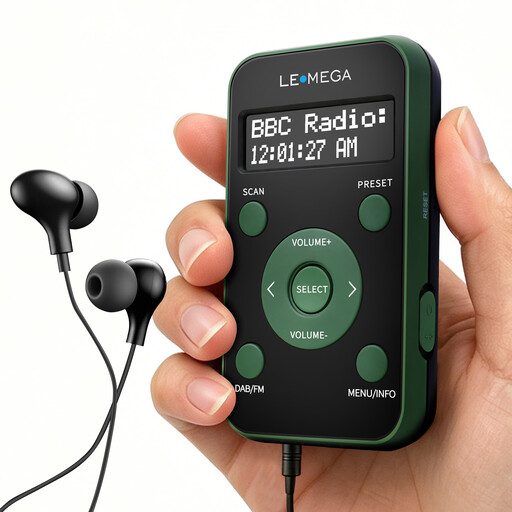
Why this product suits the profile: According to the product information, this compact pocket radio weighs 65 g and measures 90 × 51 × 16 mm. It is designed for users looking for DAB+, FM and a rechargeable battery in a small device.
The specifications clearly list DAB+/DAB and FM, an automatic station scan and 40 presets. The supplied earphones also serve as the aerial, so this should be taken into account when using the radio.
Integrated 1,000-mAh battery, USB-C charging port, LCD display with adjustable brightness and key lock.
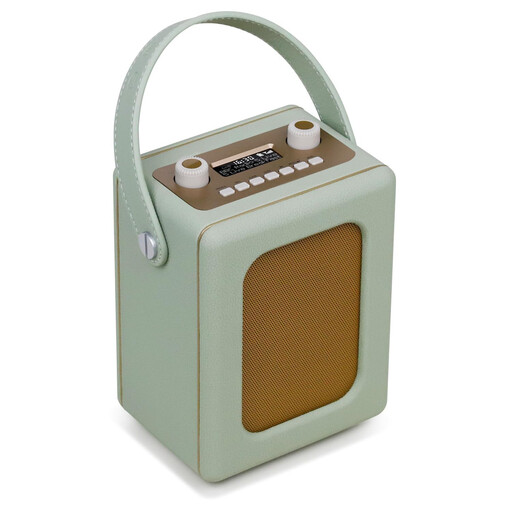
Why this product suits the profile: This retro radio combines DAB/DAB+, FM, Bluetooth and a large LED display. It is suitable for stationary use in the living room, bedroom or kitchen, and can be taken with you when needed.
The features are clearly specified: 60 presets, a headphone socket, two alarm times and a sleep timer. Four AA batteries are required for use away from home; according to the product information, these are not included.
Large LED display, Bluetooth, music and speech EQ modes, plus mains operation with the supplied adapter; stated battery life of up to 20 hours.
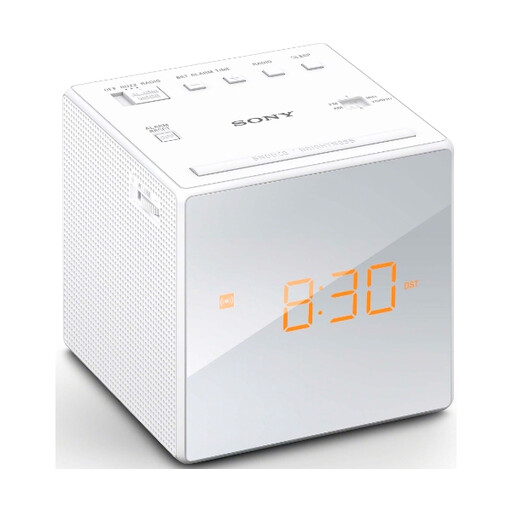
Why this product suits the profile: This compact clock radio is designed for a bedside table or desk and focuses on the time, alarm and FM and AM reception. It is an option for users who do not need a digital radio.
The product information explicitly identifies an analogue FM/AM tuner. This avoids any confusion with a DAB radio. Buyers can decide specifically whether FM and AM are sufficient for the intended location.
LED display with adjustable brightness, alarm function, mains operation and battery backup for the clock or alarm function.
We have put together a complete, regularly updated list of products that fully meet these strict selection criteria and the safety regulations applicable in the EU.
An automatic station scan usually starts when you switch the radio on. The aerial should be fully extended, or the supplied headphones should be connected if they also serve as the aerial. You can then save the available programmes to the station presets.
Battery life depends on battery capacity, volume, reception and display use. According to the product information, the LEMEGA PR1 offers up to 12 hours. Devices with AA batteries can also run for different lengths of time depending on the battery type and usage. These figures should therefore be understood as manufacturer specifications under particular conditions.
A compact battery radio uses comparatively little energy while charging. With a mains power supply, most of the energy is used during operation. If you use the radio regularly, choose between a rechargeable battery, AA batteries and continuous mains operation according to your daily routine. A sleep timer can help limit unnecessary running time in the evening.