Music listeners at a shared desk
You want to listen through wired headphones on your desktop PC, while keeping volume and desk space under control in a shared workspace.


First, choose a model that matches the connection on your wired headphones, then look for volume controls that work well in a shared space. Not every pair of headphones needs particularly high amplifier power. If you also want to talk at your desk, you’ll need a suitable microphone input too. Set the volume low before connecting your headphones or changing the gain.
You want to listen through wired headphones on your desktop PC, while keeping volume and desk space under control in a shared workspace.
You want to check that the connections and power specifications of a DAC amplifier are right for your existing headphones.
You want to use a microphone at the same desk and need to distinguish between an analogue microphone input and an XLR audio interface.
First, check that your headphones are compatible with the output. Then consider how easy the controls are to use at a shared desk, whether you need a microphone input, and how much room the device and its power supply will take up.
| What matters | What to check before buying | Who is it important to? |
|---|---|---|
| Volume and controls | Check that the volume control is easy to reach and find out which control adjusts the output you’re using. If the gain is switchable, turn the volume down before changing it. | If I often need to adjust the volume at a shared desk, I want to do so directly and in a controlled way. Around 37% of consumers prioritise ease of use and level control. |
| Headphone connection | Check that your headphone plug matches the output. Compare power ratings only at the same load and with the same type of output; a 4.4 mm output won’t necessarily work with every cable. | If I want to keep using my existing wired headphones, I need a compatible connection and a level that suits me. Around 27% of consumers prioritise headphone connections and drive capability. |
| Microphone and calls | Check the type of microphone you have and which input it needs. A headphone output isn’t a microphone input; an XLR microphone needs a suitable XLR input. | If I want to listen to music and use a microphone at the same desk, the device must match its plug and connection type. Around 18% of consumers prioritise microphone integration. |
| Space and power supply | Check the device’s dimensions, the outputs you need and how it’s powered. A compact USB device and a desktop model with a separate power supply take up space in different ways. | If desk space is limited, I want to allow for only the connections and power arrangements I actually need. Around 18% of consumers prioritise desk space and ease of setup. |
The iFi manual recommends setting the output level low when switching PowerMatch on the ZEN DAC 3. Germany’s Federal Environment Agency warns that exposure to sound that is too loud or lasts too long can damage your hearing.
The FiiO K11’s power ratings refer to different outputs and a specified load. A higher figure on its own doesn’t prove a general listening benefit.
First, check your headphone plug and compare power ratings only at the same load and with the same type of output.
A device designed for playback won’t necessarily accept a microphone signal. The Schiit Fulla E has a microphone input, while the 4th-generation Focusrite Scarlett Solo has an XLR input.
Note down your microphone’s plug type and check that the device has a suitable input.
According to its specifications, the FiiO K11 needs a separate 12-V/2-A power supply. When the iFi ZEN DAC 3 is set to “Fixed”, its rear output bypasses the volume control.
Plan where the power connection and cables will go, and check which control adjusts the output you’ll actually use.
FiiO offers both compact USB models and desktop DAC amplifiers with multiple outputs.
The Uno is described by its manufacturer as a compact desktop DAC, while the ZEN DAC 3 offers additional headphone and analogue outputs.
According to Creative, the Sound Blaster G8 is designed for setups with two USB audio sources and mixing.
According to the supplier, the Fulla E combines a DAC and headphone amplifier with an analogue microphone input.
The 4th-generation Scarlett Solo is an audio interface alternative if you need an XLR microphone and direct monitoring.
This selection includes a USB DAC for PC playback and an analogue AUX headphone amplifier alternative for PCs with a 3.5 mm audio output.
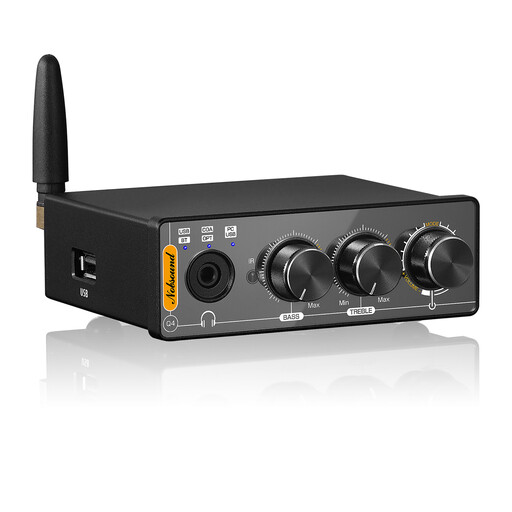 No image available
For USB playback from a PC when you also need an optical input or Bluetooth.
The product name lists an optical input, Bluetooth, 24-bit 192 kHz, tone controls and a remote control. The product information says the device needs a suitable external DC power supply; check what’s included before buying.
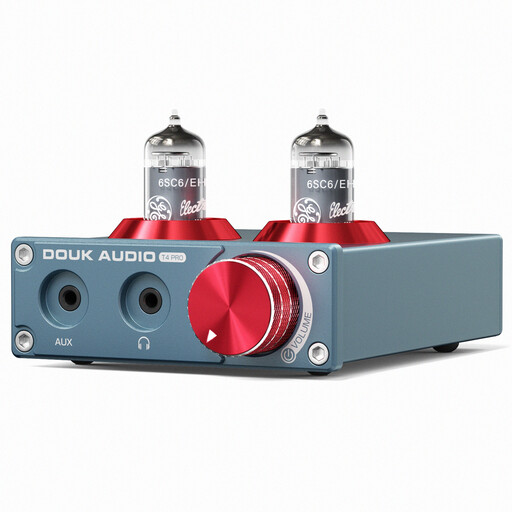 No image available
This is only a suitable alternative if your PC has an analogue 3.5 mm audio output and you don’t need a digital DAC input.
The product information lists 3.5 mm AUX and MM phono as analogue inputs, plus a 3.5 mm headphone output. The product information says the device needs a suitable external DC power supply; check what’s included before buying.
Only if you want to use a compatible microphone through that device. For listening to music alone, the headphone output is what matters. If you have an XLR microphone, an interface such as the 4th-generation Scarlett Solo is an alternative with different features.
Start with the volume set low. The iFi manual warns against switching PowerMatch on the ZEN DAC 3 without first setting a low output level. Germany’s Federal Environment Agency also warns that sound that is too loud or lasts too long can damage your hearing.
Not necessarily: Beyerdynamic points out that open-back headphones can leak sound, which may also be picked up by microphones. If other people are within earshot, consider the sound leakage separately; a DAC won’t change it.
When you buy from a business online, you generally have a 14-day right to cancel from the day you receive the goods. The Verbraucherzentrale (German consumer advice centre) notes that exceptions apply and that the terms of the specific purchase matter. If an item is faulty, statutory consumer rights against the seller are separate from a voluntary manufacturer’s warranty. The EU consumer portal states that new goods come with a minimum two-year legal guarantee.