If your computer is the audio source and its USB port provides enough power, a USB-powered DAC with a suitable headphone output can save you from using an extra socket. A desktop unit is a better fit if you need specific inputs or outputs, or an easy-to-reach control. For listening in different places, a battery-powered device may suit you, but it will need charging. For a fair comparison of recordings, keep the sound settings as consistent as possible and match the volume carefully.
Which type of device is right for you?
Comparing recordings at a desk with few spare sockets
If you use wired headphones with your computer and don’t want to add another mains adapter, check whether the DAC is also powered over USB. According to iFi audio’s manual, the uno is powered via USB-C at 5 V/0.5 A. FiiO’s K11 datasheet, by contrast, specifies an external 12 V/2 A DC power supply.
Listeners who need several connections
If you switch between headphones or audio sources, check that their plugs and connections match the device. Fosi Audio lists USB-C as the input and 3.5 mm and 4.4 mm outputs for the DS2-2024. The K11 from FiiO also has optical and coaxial digital inputs.
Comparing audio in different listening spots
If you don’t always listen in the same place, consider whether power from your source will be enough or whether a rechargeable device would better suit your routine. Chord Electronics describes the Mojo 2 as a portable, battery-powered device. A USB dongle such as the Fosi Audio DS2-2024, on the other hand, draws power through its USB connection.
What should you look for when buying?
A USB-C port doesn’t automatically mean the device is powered through it. Check the power supply, the connections you need and the settings for comparing recordings separately.
| What you need |
What to check before buying |
Who is it most relevant to? |
| Power without using an extra socket |
Check the power connection and requirements for the specific model against the USB power available from your source. |
If I want to listen to recordings on my computer without plugging in another power supply, I check whether USB also provides the power. Around 36% of consumers are likely to consider powering a device without an extra socket their top buying priority. |
| Controlled comparison of recordings |
Check whether sound modes can be turned off and the volume adjusted as needed; keep playback settings the same when switching between recordings. |
If I want to compare recordings as consistently as possible, I keep the sound mode and playback settings constant and match the volume carefully. Around 29% of consumers are likely to prioritise an unchanged listening comparison. |
| Suitable headphone and source connections |
Check the headphone plug, USB connection and any other inputs you need against the specifications for the exact model. |
If I want to connect my existing headphones or several audio sources, I check that the sockets and inputs are suitable first. Around 21% of consumers are likely to consider connection compatibility their top buying priority. |
| Listening in different places |
Consider whether power from your source will be available wherever you listen, or whether a battery-powered device would better suit your routine. |
If I want to listen in different places, I check whether the device is powered by its source or has a rechargeable battery. Around 14% of consumers are likely to consider being able to listen in different places their top buying priority. |
Mistakes to avoid
-
Assuming USB-C audio means USB-C also provides all the power
On the FiiO K11, USB-C transfers data. The K11 datasheet states that the device needs DC 12 V/2 A for power, so a USB audio connection won’t replace the external power supply.
Before planning to use it somewhere without a spare socket, check the power requirements in the specifications for the exact model.
-
Comparing recordings with different sound modes or volume levels
A different sound mode or volume level adds another variable to the comparison. The iFi uno has selectable EQ modes, while ITU recommendation ITU-R BS.1116-3 sets out controlled conditions for assessing small differences in audio.
Choose your playback settings before you start and keep them the same. Begin at a low volume and match the perceived loudness carefully.
-
Assuming two headphone sockets offer independently adjustable listening levels
Chord Electronics says the Mojo 2 allows simultaneous listening through its 3.5 mm and 4.4 mm outputs. However, this doesn’t confirm that you can adjust the volume separately for each output.
If two listeners need different volume levels, check specifically whether the device offers this feature.
-
Confusing a voluntary guarantee with your statutory rights
EU consumer information distinguishes an additional voluntary guarantee from your rights against the seller if goods are faulty.
Check the guarantee terms and your statutory rights separately. A voluntary guarantee does not replace your legal rights.
Key brands at a glance
These examples show different connection and power-supply options across individual product ranges; they are not blanket recommendations for the brands concerned.
iFi audio
The compact uno combines USB-C audio and power with a 3.5 mm headphone output and a physical volume control.
- According to iFi audio’s manual, the uno is powered via USB-C at 5 V/0.5 A.
- The manual says a driver download is needed for use with a PC. Bear the selectable EQ modes in mind if you want to compare recordings without changing the sound.
FiiO
The K11 is a desktop unit for listeners who need optical or coaxial digital inputs and a choice of headphone connections, as well as USB audio.
- The K11 datasheet lists 6.35 mm and 4.4 mm outputs, gain settings, and optical and coaxial inputs.
- The datasheet specifies an external 12 V/2 A DC power supply, so you’ll need an extra socket.
Fosi Audio
The DS2-2024 is a USB-C dongle with 3.5 mm and 4.4 mm outputs.
- Fosi Audio lists volume buttons and included USB adapters.
- The two output types aren’t specified as independently adjustable comparison channels. The manufacturer’s power and sound specifications aren’t independent evidence of an advantage with particular recordings.
Chord Electronics
The portable Mojo 2 is a battery-powered option for listening in different places and connecting several digital sources.
- The manufacturer’s current website lists USB, optical and coaxial inputs, along with 3.5 mm and 4.4 mm headphone outputs.
- The battery needs charging. The listed outputs don’t confirm independent volume control for each one.
AudioQuest
The DragonFly Cobalt is a compact USB DAC and headphone amplifier for compatible computers or mobile devices.
- AudioQuest lists a USB-C adapter and a maximum resolution of 24 Bit/96 kHz.
- The format specification doesn’t prove an audible benefit with recordings you already own. Before buying, check that the connection and headphone plug will work with your devices.
Joybuy product selection
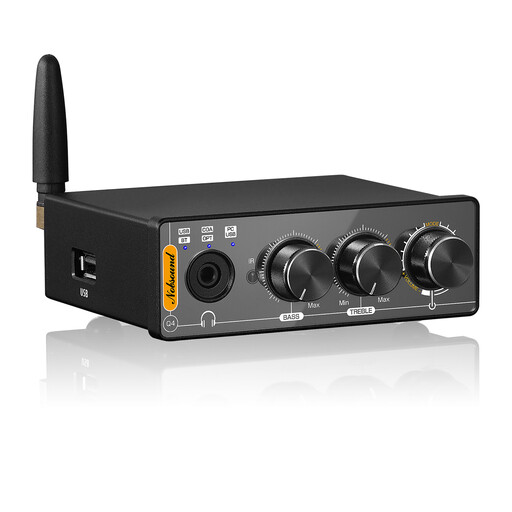
The product shown here is a USB audio DAC with an optical input and an external DC power supply. So, even with USB audio, you’ll need to allow for a mains socket.
 No image available
Nobsound Q4 USB Audio Gaming DAC Converter
If your PC setup has an optical audio source and wired headphones, the Q4 may be worth considering for its optical input. However, its external DC power supply needs a mains socket.
Features listed in the product name: optical input, 24-bit/192-kHz specification, treble and depth controls, and remote control.
View at Joybuy
Frequently asked questions
Is a USB port always enough to power a device without a mains socket?
No. According to its manual, the iFi uno can be powered via USB-C at 5 V/0.5 A. The FiiO K11 datasheet specifies DC 12 V/2 A for power, while USB-C transfers data. Also check whether the specific USB port can supply enough power for the device you’ve chosen.
Can I connect two pairs of headphones at once to compare recordings?
Chord Electronics says the Mojo 2 allows simultaneous listening through its 3.5 mm and 4.4 mm outputs. This doesn’t confirm separate volume control. If two listeners need different volume levels, check specifically whether the device offers this feature.
How can I set up a fair and careful listening test?
Start at a low volume and keep your headphones, sound mode and playback settings as consistent as possible; match the perceived loudness carefully. ITU recommendation ITU-R BS.1116-3 emphasises controlled conditions when assessing small differences in audio. Prolonged exposure to high sound levels can damage your hearing.
What rights do I have when buying online from a trader?
For a distance contract where the rules apply, you generally have a 14-day right to cancel from the day you receive the goods; exceptions and possible return costs should be taken into account. According to EU consumer information, if goods are faulty, you have a statutory right to a remedy from the seller for at least two years from receipt. This is separate from any voluntary manufacturer’s guarantee.
What should I know about product compliance for the German market?
The European Commission explains that manufacturers are responsible for identifying the EU rules that apply to a specific product and assessing its conformity; a CE mark must be applied where required. Check the details for the exact version being offered, as a general model description doesn’t automatically confirm that the specific product listing is compliant.


