For comparing existing files on your computer, a USB DAC with a headphone amplifier is a good option if the built-in headphone output isn’t suitable for your wired headphones. Check the connection, volume control and power specifications for the output you’ll actually use. If you want to make your own recordings, an audio interface is a better fit; for listening together at separate volume levels, an analogue headphone splitter is the right solution. Match playback levels and start at a low volume after changing the device or gain.
Which solution is right for you?
Comparing recordings on your own laptop
If you’re listening to existing files one after another, you’ll need a suitable headphone connection, easy-to-control volume and consistent playback conditions. The specifications from FiiO and Fosi Audio can help you understand the connections and controls on specific models.
Listening with demanding wired headphones
Before you buy, check that the output, connector and gain suit your existing headphones, and that the power specifications apply to the output you’ll actually use. FiiO, iFi audio and Focusrite provide model-specific details about connections and outputs.
Making recordings or listening together
If you want to record a microphone or instrument, look for inputs and monitoring. If several people want to listen to the same source at once and control their volume separately, the right distribution features are essential. Focusrite describes the recording features of the Scarlett Solo 4th Gen; Behringer specifies separate level controls for the HA400.
What should you look for when buying?
For comparing recordings in a student room, it’s worth first checking the volume controls and whether the device suits your existing headphones. Extra inputs or several individually controlled outputs only become important if you’re recording or listening with others at the same time.
| What matters |
What to check before buying |
Who is it important to? |
| Comparing volume levels |
Volume control and gain settings; keep settings consistent during comparisons and start at a low volume after making changes. |
When I assess recordings one after another, I want to control the volume and avoid accidentally comparing different levels. Around 36% of consumers put controlled volume first. |
| Connecting headphones |
Match the device’s connector and output; compare power specifications only for the stated load and the relevant output. |
If I want to keep using my wired headphones, I check that the connection and amplification suit those specific headphones. Around 29% of consumers focus on getting the right fit for their headphones. |
| Space and power supply |
Check the dimensions, power supply requirements and what’s included with the specific version. |
On a small desk, I want to know whether the device, power supply and cables will fit my set-up. Around 21% of consumers are most concerned about the space required and the extra effort involved in setting it up. |
| Recording or listening together |
For recording, check the inputs and monitoring; for listening together, check the number of outputs and whether they have separate level controls. |
If I want to record myself or listen to the same source with others, I need the right extra feature, not just a headphone output. Around 14% of consumers put this first. |
Common buying mistakes
-
Relying on a power rating without checking the connection and load
Output power can vary depending on the socket and the stated headphone load. So a single figure won’t tell you whether an amplifier is suitable for your headphones.
Only compare figures for the output you can use and under similar conditions. Also check the specifications for your particular headphones.
-
Looking only for multiple sockets when listening together
A headphone amplifier with several sockets isn’t automatically a splitter with individually adjustable levels. According to the manufacturer, the Behringer HA400 accepts an analogue stereo source and provides up to four separately controlled headphone outputs.
If several people will be listening at once, check that each level can be adjusted individually and that your source can be connected via an analogue input.
-
Changing tone controls or gain between recordings without noticing
The bass and treble controls on the Fosi Audio Q4, as well as XBass+ and switchable gain on the iFi audio ZEN DAC 3, can change the conditions of your comparison.
Keep the settings consistent throughout the comparison. Start at a low volume after changing the gain.
-
Assuming similarly named versions are identical
FiiO E10K and E10K-Type C are different model names, with different USB connections and supported sample rates. Power supplies and included accessories can also vary between versions of other devices.
Check the full model name, connections, power supply and what’s included with the version on offer.
Brands and model ranges to consider
FiiO
The E10K, E10K-Type C and K11 ranges offer different USB and connection configurations.
- For the K11, FiiO specifies three gain settings and headphone outputs with different connectors.
- According to FiiO, the K11 requires an external 12-V/2-A power supply. The E10K and E10K-Type C are different versions.
iFi audio
The ZEN DAC 3 is a USB-C DAC with 6.35-mm and 4.4-mm headphone outputs, as well as switchable gain.
- The manual describes USB power.
- A separate DC power supply is not included, according to the manual. Keep XBass+ in mind when comparing with unchanged settings.
Fosi Audio
According to the manufacturer, the Q4 combines USB, optical and coaxial digital inputs with a 3.5-mm headphone output and RCA outputs.
- Bass and treble controls let you adjust the playback settings.
- For a fair listening comparison, keep the controls in the same positions; this doesn’t establish an independently verified improvement in sound quality.
Focusrite
The Scarlett Solo 4th Gen is a USB audio interface for anyone who wants to record a microphone or instrument as well as monitor audio.
- Focusrite specifies a separately controlled headphone output, as well as microphone and instrument inputs.
- For this specific model, Focusrite specifies 32 mW at 33 Ω, 22 mW at 300 Ω and an output impedance of 50 Ω. Check whether it suits your headphones rather than applying these figures to other models.
Behringer
The HA400 works with an existing analogue stereo source when several people want to listen at the same time.
- According to Behringer, you can connect up to four pairs of headphones, each with its own level control.
- The HA400 isn’t a USB DAC; it needs a suitable analogue source and a power supply.
Suitable products on Joybuy
This selection includes a standalone analogue headphone amplifier for set-ups that already have an analogue output on the computer. It does not replace a USB DAC.
 No image available
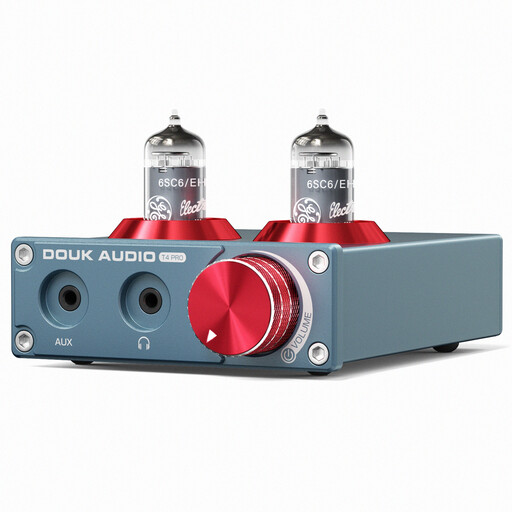
Douk Audio T4 PRO Mini Valve Tube MM Phono Amplifier
Worth considering if your computer already has an analogue 3.5-mm output; if you want digital playback without this output, you’ll need an additional DAC.
The product description lists an AUX input, a 3.5-mm headphone output and a continuously adjustable volume control.
The specifications state 150 mW at 32 Ω and support for headphones with an impedance of 32–300 Ω. According to the product details, the device requires an external 12-V power supply.
View on Joybuy
Frequently asked questions
How do I set up a comparison of existing recordings?
Where possible, use the same headphones and playback settings, match the levels before listening and avoid changing tone controls between tracks without noticing. The International Telecommunication Union describes strictly controlled conditions for formal subjective audio assessments; that doesn’t automatically make a listening comparison in a student room the same kind of test.
Do I need an audio interface if I’m only listening to files?
Not just for the recording inputs: the Focusrite Scarlett Solo 4th Gen has microphone and instrument inputs for recording. For listening alone, what matters is whether the headphone output suits your existing headphones.
What should I bear in mind when connecting or adjusting the device?
Check the connector and power supply requirements for the specific device, and start at a low volume. The iFi audio ZEN DAC 3 manual advises caution before switching the PowerMatch setting. The German Environment Agency recommends listening to music through headphones at a moderate volume.
What are my rights if a product is faulty or I buy online?
When you buy a new item from a business seller, your statutory rights cover faults; these are separate from a voluntary manufacturer’s guarantee. For a standard online distance purchase, you generally have 14 days from receiving the goods to cancel. The Verbraucherzentrale explains the difference; check the seller’s status and the terms of the specific offer.


