What should you look for when choosing one?
The German Environment Agency describes airers and washing lines as the most energy-efficient way to dry clothes. For heated appliances, power consumption and how long you use them are also important factors to consider.
| Priority |
What to check before buying |
Who is this most important to? |
| Quick drying time |
The number and spacing of usable hanging bars, as well as the heating technology; a temperature rating doesn’t guarantee a particular drying time. |
If I only have a few damp items to dry before wearing them again after my commute, the time available matters. Around 29% of shoppers would consider drying time their top priority when buying. |
| Indoor humidity |
Check whether you can ventilate the room adequately where you plan to put the airer; heat from the airer won’t remove moisture from the room. |
When drying clothes indoors, I want to be able to get rid of the moisture, rather than just warm the washing. Around 23% of shoppers would put indoor humidity first. |
| Floor space and hanging capacity |
Compare the airer’s dimensions when set up and the number of usable hanging bars with the space available, not just its folded size. |
If space is limited in my home, the airer needs to fit when opened and hold the items I need to dry. For around 18% of shoppers, the space it takes up would be their main concern. |
| Fabric care |
Check the care label on each item and the appliance instructions; a temperature rating doesn’t mean every fabric is suitable. |
For delicate underwear, I want to follow the care instructions for that particular item. Around 18% of shoppers would put fabric care first. |
| Energy use |
Check the stated power consumption and how long you expect to use the airer, then compare this with air-drying without electricity. |
If the washing can wait, I want to weigh up whether the heating function is worth the extra electricity. Around 12% of shoppers would make energy use their main buying priority. |
Airers for quicker and longer drying times
This selection includes a foldable heated airer as well as non-electric drying options for when you have more time.
 No image available
Foldable heated airer, 45–55 °C
A good option if you’re looking for a heated airer and its stated dimensions fit the space you have in mind.
Specifications include 230 W and 45–55 °C, with dimensions of 144 × 53 × 96 cm.
Check the care instructions for each item and read the appliance manual. For a mains-powered appliance, also check the rated voltage and the labelling and conformity information for the specific model before buying.
Joybuy
 No image available
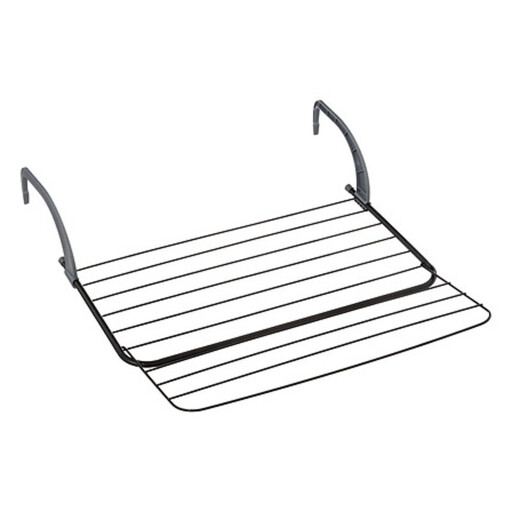
5five extendable airer, 60 × 55 × 13 cm
A non-electric drying option for when you don’t need your washing again straight away.
Specifications include 7 m of drying space and adjustable clip-on arms.
Before hanging anything on it, make sure the airer is securely attached to a suitable, stable surface.
Joybuy
 No image available
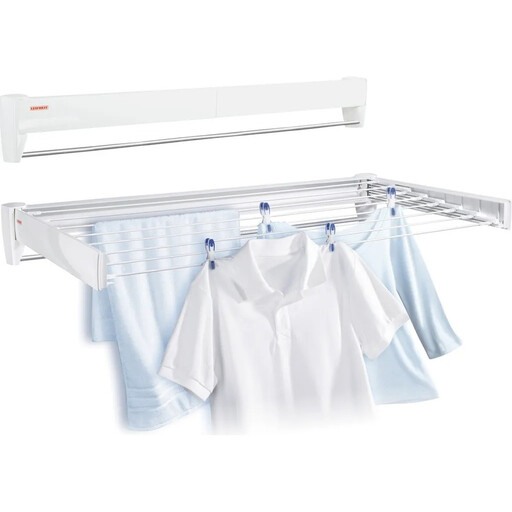
Leifheit Telegant 81 Protect
This wall-mounted option may suit you if you have a suitable wall and don’t need the extra drying time provided by a heating function.
Specifications include 8,10 m of drying space and dimensions of 103 × 53 cm when open.
Make sure it’s securely fitted to a suitable wall.
Joybuy
 No image available
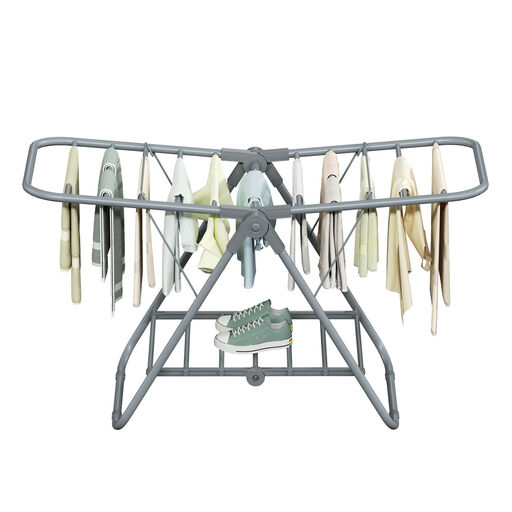
SONGMICS foldable airer with two wings
A non-electric option for smaller items when you have enough time to let them air-dry.
The two wings can be adjusted to three heights; the maximum load capacity is stated as 10 kg.
Whether it’s suitable depends on whether your washing has enough time to dry before you need it again.
Joybuy
Frequently asked questions
Can I put a heated airer in the bathroom to dry clothes?
Don’t assume it’s suitable just because it’s described as a ‘towel rail’. The VDE advises keeping electrical appliances away from showers and baths. Check the instructions, IP rating and recommended location for the specific appliance.
Do I still need to ventilate the room when drying clothes indoors on a heated airer?
Yes. The German Environment Agency recommends paying particular attention to regular ventilation when drying damp washing indoors; the heating function won’t remove the moisture from the room by itself.
How do I work out the running costs?
Multiply the power rating in kilowatts by the actual number of hours the appliance is on, then multiply by your electricity price per kilowatt-hour. For the HOMCOM 850-032, rated at 100 W, running continuously at its stated power would use 0,1 kWh per hour. This doesn’t tell you how long the washing will take to dry.
What labelling should I check on a new electric model?
The Low Voltage Directive applies to new, ready-to-use mains-powered appliances with a rated voltage between 50 V and 1.000 V AC. The Federal Institute for Occupational Safety and Health describes its scope. Under Directive 2014/35/EU, as consolidated on 30 May 2026, the manufacturer affixes the CE marking once conformity has been demonstrated. Check that the information relates to the specific model; this requirement doesn’t apply to non-electric airers.
Does ‘do not tumble dry’ mean heated bars are suitable?
No. This symbol refers to tumble dryers and doesn’t specifically mean that the item can be placed against heated bars. Always follow the care instructions for the item and the appliance manual.


