
Lieferung heute & morgen

Qualitätsgarantie

Willkommens-Angebote freischalten: KOSTENLOSE Lieferung | Bis zu 80 % RABATT | Kostenlose 30-Tage-JoyPlus-Testphase
App herunterladen
A steam cleaner can loosen grease, soap residue and stuck-on dirt using hot steam. To make sure your purchase is genuinely practical at home, though, don’t focus only on wattage and the number of accessories. Tank capacity, steam pressure, heat-up time, cable length and suitability for different surfaces are important too.
A power rating of 1,500 or 2,000 watts mainly describes the heating power. On its own, it doesn’t tell you how long the appliance can produce steam or how easily you can control the output. A steam cleaner with a short heat-up time can be convenient for everyday use, but it still needs a tank large enough for longer cleaning sessions.
Figures such as 3.5 or 5 bar sound impressive. In practice, it’s just as important to know whether the pressure stays consistent, whether there are several steam settings and which nozzle is used. A high-pressure steam cleaner isn’t automatically suitable for every surface. Heat and moisture can damage delicate plastics, untreated wood, certain types of laminate and delicate fabrics.
A large selection of attachments is only useful if it suits your home. For a steam cleaner for the kitchen and bathroom, a jet nozzle, round brush and grout brush are handy. If you’re looking for a steam cleaner for windows, you’ll need a suitable window attachment or squeegee. For upholstery and car interiors, fabric attachments, an extension hose and narrow nozzles are more useful than a large number of almost identical brushes.
Compact handheld models often have a tank capacity of around 250 to 550 millilitres. This keeps the weight down and makes spot cleaning easier, but you may need to refill the tank more often. Models with a capacity of 1.1 to 1.9 litres are better suited to floors, several rooms or longer cleaning sessions. Bear in mind that the stated steaming time depends on the setting selected and can be significantly shorter at maximum power.
Steam pressure is measured in bar, while steam temperature is given in degrees Celsius. Always consider these figures alongside the steam settings. Multiple settings make it easier to adjust the steam for tiles, glass, grout or selected fabrics. A chemical-free steam cleaner uses water only; however, steam still isn’t a substitute for checking whether a surface can withstand heat and moisture.
A heat-up time of 15 to 25 seconds is handy for quick jobs. Larger appliances may take three to four minutes. Also check the cable and hose lengths, and make sure the controls are easy to understand. A child safety lock, overheat protection and a securely sealed tank are useful safety features. Never open the tank while the appliance is running or still under pressure.
Before using the appliance for the first time, check the care instructions from the manufacturer of your flooring, furniture or vehicle. Never direct steam at people, animals, sockets or electrical appliances. For delicate materials, test the cleaner on an inconspicuous area first.
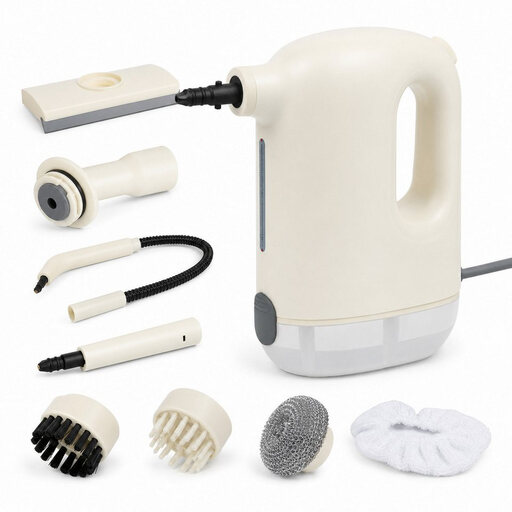
Why it suits this profile: This compact appliance is designed for individual jobs in the kitchen, bathroom and around windows. It has a transparent 300 ml tank.
The specifications give both the 3.0 bar pressure and the tank capacity, making it easier to assess performance than by looking at wattage alone.
1,200 W, 3.0 bar, up to 120 °C according to the product information, and an 8-piece accessory set.
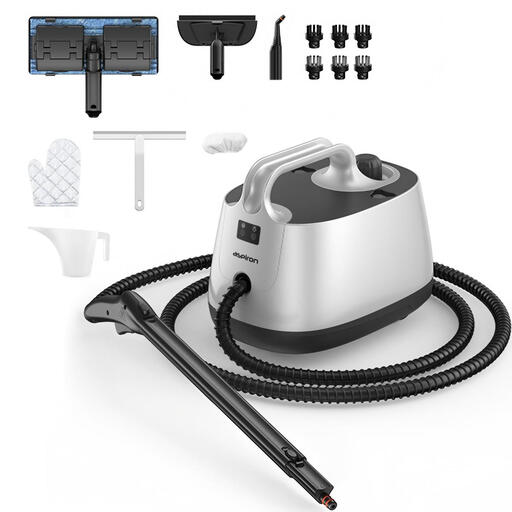
Why it suits this profile: This model is for households looking to clean floors, windows, grout, upholstery and selected areas of their vehicle with one appliance.
Its suitability is explained through specific attachments rather than vague claims about versatility. Even so, test delicate fabrics first.
1,500 W, up to 4 bar, a 1.5-litre tank and 21 accessories according to the product description.
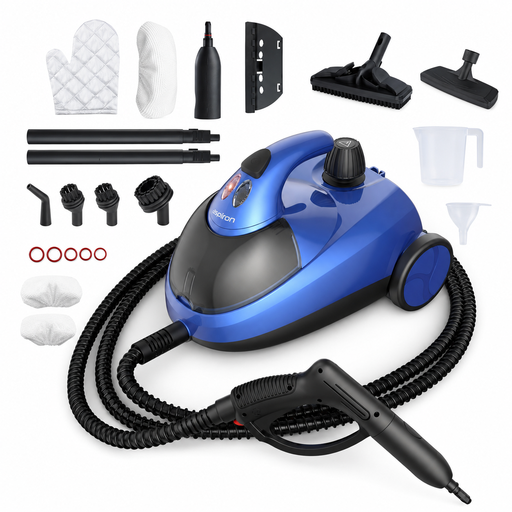
Why it suits this profile: The large tank and task-specific attachments are designed for larger households and regular cleaning.
With a 1.5-litre tank, the emphasis is on reach rather than a quick heat-up time. The product description also recommends testing materials on an inconspicuous area.
2,000 W, up to 4 bar, up to 45 minutes of steaming and 13 accessories according to the product information.
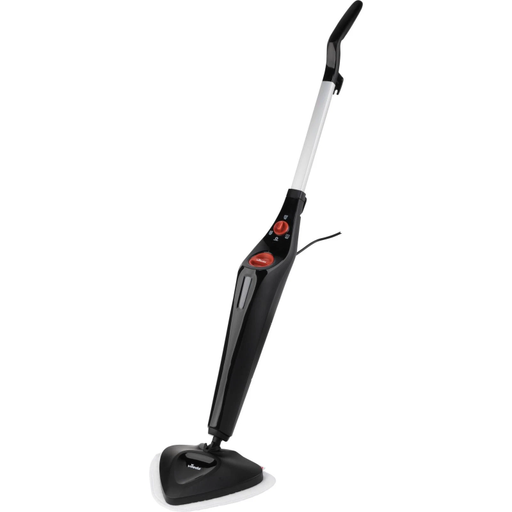
Why it suits this profile: This steam mop is designed for sealed hard floors and tiles, and can be used with a carpet glider.
Its uses are more clearly defined than those of a fully equipped handheld steam cleaner. That way, you won’t pay for attachments you don’t need.
1,550 W, a 0.4-litre tank, around 15 minutes’ running time and a carpet glider according to the product description.
We’ve put together a complete, regularly updated list of products that meet these strict selection criteria and fully comply with the safety regulations in force in the EU.
Always use water in accordance with the instruction manual. Hard tap water can encourage limescale build-up; the manufacturer will specify whether filtered or distilled water is suitable. Empty the tank after each use and let the appliance cool down completely. Clean the nozzles, cloths and brushes regularly.
Running costs mainly comprise electricity, water and, where necessary, replacement pads. Wattage alone doesn’t determine the cost: what matters is how long you use the cleaner, how often it heats up and which steam setting you choose. Store the appliance properly, avoid running it dry and follow the maintenance instructions to help extend its lifespan.
According to product information, some compact models are ready to steam in around 15 to 25 seconds. Appliances with larger tanks often take three to four minutes. The exact time depends on the heating power, design and amount of water in the tank.
A steam cleaner for windows can be used with a suitable squeegee. For upholstery, fabric attachments and a low steam output are a good choice. First, test a hidden area to check for colour changes, moisture and material compatibility.
The cost depends on power consumption, how long you use it and your electricity tariff. A 1,500-watt appliance uses 1.5 kilowatt-hours for one hour of heating alone, in theory. In practice, the heater switches off at intervals, depending on the model and how you use it.