Detail photographers
You want to capture seeds and fine textures at a much larger scale, and you’re happy to choose a camera and a suitable close-up lens as a combination.


If you want to switch between a view of the path and a close-up without changing lenses, a rugged compact camera with a macro mode is a practical option. According to the manufacturer, the OM SYSTEM Tough TG-7 can focus from 1 cm away in Microscope mode. For much larger images of individual seeds, a mirrorless camera paired with a suitable macro lens is a better choice: OM SYSTEM and Nikon specify a 1:1 reproduction ratio for certain lenses, but the TG-7’s 1 cm focusing distance does not mean the same thing. In windy conditions, taking a single shot is often easier than focus stacking, which requires several images of the same subject.
You want to capture seeds and fine textures at a much larger scale, and you’re happy to choose a camera and a suitable close-up lens as a combination.
You want to switch between dandelion clocks and the woodland path without changing lenses as you go; portability and ease of access matter most.
You head out in damp weather too, and want to check the protection ratings for the specific camera and, where applicable, the lens.
First decide whether you want individual seeds to appear large in the frame or to capture the dandelion clock with the woodland path around it. Then consider handling, shooting conditions and what’s actually included in the package.
| What matters to you | What to check before buying | Who this matters most to |
|---|---|---|
| Capturing tiny seeds at a large scale | Compare the maximum reproduction ratio, focusing distance and lens mount for the specific camera-and-lens combination. | If you want to highlight individual seeds and fine details, the lens’s close-up performance is key. Around 36% of consumers put magnifying fine details first. |
| Portability and protection | Check the total weight with the lens, as well as the protection ratings for the camera body and lens. | If you want your camera close to hand on a walk, look for a combination that’s easy to carry and check its protection ratings. Portability and weather protection are the top priorities for around 29% of consumers. |
| Shade or movement | Check how to adjust focus and exposure, and what features the specific camera-and-lens combination offers. | If the dandelion clock is moving in the wind or the light is changing in the woods, you’ll want to be able to get the shot you need without relying on a series of images. Around 21% of consumers prioritise these shooting conditions. |
| What’s included in the package | Check which lens is included, the lens mount and whether you’ll need any additional components. | If you want to use the camera for close-ups straight away, it’s essential to know exactly which parts are included in the offer. For around 14% of consumers, what’s in the box and the system components they need are the main considerations. |
A focusing distance of 1 cm or less doesn’t mean that a subject appears on the sensor at a 1:1 reproduction ratio. You’ll also need to get very close to delicate seeds to focus from such a short distance.
Check how large the subject appears in photos taken with the specific model. If individual seeds matter to you, compare the lens’s stated maximum reproduction ratio.
A suitable macro lens isn’t automatically included with a mirrorless camera. For example, the documented Nikon Z50II standard kit comes with a 16–50 mm zoom lens, not the separately described NIKKOR Z MC 50 mm 1:2,8.
Check exactly what’s included, the lens mount and any additional components you’ll need for the close-ups you want to take.
A protection rating for the camera body doesn’t automatically tell you how well the attached lens is protected.
Check the ratings for both components in the combination you’ll actually be using.
The Tough TG-7 is a compact camera with a fixed lens; the OM-5 Mark II is a mirrorless camera for which you’ll need to check the macro lens separately.
The EOS R50 lets you capture both views of the path and close-ups with the EOS R system; make sure the lens suits the specific offer.
The Z50II is available in a documented standard zoom kit; the NIKKOR Z MC 50 mm 1:2,8 is a separate macro lens option.
The α6700 is a mirrorless camera, and you can choose an APS-C E-mount macro lens separately.
The following action and POV cameras are listed as portable options for capturing views of the path and outdoor scenes. Their product details don’t confirm that they can focus on individual seeds for macro photography, so check this for the specific model before buying.
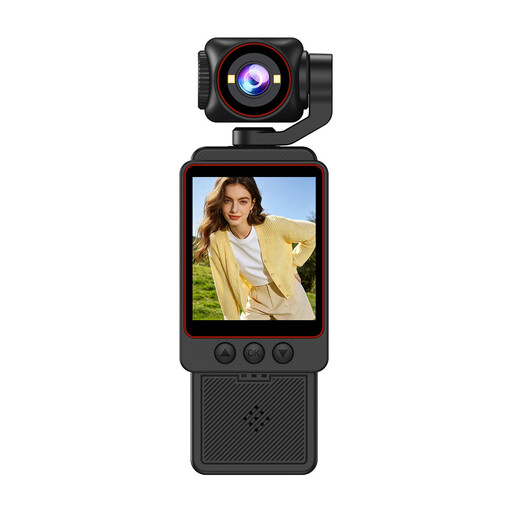 Image unavailable
This portable POV camera could be handy for capturing different angles along the path; the product details don’t confirm that it can focus on individual seeds for macro photography.
The product is described as a 2K camera with a 360° rotating lens.
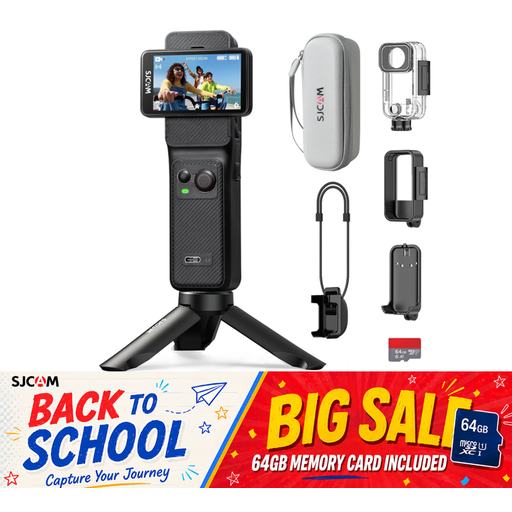 Image unavailable
If you want to capture a wider view of the path as well as your subject, the specified wide-angle lens is worth considering; it isn’t confirmed as suitable for close-ups of individual seeds.
The product description lists a 154° wide-angle lens, 6-axis stabilisation and a 64 GB card. The stated water resistance to 30 m applies when used with the waterproof housing.
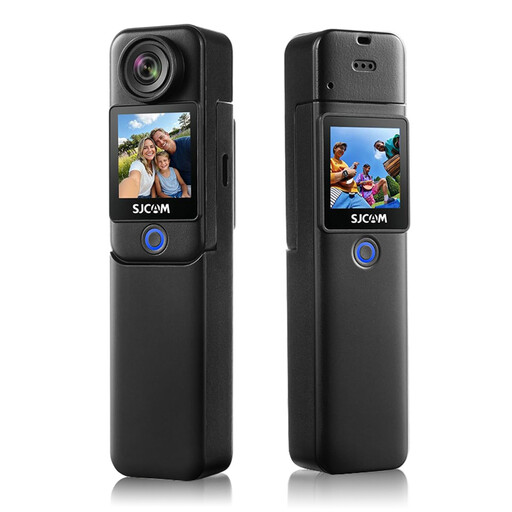 Image unavailable
Described as an outdoor and travel camera, this option can capture views of the path; check separately whether it can focus closely enough on individual seeds.
The product description lists 20 MP photos, a 154° wide-angle lens, 6-axis EIS and a 1.3-inch touchscreen. The stated water resistance to 30 m applies when used with the waterproof housing.
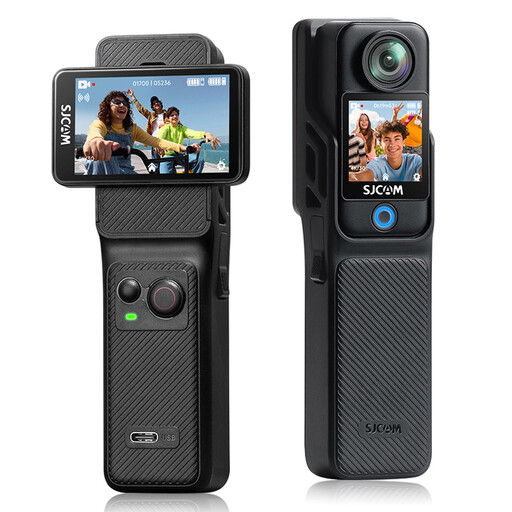 Image unavailable
The product details list hiking as one of its uses and a wide-angle lens for capturing larger scenes; they don’t confirm that it can focus on individual seeds for macro photography.
Features listed include two touchscreens, 16 MP photos and a 154° wide-angle lens. The stated water resistance to 30 m applies when used with the waterproof housing.
No, it depends on how large you want the subject to appear in the frame. For tiny details such as individual seeds, the specific lens’s maximum reproduction ratio matters; for a shot that includes the woodland surroundings, a greater shooting distance may suit your composition better.
Start with a single shot if the dandelion clock might move between images. Focus stacking requires several shots of the same subject, each with a different focus point, so it’s better suited to a sufficiently still scene.
Check which lens and battery are included in the specific offer, try out the subject size you want to capture, and pay attention to the protection ratings for both the camera and lens. According to OM SYSTEM, the TG-7’s ability to focus from 1 cm away applies to Microscope mode.
According to consumer information from the European Union, goods are generally covered by a legal guarantee of at least two years from the date you receive them. For a qualifying distance sales contract, you generally have 14 days from delivery to withdraw; exceptions and the circumstances of the contract should be checked on a case-by-case basis. These statutory rights are separate from a voluntary manufacturer’s warranty.
The Federal Forest Act generally allows people to enter forests for recreation; the details and possible restrictions are also governed by the individual federal states. Section 39 of the Federal Nature Conservation Act prohibits, among other things, removing wild plants without good reason. It provides a limited exception for carefully taking small quantities for personal use in places where access is not prohibited. This doesn’t mean you can ignore local restrictions or damage plants; follow the rules in the specific area.