Guests who enjoy bold cocoa notes
If dark chocolate is the star of the show, bars labelled as 70%, 74% or 81% cocoa give you a choice of cocoa content. Whether a particular variety suits your taste is a personal matter.


If some guests specifically enjoy bold cocoa notes, a dark chocolate bar with at least 70% cocoa is a sensible place to start. You could also offer a milder dark chocolate to cater for different tastes. Before serving any variety, check the ingredients and allergen information on the actual packaging.
If dark chocolate is the star of the show, bars labelled as 70%, 74% or 81% cocoa give you a choice of cocoa content. Whether a particular variety suits your taste is a personal matter.
If you’re hosting more than just fans of intense dark chocolate, you could offer a milder variety alongside a high-cocoa bar. Milka states that Darkmilk contains at least 40% cocoa and Zartherb at least 45%; Ritter Sport lists 50% for Halbbitter.
When catering for a group, check each specific pack before putting the chocolate out. Ingredients and information about milk, nuts, soya and other allergens can vary between varieties.
Start by choosing the main variety to suit your guests’ tastes. Then consider whether a milder option would be useful and which ingredient details matter to your group.
| Criteria | What to check | Who it matters to |
|---|---|---|
| Cocoa content | For a rich-tasting main option, check the stated cocoa content; 70% can be a good starting point. A higher figure alone doesn’t tell you everything about the taste. | If I’m specifically inviting guests who enjoy pronounced cocoa notes, I want the main option to have a clearly stated high cocoa content. Around 40% of consumers would put this need first. |
| Variety of flavours | Compare a rich-tasting bar with a milder dark chocolate. Manufacturers may describe different flavour profiles even for products with the same cocoa percentage. | Not all my guests like very intense dark chocolate, so I’d like to offer them a second dark variety. Around 30% of consumers would put this choice first. |
| Ingredients and serving | Check the ingredients and allergen information on every pack. If guests will be helping themselves, consider the shape of the pieces too. | Before putting chocolate out for a group, I need to check the labelling on the varieties I’ve bought and make sure I can serve them appropriately. Around 30% of consumers would give this need priority. |
The name alone doesn’t tell you whether a variety meets the preference for at least 70% cocoa. Milka states that Darkmilk contains at least 40% cocoa and Zartherb at least 45%, while Ritter Sport lists 50% for Halbbitter.
Compare the exact percentage for your rich-tasting main option. A bar with a lower cocoa content can be a thoughtful addition for guests with different tastes.
Dark chocolate can contain milk ingredients or carry warnings about possible allergens. So the product name isn’t a reliable way to tell whether a variety is suitable for individual guests.
Check the ingredients list and allergen information on every pack you actually buy. If you know someone has an allergy, don’t rely on assumptions about the brand or product category.
Ritter Sport lists 74% cocoa for Die Aromatische and 81% for Die Intensive; Halbbitter contains 50%.
Lindt EXCELLENCE includes both a standard 70% bar and EXCELLENCE Mild 70%. “Mild” is how Lindt positions the second variety.
Milka states that Darkmilk contains at least 40% cocoa and Zartherb at least 45%. Darkmilk contains milk ingredients.
Schogetten offers Edel-Zartbitter chocolate in individual pieces.
REWE stocks dark chocolate from various brands and its own-label ranges, including products labelled as containing 70% and 85% cocoa.
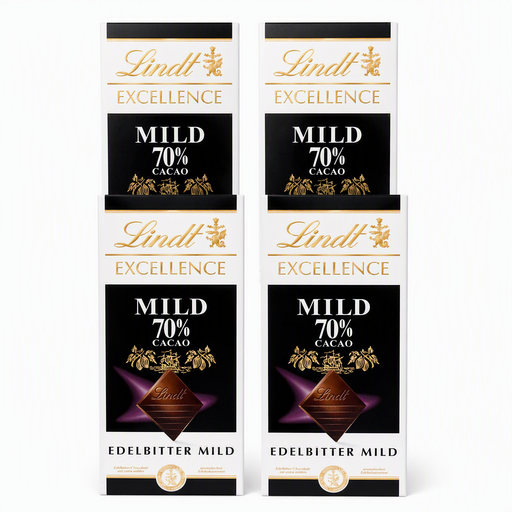
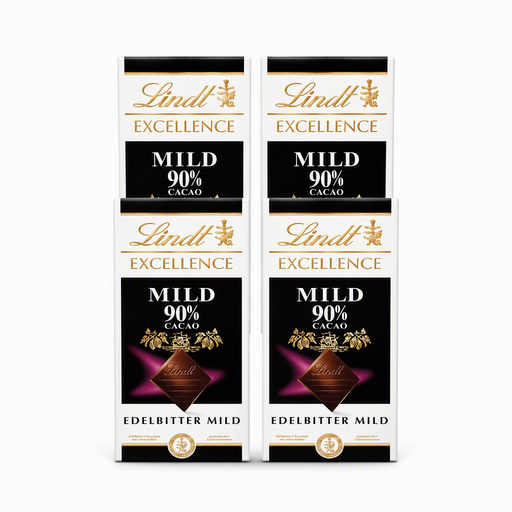
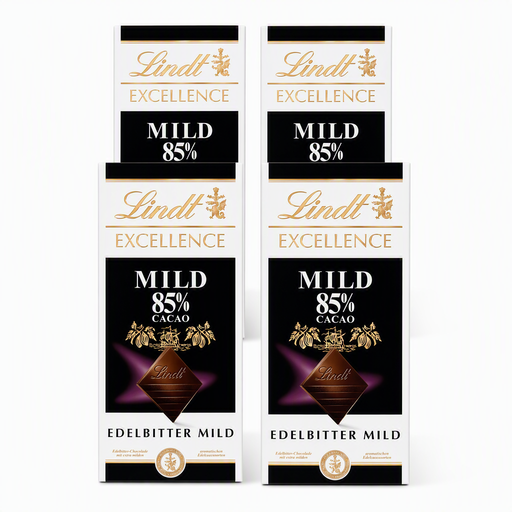
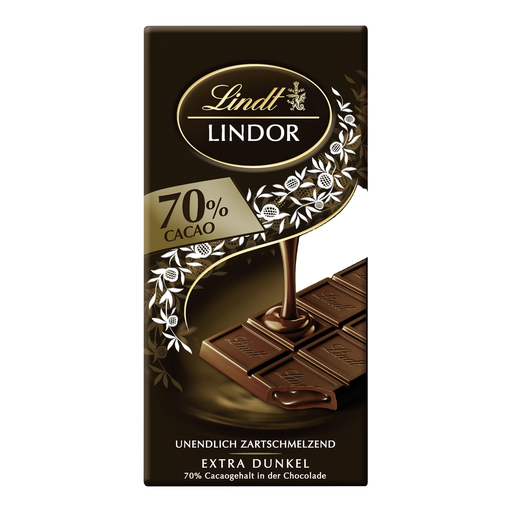
This selection includes Lindt dark chocolate with stated cocoa contents: three multipacks of four bars with different percentages, plus a filled bar. If you’re looking for a solid dark chocolate bar, don’t assume the filled bar is the same as the others just because it states 70%.
 No image available
A good option for guests looking for a 70% cocoa dark chocolate bar who prefer the profile Lindt describes as mild.
The pack contains four bars, each weighing 100 g. Before serving, check the ingredients and any warnings about possible allergen traces on the pack.
 No image available
This could suit guests who specifically want a bar with a very high cocoa content. If you’re catering for a mixed group, you may also want to consider a variety with a lower percentage.
The pack states 90% cocoa and contains four bars, each weighing 100 g. Check the ingredients and allergen information against the packaging.
 No image available
This bar is an option for those looking for a high cocoa content. The word “Mild” shouldn’t obscure the fact that guests who prefer less intense chocolate may like a different variety better.
The pack states 85% cocoa and contains four bars, each weighing 100 g. Check the ingredients and allergen information on the pack before serving.
 No image available
This filled bar is different from a solid dark chocolate bar. The 70% figure refers to the dark chocolate, not necessarily to the bar as a whole.
The pack states 100 g. In particular, check the filling ingredients and allergen information on the actual packaging.
At least 70% cocoa is a sensible place to start if your guests specifically enjoy bold cocoa notes. Ritter Sport, for example, lists 74% and 81%, but a higher percentage isn’t a substitute for considering your guests’ tastes.
If your guests have different tastes, a second dark chocolate could be a good idea. Compare its stated cocoa content and ingredients: Lindt offers an EXCELLENCE variety described as mild with 70% cocoa, while Milka states that Darkmilk contains at least 40% cocoa.
No. The word “dark” doesn’t mean either of those things. Milka Darkmilk contains milk ingredients, and other varieties may also carry warnings about possible traces of milk. Always check the current labelling on the specific pack.
Check the ingredients list and allergen information on the packaging for each variety. Best-before dates and storage instructions are also relevant to the products you’ve bought; the Verbraucherzentrale lists ingredients and allergens as important information on packaged foods.