Breakfast guests who care about cocoa
You're looking for dark chocolate biscuits and want to compare the chocolate and cocoa information, rather than relying on the variety name alone.


If a rich cocoa flavour matters to you at Sunday breakfast, don't choose dark chocolate biscuits based solely on descriptions such as ‘dark’ or ‘richly flavoured’. Check whether the amount of chocolate in the biscuit and the cocoa content of that chocolate are stated. For sharing around the table, the type of biscuit and the ingredients in the specific pack also matter.
You're looking for dark chocolate biscuits and want to compare the chocolate and cocoa information, rather than relying on the variety name alone.
You're choosing biscuits for several people and deciding whether individual chocolate-topped shortbread biscuits, wafer biscuits or cookies would work best for your planned breakfast.
You check the ingredients and allergen information on every pack before serving. In the examples described by REWE and EDEKA, wheat, milk ingredients and egg are among the ingredients to look out for.
First, check what a percentage refers to. Then choose the type of biscuit, and if you have specific ingredient requirements, read the information on the particular pack.
| Criteria | What to check when buying | Who it's important for |
|---|---|---|
| Chocolate and cocoa | Does the percentage refer to the chocolate in the whole biscuit, or the cocoa in the chocolate used? Only compare figures that refer to the same thing. | If I'm looking for a pronounced cocoa flavour, I want to be able to judge the recipe using specific information. This comparison is a priority for around 50% of consumers. |
| Type of biscuit | Are they shortbread biscuits, cookies or wafers? If several people will be sharing them, check the pack size and individual biscuit shape. | At a shared breakfast table, the biscuits should be easy to divide between everyone. Their texture and size matter more than a particular variety name. This is a priority for around 30% of consumers. |
| Ingredients and allergens | Read the ingredients list, highlighted allergens and any relevant ‘may contain’ warnings on the specific pack. | If you need to avoid certain ingredients, first check whether the individual biscuit is suitable at all. This takes priority for around 20% of consumers. |
The flavour description alone doesn't indicate a particular cocoa percentage. So a dark-sounding variety name isn't enough to compare biscuits by cocoa content.
If cocoa content is what matters to you, look for a percentage on the specific pack showing the cocoa content of the chocolate.
REWE describes the ja! Zartbitter Schokokeks as a shortbread biscuit with 63% dark chocolate. That refers to the amount of chocolate in the biscuit, not the cocoa content of that chocolate.
Only compare a biscuit's chocolate content with figures labelled in the same way for other biscuits. Check the cocoa content separately.
A dark chocolate coating doesn't tell you whether a biscuit contains milk or egg. The examples described by REWE and EDEKA show why it's important to check the full recipe.
Check the ingredients and allergen information on every pack before serving.
REWE stocks products including LEIBNIZ Butterkeks Choco Edelherb and LEIBNIZ Vollkornkeks Choco. Bahlsen groups its Choco products within its biscuit range.
Bahlsen's product overview features a range of biscuit and wafer formats, including Ohne Gleichen and Waffeletten.
REWE describes the ja! Zartbitter Schokokeks as a 125-g pack of shortbread biscuits with 63% dark chocolate.
EDEKA describes Schoko-Röllchen Zartbitter as a wafer biscuit in a 125-g pack, containing 26% dark chocolate.
Lidl sells SONDEY as its own brand of sweet biscuits.
This product format is an option for a Sunday breakfast featuring classic chocolate shortbread biscuits. If you're looking for a specific cocoa content, check the percentages on the pack.
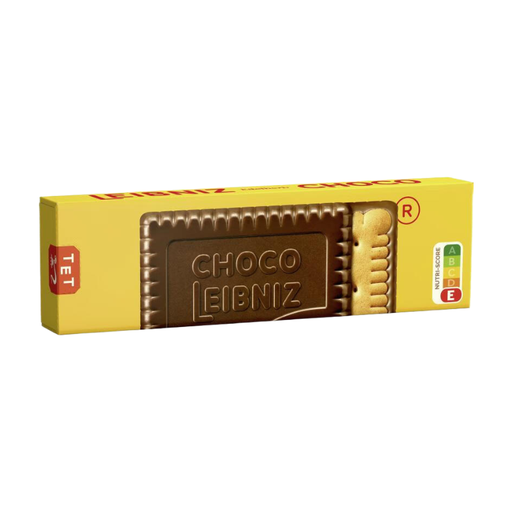 No image available
These shortbread biscuits are a good choice if you'd like to serve individual biscuits topped with dark chocolate at Sunday breakfast.
Pack size: 125 g. If cocoa content or specific ingredients are important to your choice, check the information on the particular pack.
No, the description alone doesn't specify a particular cocoa content. Check whether the pack states the cocoa content of the chocolate used as well as the amount of chocolate in the biscuit. For the ja! Zartbitter Schokokeks described by REWE, the 63% refers to the dark chocolate in the biscuit.
Read the ingredients in the order shown and check the highlighted allergens. The Federal Office of Consumer Protection and Food Safety explains that, as a general rule, ingredients are listed in descending order by weight. The Federal Ministry of Agriculture, Food and Regional Identity explains how relevant allergens are labelled.
No, the description of the chocolate doesn't tell you that. The examples described by REWE and EDEKA contain milk and egg ingredients. The ingredients list on the individual pack is what matters when choosing.
It can help you narrow down your options, but you should check the information on the pack you receive before serving. EDEKA notes that the product information shown for its wafer biscuits may differ from the packaging.