Which option is right for you?

If you want to compare cocoa content

If knowing the cocoa content is more important to you than having a biscuit that’s already coated in chocolate, you could choose a separately labelled dark chocolate to enjoy with your biscuit. You can’t simply apply the percentage given for a chocolate bar to an entire biscuit.

If you want biscuit and chocolate together

You’re looking for a biscuit with a dark chocolate coating to enjoy with your coffee. Bahlsen describes CHOCO LEIBNIZ Dark as a biscuit surrounded by dark chocolate; check the pack for details of the specific variety.

If you need to check ingredients and allergens

The information on the specific pack matters, whatever shade the chocolate looks. Check the ingredients list, highlighted allergens and any ‘may contain’ information on both the biscuit and any chocolate you buy separately.

What should you look for when buying?

Biscuit with a dark chocolate coating

A good choice if: You want a ready-made biscuit and chocolate combination to enjoy with your coffee.

The trade-off: A cocoa percentage for the coating isn’t the cocoa percentage for the whole biscuit.

Biscuit with dark chocolate on the side

A good choice if: You want to compare the declared cocoa content of the chocolate itself.

The trade-off: This combination won’t have the same shape and texture as a biscuit that’s already coated in chocolate.

What to consider What to check when buying Who it matters most to
Cocoa content Check whether the percentage refers to the chocolate. To compare whole biscuits, you’d also need to know how much chocolate they contain. If cocoa content is the deciding factor for me, I want to know exactly what the figure refers to. Around 42% of consumers put this transparency first.
Biscuit format There’s a difference between a biscuit with a chocolate coating and a biscuit eaten alongside a separate chocolate bar. The product description explains how each is made up. With my coffee, I want a biscuit that’s already coated in chocolate rather than two separate products. This combination is the main priority for around 33% of consumers.
Ingredients and allergens Check the ingredients list, highlighted allergens and any ‘may contain’ information on each current pack. If I need to avoid certain ingredients, the information on the specific pack determines whether I can consider it. This check comes first for around 25% of consumers.

Common misunderstandings

  • Assuming ‘dark’ tells you the cocoa content of the whole biscuit

    For chocolate-coated products, the cocoa content refers to the chocolate. On its own, it doesn’t tell you the combined cocoa content of the biscuit and coating, as Lebensmittelklarheit, run by the consumer advice centre, explains.

    Check exactly what the information refers to. If a clear cocoa percentage is your main priority, compare the chocolate itself or choose it separately to enjoy with your biscuit.

  • Relying on an old ingredients list for the current pack

    Ingredients and allergen information are particularly important when you have an allergy or intolerance. EDEKA notes that the information provided online may differ from what’s on the packaging.

    Check the label on the pack each time you buy. If you’re combining a biscuit with chocolate, check both packs.

  • Assuming a chocolate bar is the same as a chocolate biscuit

    Eating a piece of dark chocolate separately makes it easier to compare the cocoa content of the chocolate, but it doesn’t give you the same format as a biscuit with a chocolate coating.

    Decide whether the declared cocoa content or a ready-made biscuit and chocolate combination matters more to you.

Brands and product ranges to help you choose

Bahlsen / LEIBNIZ

On an international product page, Bahlsen describes CHOCO LEIBNIZ Dark as a biscuit surrounded by dark chocolate.

  • A clearly described biscuit-and-chocolate combination for anyone who wants both with their coffee.
  • Check the current pack for the cocoa content, ingredients and allergens in the variety you’re buying.

EDEKA Herzstücke

EDEKA describes a Herzstücke dark chocolate bar with 72% cocoa. You can enjoy it separately with a biscuit, but it isn’t a chocolate biscuit itself.

  • The stated cocoa content of this chocolate bar is 72%.
  • EDEKA notes that the bar may not be available in every store and that the information on the pack may vary.

EDEKA Bio

EDEKA describes an organic dark chocolate bar with 70% cocoa, as well as Fairtrade information for the cocoa and sugar. This is also a bar, not a chocolate biscuit.

  • The declared cocoa content of this bar is 70%.
  • Check the current pack, including the ingredients and any ‘may contain’ information, before pairing it with a biscuit.

Chocolate biscuits at Joybuy

This dark chocolate biscuit is an option if you’d rather have a ready-made biscuit and chocolate combination with your coffee than a separate chocolate bar. If you’re choosing based on cocoa content, check the information on the current pack.
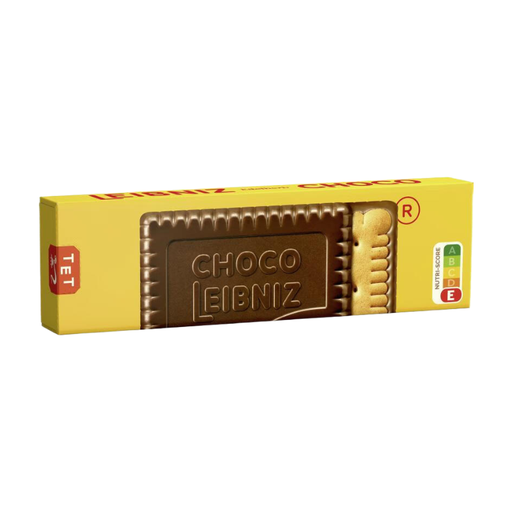
Leibniz butter biscuit with dark chocolate, 125 g

Leibniz butter biscuit with dark chocolate, 125 g

For anyone who wants a butter biscuit with dark chocolate to enjoy with their coffee, rather than a separate chocolate bar.

Pack size: 125 g. Check the current pack for information on cocoa content, ingredients and allergens.

View at Joybuy

Frequently asked questions

Does the cocoa percentage on a chocolate biscuit apply to the whole biscuit?

No. For chocolate-coated products, the cocoa content refers to the chocolate or coating, as Lebensmittelklarheit, run by the consumer advice centre, explains. Without further information about quantities, you can’t work out the combined cocoa content of the biscuit and coating.

Where can I find the cocoa content on dark chocolate?

Look for a statement such as ‘Cocoa: … % minimum’. Lebensmittelklarheit, run by the consumer advice centre, explains that cocoa content must be stated for chocolate, except white chocolate. On a chocolate-coated biscuit, this figure doesn’t automatically refer to the whole product.

What should I check before buying if I have an allergy?

Check the ingredients list and allergen information on the specific pack, along with any ‘may contain’ information. The Federal Ministry of Agriculture, Food and Regional Identity explains the labelling requirements for the 14 most common causes of allergies and intolerances. If you’re buying products separately, check each pack individually.

Is a supermarket’s online ingredients list enough?

Use it to help narrow down your options, but check the ingredients and allergens on the current pack before buying. EDEKA specifically notes that online information about its chocolate bars may differ from what’s on the packaging.