Snack lovers during training week
You’re looking for a dark chocolate biscuit to enjoy during a break or after training, not as your sole race-day fuel. The portion you eat, the nutritional information and how well you tolerate it are what matter.


A dark chocolate biscuit can be an enjoyable snack during marathon training, but it isn’t automatically suitable as your main fuel for a long run or race. The Verbraucherzentrale highlights the importance of carbohydrate intake during prolonged, intense exercise. When choosing a biscuit, you should also consider the portion you’ll actually eat, the ingredients and how well you’ve tolerated it in training. “Dark chocolate” alone doesn’t tell you how much cocoa it contains.
You’re looking for a dark chocolate biscuit to enjoy during a break or after training, not as your sole race-day fuel. The portion you eat, the nutritional information and how well you tolerate it are what matter.
You want to know whether, and when, you can tolerate a solid snack before a long run. Check the fat, fibre and ingredients on the pack, and don’t try changes to your fuelling for the first time on race day.
You look for dark chocolate, but don’t want to confuse the chocolate content with the cocoa content. The ingredients list and allergen information are just as important as the product name when making your choice.
First decide whether you want a snack for everyday training or fuel for a long run. Then compare the information per 100 g with the portion you’ll actually eat, and check the current packaging.
| Criteria | What to check when buying | Who it matters to |
|---|---|---|
| Tolerance on long runs | Check the carbohydrates, fat and fibre per 100 g and in the portion you’ll eat; try the timing and drink during training. | On long runs, I want to plan my carbohydrate intake without relying on a biscuit I haven’t tried before. For around 38% of consumers, how well it’s tolerated is the main consideration. |
| Portability and portion size | Check the pack size, the weight per biscuit and the actual packaging format. | I want a snack that’s easy to take with me on the way to training or to enjoy during a break afterwards. Around 37% of consumers mainly value a handy portion size. |
| Dark chocolate, ingredients and allergens | Distinguish the chocolate content of the biscuit from the cocoa content of the chocolate; read the ingredients and allergen information on the pack. | I want to know what “dark chocolate” means and which ingredients I’m eating. For around 25% of consumers, checking this comes first. |
myTime.de states that LEIBNIZ Choco Edelherb contains 63% dark chocolate by weight of the whole biscuit. This isn’t the cocoa content of that chocolate.
If a particular cocoa content matters to you, look for an explicit percentage on the specific pack that refers to the cocoa content.
The Verbraucherzentrale notes that carbohydrates are relevant during prolonged, intense exercise. That doesn’t tell you whether you’ll tolerate a particular solid biscuit while running. LEIBNIZ lists 25 g of fat per 100 g for Choco Edelherb, and REWE also lists 25 g per 100 g for PiCK UP! Dark.
If you’re planning to have a biscuit on long runs, try the portion, timing and drink beforehand in similar training conditions.
Wheat and milk, among other ingredients, are relevant in the varieties considered here; the information varies by product. Any warnings about possible traces must also match the pack you actually buy.
Read the current ingredients and allergen information before buying and eating, especially if you need to avoid particular ingredients.
LEIBNIZ Choco Edelherb is a useful example when comparing a classic butter biscuit with dark chocolate.
The Bahlsen family includes the LEIBNIZ and PiCK UP! ranges considered here: a chocolate-coated butter biscuit and a biscuit sandwich.
PiCK UP! Dark is a biscuit sandwich with a dark chocolate bar, making it a different product format from a chocolate-coated butter biscuit.
These biscuits could work as dark chocolate biscuit snacks for everyday training. For longer runs, also check the nutritional information on the specific pack and consider how well you tolerate it; neither product name gives a cocoa percentage.
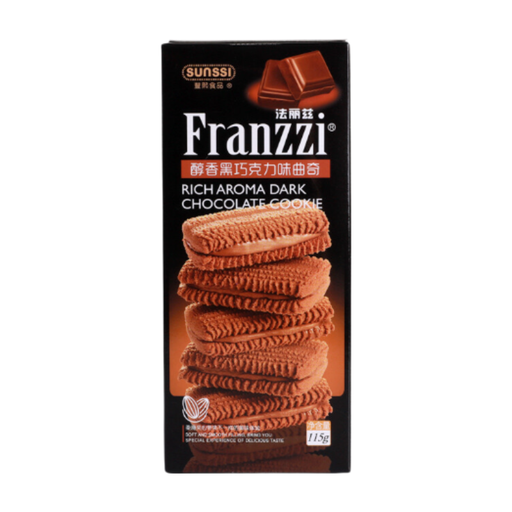 No image available
An option if you’re looking for a dark chocolate-flavoured biscuit as a snack for everyday training. The pack contains 115 g. Before buying, check the sugar information on the specific pack and work out the nutritional values based on the amount you plan to eat. The flavour name doesn’t indicate a particular cocoa content.
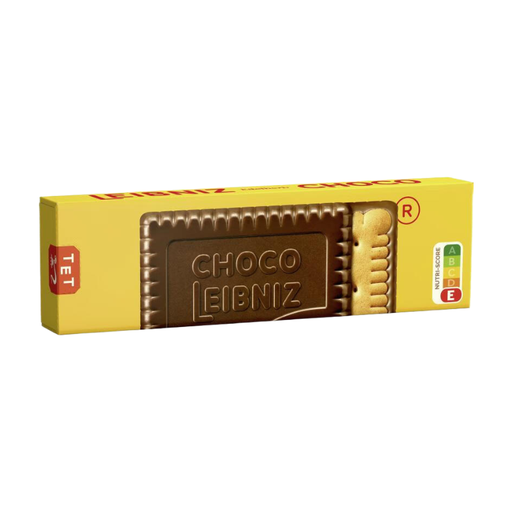 No image available
An option if you prefer a butter biscuit with dark chocolate as an enjoyable snack. The pack contains 125 g. To plan a portion, check the nutritional information and ingredients on the specific pack; “dark chocolate” doesn’t tell you the cocoa content.
Not simply because of their carbohydrate content or their name. The Verbraucherzentrale highlights carbohydrates during prolonged, intense exercise. You should try the biscuit in training before race day to see whether it fits your planned intake and how well you tolerate it.
It’s more suitable as an enjoyable snack during everyday training than as an untested part of your race-day fuel. If you want to eat one before a run, consider the portion and how long before your run you’ll have it, and try both in training.
No. The 63% figure given by myTime.de for the dark chocolate in LEIBNIZ Choco Edelherb describes the chocolate content of the biscuit. To find out the cocoa content, you’ll need a separate figure for the chocolate used.
The ingredients and allergen information on the specific pack are what matter. LEIBNIZ Choco Edelherb lists wheat, milk and egg yolk. The PiCK UP! Dark listed by REWE contains wheat and milk; it may also contain eggs and hazelnuts.