For a gently bitter introduction at Sunday breakfast, bars with around 60–70% cocoa are a sensible starting point. If you’re specifically after bold cocoa notes, you could consider an 85% bar. However, the cocoa content doesn’t tell you everything about the flavour, and it’s no substitute for comparing nutritional information or checking the ingredients and allergen advice for the specific variety.
Which varieties might suit you
For fans of bold cocoa notes
If you’re specifically after a bitter bar for Sunday breakfast, a variety with 85% cocoa could be right for you. Lindt describes its EXCELLENCE 85% as having earthy, spicy notes; this flavour description applies to that specific bar.
For those new to dark chocolate
If you’d like a gently bitter bar with your coffee without going straight for a very high-cocoa variety, you could start at around 60–70%. Lindt describes its EXCELLENCE 60% as having a balanced, gently bitter flavour. Whether another bar tastes similar depends on its recipe.
For shoppers focused on ingredients or allergens
If certain ingredients matter to you, don’t choose on cocoa content alone. Check the ingredients and allergen advice for each variety individually: Lindt, for example, says that EXCELLENCE 70% may contain milk, soya, nuts and sesame, among other allergens.
What to look for when choosing
First decide what matters most to you: a bold cocoa flavour, a gently bitter introduction or the ingredients in the bar. Then compare specific varieties rather than relying on descriptions such as ‘dark’ or ‘bittersweet’.
| What to consider |
What to check when buying |
Who it matters to |
| Bold cocoa flavour |
Compare the cocoa content and flavour description of the specific bar. |
I’m specifically looking for bitter, pronounced cocoa notes at breakfast and don’t want to choose a gently bitter variety instead. Around 40% of consumers put this flavour first. |
| A gently bitter introduction |
Look at bars with around 60–70% cocoa and compare their nutritional information per 100 g. |
I’d like to try dark chocolate with my coffee without starting with a particularly bold bar. Around 30% of consumers prioritise this kind of introduction. |
| Ingredients and allergens |
Read the ingredients list and allergen advice for the exact variety you’ve chosen. |
Before choosing a variety, I need to know whether its ingredients and potential allergens are suitable for me. Around 30% of consumers prioritise this. |
Common buying mistakes
-
Treating the cocoa percentage as a complete guide to flavour
A percentage alone won’t tell you which flavours you’ll enjoy. Even bars with a high cocoa content can have very different flavour profiles.
Use the cocoa content as a first filter, then read the description of the specific variety. If you’re trying very dark chocolate for the first time, you could start with a single bar rather than a multipack.
-
Assuming ‘dark’ means a particular ingredients list
Dark chocolate isn’t automatically free from milk or nuts. Lindt flags potential allergens for EXCELLENCE 70%, while, according to the manufacturer, Schogetten Edel-Zartbitter-Haselnuss contains pieces of hazelnut.
Before buying, read the ingredients list and allergen advice for the exact variety. Similar-looking packaging is no substitute for checking.
Brands to consider
Lindt
The EXCELLENCE range offers a choice of cocoa contents, including 60%, 70% and 85%, making it easy to compare bars within the same product line.
- Lindt states that EXCELLENCE 70% contains at least 70% cocoa and 30 g of sugar per 100 g; EXCELLENCE 85% contains at least 85% cocoa and 13 g of sugar per 100 g.
- The flavour descriptions come from the manufacturer. Check the ingredients and allergen advice for the specific variety you choose.
Ritter Sport
Ritter Sport could be worth considering if you’re looking at a semi-sweet or hazelnut variety as well as plain dark chocolate bars.
- A product description at Joybuy lists Ritter Sport Halbbitter as a bar with 50% cocoa.
- If you’re choosing a bar with whole hazelnuts, the nuts are an important part of the decision. Check the labelling for the variety you want.
Schogetten
The Edel-Zartbitter-Haselnuss variety is aimed at shoppers who value pieces of hazelnut more than a plain cocoa bar.
- Schogetten describes the variety specifically as dark chocolate with hazelnut pieces.
- This variety isn’t suitable for people with a hazelnut allergy. The manufacturer states that it contains 41 g of sugar per 100 g; the word ‘dark’ in the product name doesn’t tell you this.
REWE Beste Wahl und REWE Bio
These own-label ranges also include bars with 85% cocoa, if you’d like to compare varieties by their cocoa content.
- REWE lists an 85% cocoa bar from both its Beste Wahl and Bio ranges.
- When checking ingredients or allergens, it’s the labelling on the specific bar that matters, not just the own-label brand or percentage.
Milka
Milka ‘Zartherb’ is another darker-flavoured option among the chocolate products listed by REWE.
- REWE lists Milka Zartherb as a 90 g bar.
- ‘Zartherb’ doesn’t specify a cocoa percentage. If you’re looking for a bar with a high cocoa content, compare the details on the pack you choose.
Dark chocolate bars and a hazelnut option at Joybuy
This selection includes bars with 70%, 85% and 90% cocoa, as well as a dark Ritter Sport variety with whole hazelnuts. They offer different options for breakfast: cocoa content and flavour in the plain bars, and a nutty texture in the hazelnut variety.
 No image available
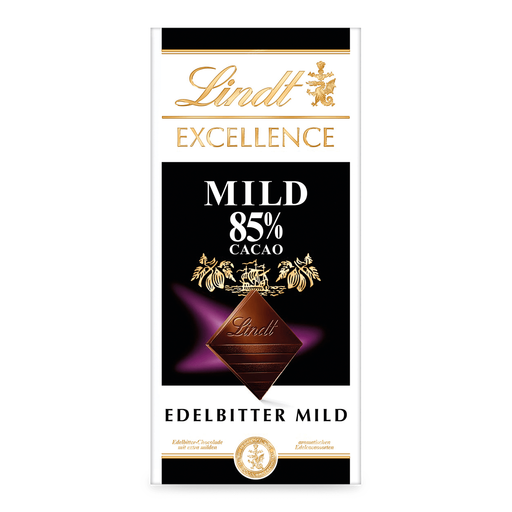
Lindt Excellence 85% Cocoa Mild, 100 g
An option if you’re specifically looking for a high-cocoa bar for breakfast; ‘Mild’ in the variety name doesn’t guarantee that you’ll find the flavour mild.
Dark chocolate with 85% cocoa; 100 g bar.
If ingredients or allergens are important to you, check the labelling for this variety on the pack.
View at Joybuy
 No image available
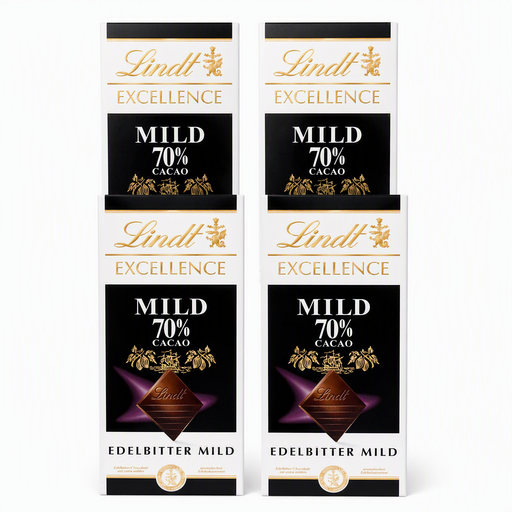
Lindt EXCELLENCE Mild 70%, 4 × 100 g
This could be an option if you’d like to start with 70% cocoa at breakfast and specifically want four bars.
Four-pack of Mild 70%, with 100 g in each bar; not a single bar.
Don’t assume that nutritional or allergen information for other EXCELLENCE 70% varieties also applies to this multipack without checking.
View at Joybuy
 No image available
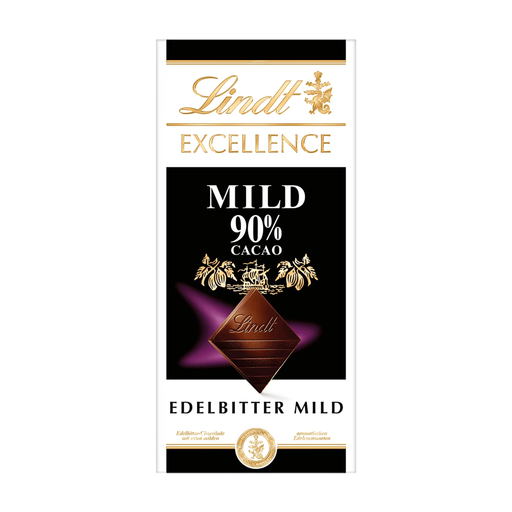
Lindt Excellence 90% Cocoa, 100 g
This bar could be right for you if you specifically want to choose a very high-cocoa option for Sunday breakfast.
Dark chocolate with 90% cocoa; 100 g bar.
Check the details on the specific pack to compare sugar, other nutritional information and allergens.
View at Joybuy
 No image available
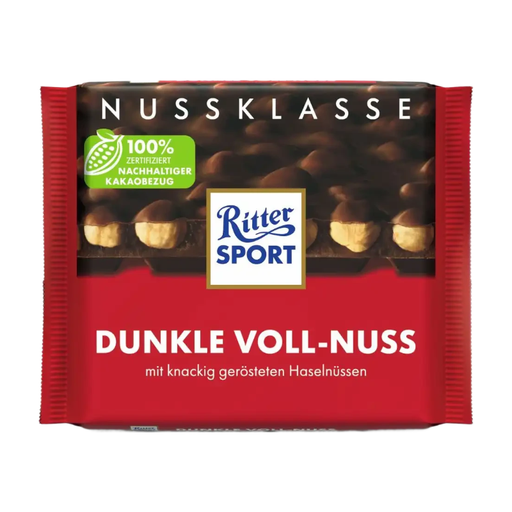
Ritter Sport Dark Whole Hazelnuts, 100 g
A different option for breakfast if you’re looking for dark chocolate with whole hazelnuts rather than a plain bar.
100 g bar with whole hazelnuts; not suitable for people with a hazelnut allergy.
The cocoa content of the chocolate portion doesn’t automatically tell you the cocoa content of the whole bar. If needed, check the details for the exact ingredients.
View at Joybuy
Frequently asked questions
What cocoa percentage should I start with when trying dark chocolate for breakfast?
Around 60–70% cocoa is one possible starting point if you’re looking for gently bitter rather than distinctly bitter chocolate. Lindt describes its EXCELLENCE 60% as balanced and gently bitter. The consumer advice centre classifies chocolate with around 60% cocoa or more as dark chocolate in many cases, but notes that the threshold isn’t precisely defined.
Does a bar with more cocoa always contain less sugar?
No. Cocoa content alone doesn’t determine the sugar content of every recipe. For the specific Lindt bars compared here, Lindt states that EXCELLENCE 70% contains 30 g of sugar per 100 g, while EXCELLENCE 85% contains 13 g per 100 g. Compare the nutritional information for the varieties you’re actually choosing between.
Is dark chocolate automatically vegan or dairy-free?
No. The word ‘dark’ doesn’t tell you that. For Lindt EXCELLENCE 70%, the manufacturer lists milk among the substances the product may contain. Check both the ingredients and allergen advice on the specific pack before making your choice.
Where can I find allergen information for packaged chocolate?
Check the ingredients list and any additional allergen advice on the pack of the variety you’ve chosen. Germany’s Federal Office of Consumer Protection and Food Safety explains that, under German food labelling rules, the 14 most important allergenic substances or products must be listed in the ingredients list.


