Who should take particular care when choosing?

People who need to avoid a specific allergen

If you need to avoid wheat, milk, eggs, soya or nuts, for example, check the information on the individual pack. The Federal Ministry of Agriculture, Food and Regional Identity explains the labelling requirements for the 14 most common allergens. The Bavarian Health and Food Safety Authority states that unintended contamination is not subject to the same labelling requirements.

People looking for dark chocolate

If you want a butter biscuit generously coated in dark chocolate, it’s important to distinguish the chocolate content from the cocoa content. EDEKA and REWE each describe the varieties covered here as containing 63% dark chocolate; this doesn’t tell you the chocolate’s cocoa content.

People comparing own-label brands

If you’re choosing between varieties from ja!, GUT&GÜNSTIG and BISCOTTO, compare the exact product and its current pack labelling. The same product description doesn’t necessarily mean the ingredients or allergen information are the same.

What should you look for when buying?

When buying dark chocolate butter biscuits with an allergy in mind, first check the product against the specific allergen you need to avoid. Then you can compare the chocolate profile and different varieties.

What you’re looking forWhat to check before buyingWho it matters to
Avoiding a specific allergen Check the ingredients, highlighted allergens and any precautionary allergen information on the specific pack against your personal avoidance plan. If you need to avoid a particular allergen, don’t choose a variety based on its dark chocolate description alone. This would be the main consideration for around 42% of consumers.
Assessing the chocolate profile Distinguish the proportion of dark chocolate on the biscuit from a separate statement of the chocolate’s cocoa content. If you’re looking for a pronounced chocolate coating, you’ll want to know how much chocolate it contains without assuming this tells you its cocoa content. Around 33% of consumers would prioritise comparing this product feature.
Comparing own-label brands Compare the exact variety and the information on the current pack, rather than assuming the recipe is the same because the brand name is the same. When switching between supermarket varieties, I want to recognise a suitable product and check its labelling again. This would be the main consideration for around 25% of consumers.

Common comparison mistakes

  • Assuming ‘dark chocolate’ means dairy-free or vegan

    The description refers to the chocolate, not the full recipe. The dark chocolate butter biscuits described by REWE and EDEKA also list ingredients or allergens that may be relevant to your choice.

    Make your decision based on the full labelling on the specific pack, not the product description.

  • Overlooking precautionary allergen information

    Any precautionary allergen information on the pack may be relevant to your personal avoidance plan. Conversely, the Bavarian Health and Food Safety Authority states that the absence of such information doesn’t mean unintended contamination is impossible.

    If you’re unsure about traces, find out which information matters for your individual circumstances.

  • Confusing chocolate content with cocoa content

    The 63% figures given by EDEKA and REWE refer to the proportion of dark chocolate on the biscuit, not the cocoa content of that chocolate.

    If cocoa content is an important factor, look for a specific statement about it.

  • Assuming online information matches the pack

    EDEKA notes that the product information on its website may differ from the information on the packaging. If you need to avoid an ingredient, this difference could affect your choice.

    Check the ingredients and allergen information on the pack every time, even if you already know the product.

Brands to consider

LEIBNIZ

Bahlsen describes CHOCO LEIBNIZ Dark as a biscuit with dark chocolate.

  • This variety may appeal if you’re specifically comparing butter biscuits with dark chocolate.
  • If you’re choosing with an allergy in mind, check the ingredients and allergen information on the specific pack sold in Germany.

ja!

REWE describes ja! Dark Chocolate Biscuits as butter biscuits with 63% dark chocolate.

  • You can compare the stated chocolate content as a product feature.
  • The ingredients listed by REWE include wheat, butter, a whey product, whole milk powder and egg yolk.

GUT&GÜNSTIG

EDEKA describes its dark chocolate butter biscuits as containing 63% dark chocolate.

  • EDEKA lists the ingredients and allergen information for this variety.
  • The declaration includes wheat, milk and soya, and states that traces of nuts may be present. EDEKA advises shoppers to check the pack before buying.

BISCOTTO

ALDI SÜD and ALDI Nord sell BISCOTTO chocolate butter biscuit varieties in dark chocolate.

  • The product description helps you search specifically for the dark chocolate variety.
  • If you have an allergy, the ingredients and information on the specific pack on offer are what matter.

Our selection at Joybuy

This selection features a butter biscuit with dark chocolate. Check the labelling on the specific pack to decide whether it’s suitable for your particular allergy.
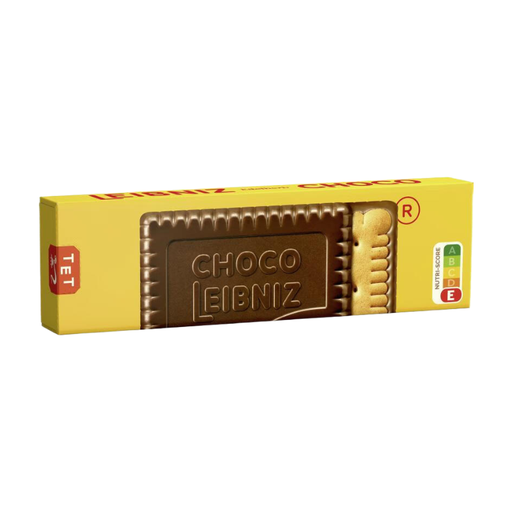
Leibniz butter biscuits with dark chocolate, 125 g

Leibniz butter biscuits with dark chocolate, 125 g

An option if you’re looking for a butter biscuit with dark chocolate and can check the ingredients on the specific pack against your requirements.

If you need to avoid wheat, eggs or milk, it’s particularly important to check the full ingredients and allergen information. Look out for any precautionary allergen information too. The description ‘dark chocolate’ doesn’t tell you the cocoa content.

View at Joybuy

Frequently asked questions

Are dark chocolate butter biscuits automatically dairy-free or vegan?

No. ‘Dark chocolate’ doesn’t mean a product is dairy-free or vegan. For example, the ja! variety described by REWE contains butter and other milk ingredients. Check the full ingredients on the pack for every variety.

Do allergens have to be labelled on packaged biscuits in Germany?

Yes. According to information from the Federal Ministry of Agriculture, Food and Regional Identity, the 14 most common allergens and causes of intolerance must be declared when they are used as ingredients. If you have a specific allergy, check the labelling on the product you’re considering.

Does the absence of precautionary allergen information rule out unintended contamination?

No. The Bavarian Health and Food Safety Authority explains that unintended contamination isn’t subject to the same labelling requirements as ingredients that are deliberately added. If traces could be relevant to you, check what you need to look for when choosing a product in your individual circumstances.

Does 63% dark chocolate also mean 63% cocoa?

No. For the varieties described by EDEKA and REWE, 63% refers to the proportion of dark chocolate in the whole biscuit. You’ll need to look for a separate statement to find out how much cocoa the chocolate contains.

Which information should I rely on when buying: the product page or the pack?

If you’re buying with an allergy in mind, check the information on the specific pack. EDEKA notes that the information on its product page may differ from the packaging.