What should you look for when buying?
First decide whether dark chocolate will be an extra option or the only type of biscuit on offer. Then check the information on the specific pack, especially if any guests have allergies or you’re looking for a particular cocoa percentage.
| Criterion |
What to check when buying |
Who it matters most to |
| Chocolate flavour |
The variety name and, if a minimum figure matters to you, the cocoa percentage of the chocolate itself, clearly stated. |
If some guests enjoy rich chocolate, I’d like to offer it as a separate option rather than serve it to everyone. For around 40% of consumers, this would be the main factor in their choice. |
| Allergens |
The ingredients list and any warnings about possible traces on each individual pack. |
If I know that any guests have allergies, I need to check the labelling on each variety before serving it. Around 30% of consumers would put this check first. |
| Pack size and variety |
The weight in grams and how much you need alongside the other snacks. |
When offering several snack options, I want to plan enough choice without assuming that the contents of a single pack will provide party-sized portions. For about 20% of consumers, this planning would be the priority. |
| Ingredients and nutritional information |
Sugars and saturated fat per 100 g, as well as the ingredients in the specific variety. |
If I’m comparing dark and milder biscuits, I’d rather compare their nutritional information than go by the colour of the chocolate alone. Around 10% of consumers would prioritise checking the ingredients and nutritional information. |
For GUT&GÜNSTIG and ja!, the 63% figure given by EDEKA and REWE refers to the proportion of dark chocolate in the biscuit as a whole. If you’re looking for a particular cocoa percentage within that chocolate, you’ll need to find this stated separately. The term ‘dark chocolate’ alone doesn’t give you a percentage either.
Brands and varieties to consider
These examples highlight differences in chocolate content, ingredients and pack information. This brand overview doesn’t indicate which varieties are available at Joybuy.
LEIBNIZ
LEIBNIZ describes Choco Edelherb as a butter biscuit topped with a layer of dark chocolate.
- The manufacturer’s website lists the ingredients and nutritional information, including 33 g of sugars and 16 g of saturated fat per 100 g.
- This variety contains wheat, milk and egg yolk. The term ‘edelherb’ doesn’t state a cocoa percentage for the chocolate.
GUT&GÜNSTIG
EDEKA lists its dark chocolate butter biscuits in a 125-g pack, with dark chocolate making up 63% of the product.
- The EDEKA product page lists the ingredients, nutritional information and allergens.
- Wheat, milk and soya are listed, and traces of nuts may be present. EDEKA says pack information may vary, and this variety may not be available in every store.
ja!
REWE lists the ja! dark chocolate biscuit as a 125-g butter biscuit, with dark chocolate making up 63% of the product.
- The REWE product page lists the ingredients and nutritional information for the variety described.
- The ingredients list includes wheat, milk and egg yolk. Here too, 63% chocolate doesn’t mean that the chocolate itself contains 63% cocoa.
BISCOTTO
ALDI SÜD lists BISCOTTO dark chocolate butter biscuits in a 125-g pack.
- The ALDI SÜD product page gives the pack size and nutritional information.
- ALDI SÜD notes that products may come from different suppliers, so nutritional information may vary. Always refer to the specific pack when choosing.
A suitable product at Joybuy
If you’re putting together a party spread with dark chocolate, this butter biscuit could be a good extra option. Check the ingredients and allergen information on the pack you receive before serving.
 No image available
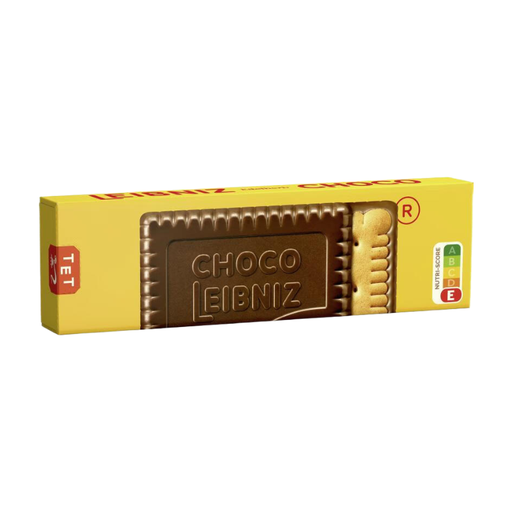
Leibniz butter biscuits with dark chocolate, 125 g
A good option if you’d like to offer butter biscuits with dark chocolate alongside milder snacks.
Pack size: 125 g. If any guests have known allergies, always check the information on the specific pack before serving.
View at Joybuy
Frequently asked questions
Does 63% dark chocolate mean 63% cocoa?
No. For the butter biscuits described by EDEKA and REWE, 63% refers to the proportion of dark chocolate in the product as a whole, not the cocoa content within the chocolate. If you’re looking for a particular cocoa percentage, check the pack for a figure stated specifically for cocoa content.
Which allergens should I look out for in dark chocolate butter biscuits?
Check the labelling on each specific variety, particularly for wheat and milk, and, where relevant, soya, egg and warnings that traces of nuts may be present. EDEKA lists wheat, milk and soya for GUT&GÜNSTIG, as well as possible traces of nuts; LEIBNIZ lists wheat, milk and egg yolk for Choco Edelherb. The Federal Ministry of Agriculture, Food and Regional Identity explains that certain allergenic ingredients must be declared on food packaging.
If there’s no warning about traces, does that mean a biscuit is suitable for people with allergies?
No. The absence of a trace warning on its own isn’t proof that a product is safe for someone with an allergy. The Bavarian Health and Food Safety Authority distinguishes between allergenic ingredients that are deliberately added and those that may be present unintentionally. If a guest has a known allergy, check their requirements with their family and inspect the specific pack.
How should I store chocolate butter biscuits before the party?
Follow the storage instructions on the pack you’ve bought. REWE says to store the ja! dark chocolate biscuit in a dry place away from heat; you can keep it in its original sealed pack until you’re ready to serve it.
Can nutritional information online differ from what’s on the pack?
Yes, this is possible for the ranges described here. ALDI SÜD notes that different suppliers may mean nutritional information varies; EDEKA also points out that information on its product page may differ from the packaging. So compare varieties using the information on the packs you actually buy.


