New to dark chocolate
If you’re switching from milk chocolate and don’t want pronounced bitterness, a 70% bar could be a good starting point. Lindt describes its EXCELLENCE 70% as a balanced option for people discovering dark chocolate.


A bar with around 70% cocoa can be a good place to start for a mid-morning break if you’re looking for dark chocolate without pronounced bitter notes. 74% or 85% varieties are worth considering if you’re after a more intense cocoa flavour. Whatever the cocoa percentage, check the nutritional information, ingredients and allergen advice for the specific variety.
For a short break, it helps to decide first what kind of flavour you’re after. Then you can look at the format and nutritional information for the individual bars.
If you’re switching from milk chocolate and don’t want pronounced bitterness, a 70% bar could be a good starting point. Lindt describes its EXCELLENCE 70% as a balanced option for people discovering dark chocolate.
If you enjoy more intense, roasted or bitter notes, varieties with a higher cocoa percentage may suit you. Alongside the percentage, compare the flavour description for the specific bar.
If you need to avoid certain ingredients or allergens, check the labelling for the variety you’re buying rather than relying on its dark colour. To compare nutritional values, check sugar and energy using the same measure, such as per 100 g.
Start by choosing a cocoa percentage that appeals to your taste. Then check the details for the specific variety: the percentage alone won’t tell you about portion size, sugar, energy or allergens.
| Consideration | What to check | Who it matters to |
|---|---|---|
| Cocoa percentage and flavour | Compare the cocoa percentage and the description of the specific variety. | If I want pronounced cocoa notes for my break, I want the bar to suit my taste. Around 33% of consumers might make cocoa flavour their top buying consideration. |
| Sugar, energy and portion size | Compare sugar in g and energy in kcal or kJ using the same measure, and consider how many pieces you plan to eat. | For a short break, I want to know the nutritional values for the amount I’ll actually eat. Around 25% of consumers might prioritise this comparison. |
| Ingredients and allergens | Read the ingredients list, highlighted allergens and any precautionary allergen advice for the exact variety. | If I need to avoid certain ingredients, I can’t rely on the word ‘dark’. Around 25% of consumers might put checking ingredients and allergens first. |
| Portion format | Check how the bar is divided into pieces, the pack weight and, where provided, the stated serving size. | When I’m out and about or at work, I want to be able to pick out a few pieces for my break without having to work out the portion from the bar’s weight. For around 17% of consumers, the format might be the most important factor. |
Two specific bars make it clear how little the cocoa percentage alone tells you about nutritional values. Lindt states that EXCELLENCE 70% contains at least 70% cocoa and 30 g sugar per 100 g, while EXCELLENCE 85% contains at least 85% cocoa and 13 g sugar per 100 g. These values apply to the varieties named, not to every chocolate with the same cocoa percentage. Check the nutritional information for any other product you’re considering.
The description doesn’t tell you the exact percentage: the documented varieties range from Milka Zartherb, with at least 45%, to Lindt EXCELLENCE 85%, with at least 85% cocoa. So, if you’re looking for a particular flavour, the percentage on the individual bar is more useful than the variety name alone.
Check the cocoa percentage on the pack, then choose according to how intense you want your chocolate to taste during your break.
Of the EXCELLENCE varieties listed by Lindt, the 85% bar contains less sugar, at 13 g per 100 g, than the 70% bar, at 30 g. However, its energy value is 589 rather than 566 kcal per 100 g. So, in this case, less sugar doesn’t mean less energy.
Compare sugar and energy per 100 g, then consider how many pieces you plan to have during your break.
Even a bittersweet variety may contain milk ingredients or carry precautionary allergen advice. For example, according to its product information, Schogetten Edel-Zartbitter contains butterfat and soya; Lindt EXCELLENCE 70% warns that it may contain milk and other allergens.
If you have allergies, intolerances or specific dietary requirements, check the current ingredients list and allergen advice for the exact variety you plan to buy.
These examples cover a range of cocoa percentages and recipes. Information about ingredients and nutritional values applies to the specific variety named, not every bar from the same brand.
Die Aromatische, with 74% cocoa, is an option if you’re looking for a different flavour between a 70% and an 85% bar.
The EXCELLENCE range includes specific bars with at least 70% and at least 85% cocoa, making them easy to compare.
These own-label ranges include dark chocolate with different cocoa percentages, so compare the specific variety.
Edel-Zartbitter is divided into individual pieces, making it a handy option if portion format matters to you.
Zartherb may suit you if you’re looking for a milk-containing variety with less pronounced bitterness than a high-cocoa bar.
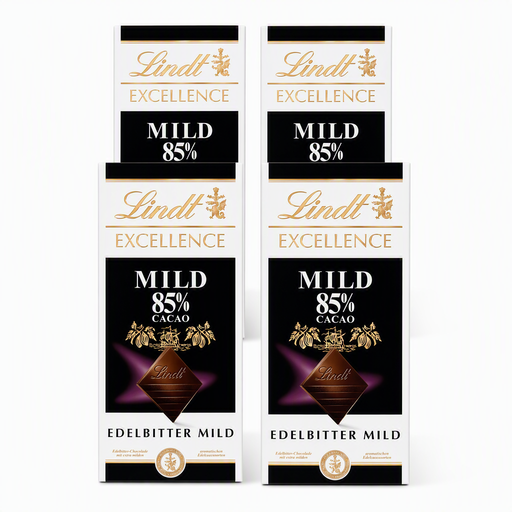
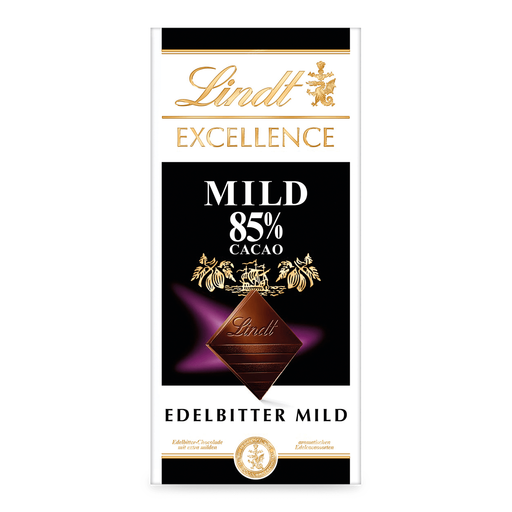
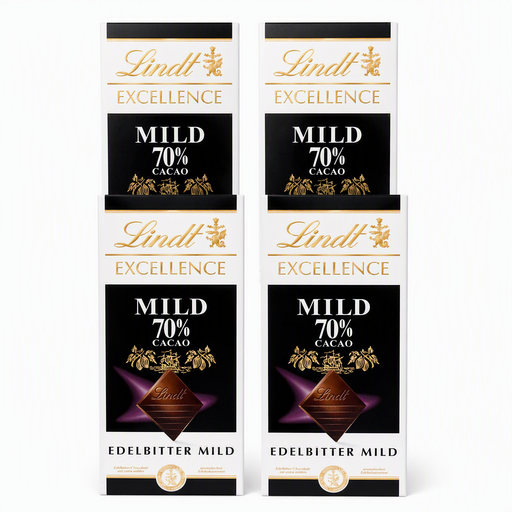
These bars offer two flavour profiles for your mid-morning break: 85% cocoa for a bolder cocoa flavour and 70% cocoa as a less intense alternative. Both cocoa percentages are available in different pack sizes. Check the labelling for the specific variety before you buy.
 No image available
If you’re looking for a bar with a bold cocoa flavour for several mid-morning breaks, this four-pack could be a good choice.
 No image available
If you’d like to choose a single 85% cocoa bar for your breaks, this format is an alternative to the four-pack.
 No image available
If you’re looking for a dark chocolate bar with a less intense cocoa flavour than the 85% varieties for several breaks, this four-pack could be a good choice.
No. A higher cocoa percentage is most useful as a guide if you’re looking for a bolder cocoa flavour. When choosing between specific bars, you should also compare sugar, energy, ingredients and how many pieces you plan to eat. According to Lindt, EXCELLENCE 85% contains less sugar but more energy per 100 g than EXCELLENCE 70%.
Check the cocoa percentage, ingredients, highlighted allergens, any precautionary allergen advice and the nutritional information for the specific bar. For a mid-morning break, the pack weight and how the bar is divided into pieces can also help you choose the right format. The Federal Office of Consumer Protection and Food Safety explains how important allergens are highlighted on prepacked foods.
No. The word ‘dark’ doesn’t mean that a recipe is vegan or dairy-free. According to its product information, Schogetten Edel-Zartbitter contains butterfat; Lindt EXCELLENCE 70% warns that it may contain milk. Check the current labelling for the exact variety you’ve chosen instead of relying on information for another bar.
Follow the storage instructions on the relevant pack. Schogetten Edel-Zartbitter should be protected from heat and moisture. So, avoid leaving a bar you’ve taken with you in the sun, in a warm car or right next to a heat source for a long time.