What should you look for when buying?
When choosing dark chocolate to enjoy with your Sunday coffee, the key question is whether you’re prioritising a balanced taste, an intense cocoa profile or the ingredients in a particular bar.
| What to consider |
What to check |
Who it matters most to |
| Balanced bitterness |
Compare the cocoa content and sugar per 100 g; Lindt describes its 60% bar as gently bitter and its 70% bar as balanced. |
If you want a bar to taste clearly of cocoa alongside your coffee, but not be noticeably bitter, a gently bitter introduction may be best. This is the top priority for around 33% of consumers. |
| Cocoa flavour and intensity |
Read the flavour description alongside the cocoa content; 78%, 85% and 99% don’t mean the same flavour profile. |
If you’re after strong cocoa and roasted notes with your coffee, you’ll want to choose the intensity that suits you. This is the main priority for around 45% of consumers. |
| Ingredients and allergen traces |
Check the ingredients list, highlighted allergens and possible traces for the particular variety. |
If an ingredient or possible trace limits your choice, the label on the individual bar should guide your decision. This is the top priority for around 22% of consumers. |
Dark chocolate bars at Joybuy
These bars range from a milder 70% cocoa option to more intense varieties with 85% and 90%. For your Sunday coffee, the right choice depends not only on cocoa content, but also on the pack size and ingredient information that suit your needs.
 No image available
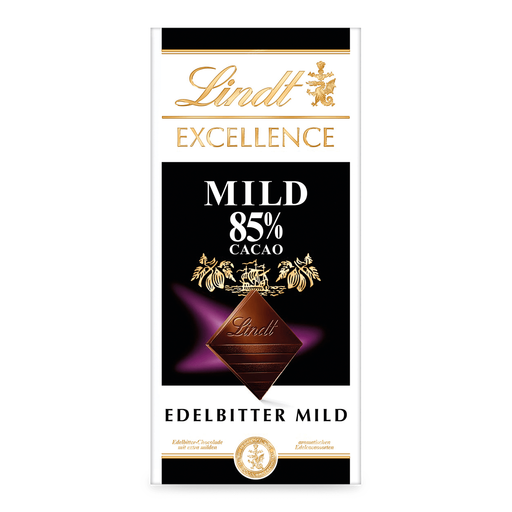
Lindt Excellence Mild Dark, 85% cocoa, 100 g
An option if you’re looking for a bar with a noticeably higher cocoa content than a 70% introduction to enjoy with your coffee.
85% cocoa; 100 g bar. “Mild” is part of the variety name and doesn’t replace your own taste test.
If allergen traces are relevant to you, check the information on the specific pack.
View at Joybuy
 No image available
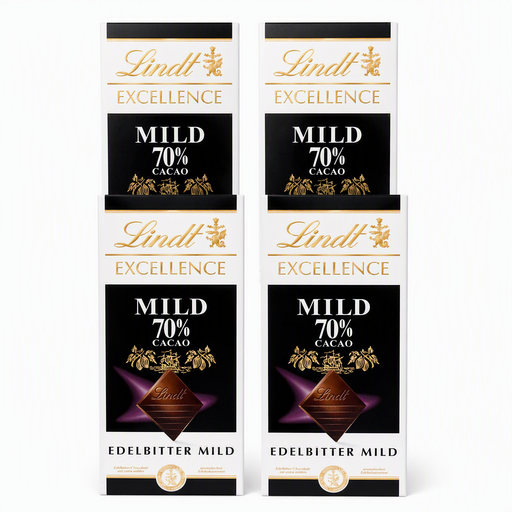
Lindt EXCELLENCE Mild 70%, 4 × 100 g
A 70% cocoa option if you’d like several bars to share or keep for future coffee breaks.
Four bars, 100 g each; 70% cocoa. If you only need one bar, bear the pack size in mind.
If you have allergies, read the ingredients and trace warnings on the specific pack.
View at Joybuy
 No image available
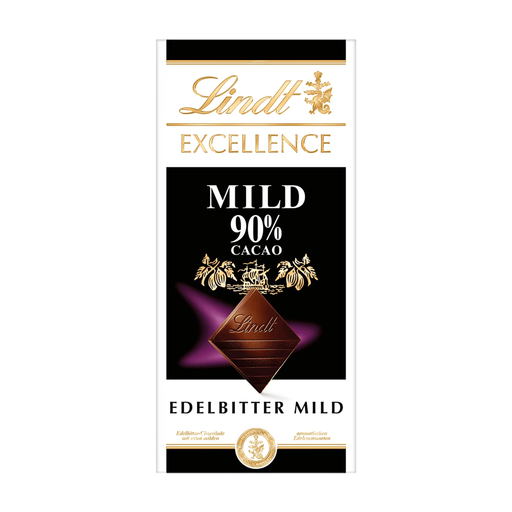
Lindt Excellence, 90% cocoa, 100 g
If you’re looking for a bar with a very high cocoa content to enjoy with your coffee, whether you like its particular flavour is a matter of personal taste.
90% cocoa; 100 g bar. The cocoa content alone doesn’t tell you whether it contains milk ingredients or allergen traces.
If you have specific requirements, check the full ingredients and allergen information on the pack before choosing.
View at Joybuy
Frequently asked questions
What cocoa content should I start with for Sunday coffee?
If you’re looking for a dark bar that isn’t too bitter, 60–70% cocoa is a good place to start. Lindt describes its 60% variety as balanced and gently bitter, and its 70% variety as a balanced introduction to dark chocolate. This is a guide to flavour, not a universal rule for quality.
Is dark chocolate automatically vegan or milk-free?
No. Cocoa content alone doesn’t confirm either. The Lindt EXCELLENCE 78% described here contains anhydrous milk fat, and you should also check for possible allergen traces in other varieties. So check the ingredients and warnings on the specific pack.
Which details on the pack can help me choose?
When choosing a dark chocolate bar, the most relevant details are the cocoa content, ingredients, highlighted allergens, nutritional information, net weight and best-before date. The Verbraucherzentrale explains what food labelling means; if you have allergies or specific dietary requirements, the ingredients and allergen information on the particular pack are what matter.
What does the best-before date mean for chocolate?
The best-before date isn’t an automatic expiry date. According to Lebensmittelverband Deutschland, it indicates how long certain quality characteristics are maintained when the unopened product is stored appropriately. Follow the storage instructions and check the appearance, smell and texture after the date has passed. Don’t eat the chocolate if it has mould or an unusual smell.


