Leisure cyclists who ride for pleasure
On a relaxed ride or afterwards, they’re mainly after the rich, slightly bitter chocolate flavour. The biscuit is a snack, not a precisely portioned sports fuel.


Dark chocolate butter biscuits may work as a portioned treat or supplementary snack when cycling, but they shouldn’t automatically be relied on as your sole fuel for long or intense rides. Compare the nutritional values per 100 g with the portion you’ll actually eat, and check the ingredients and allergen information on the pack. For intense exercise, plan your carbohydrate intake separately and test it during training.
On a relaxed ride or afterwards, they’re mainly after the rich, slightly bitter chocolate flavour. The biscuit is a snack, not a precisely portioned sports fuel.
They want to estimate the carbohydrate content of their ride food. This means looking not just at the nutritional values per 100 g, but also at the portion they actually pack and how well it sits during the ride.
For them, the labelling on the specific pack is key. Depending on the product, the varieties considered here may contain wheat, milk, egg or soya, and may carry a precautionary warning about traces of nuts.
First decide whether you’re choosing a biscuit mainly for its flavour or as part of a planned fuelling strategy. Then consider portion size, nutritional information and the ingredients in the specific variety.
| Criteria | What to check | Who it matters to |
|---|---|---|
| Carbohydrates you can plan for | Check the carbohydrate content per 100 g and work it out for the portion you’re packing; plan your overall fuelling separately for intense rides. | For a longer ride, I want to know how many carbohydrates my portion actually contains, rather than deciding based on the type of biscuit alone. Around 40% of consumers put this ability to plan first. |
| Rich chocolate flavour | Compare the product name and stated chocolate content; also check the sugar and fat per 100 g. | If rich flavour matters more to me than precise fuelling, I’ll look specifically for a dark chocolate variety. For around 30% of consumers, enjoyment comes first. |
| Ingredients and allergens | Read the ingredients list, highlighted allergens and any precautionary allergen warnings on the pack you buy. | Before packing it, I need to check whether the specific variety contains ingredients or has warnings that are relevant to me. For around 30% of consumers, this check is the main priority. |
The description refers to the chocolate flavour, not how suitable the biscuit is for a particular ride duration. The varieties considered here each contain around 25 g of fat per 100 g, as well as carbohydrates.
Factor the portion you want to eat into your fuelling plan. For longer or more intense rides, test the amount and how well your overall carbohydrate intake sits during training.
The products considered here vary in their ingredients and potential traces. For example, a dark chocolate coating doesn’t tell you whether the product contains milk or egg.
Check the ingredients list and allergen information on the specific pack, rather than applying details from another variety.
EDEKA warns that online information may differ from what’s on the packaging. ALDI SÜD says different suppliers may account for variations in nutritional values.
Use product pages to narrow down your options, then check the nutritional information and ingredients on the pack you receive before eating the biscuits.
The information below relates to individual varieties or the specific brand range mentioned, not every product from that brand.
According to REWE, the 125 g pack of Butterkeks Choco Edelherb combines butter biscuits with 63% dark chocolate.
According to REWE, the Zartbitter Schokokeks contains 63% dark chocolate.
EDEKA describes its Schoko-Butterkeks Zartbitter as a butter biscuit with 63% dark chocolate.
ALDI SÜD stocks a 125 g pack of Schoko-Butterkeks Zartbitter.
Lidl places SONDEY in its range of fine biscuits and small baked treats.
If you’re after a dark chocolate butter biscuit as a treat or a supplementary snack, this 125 g pack from Leibniz is one option. If you’re planning your carbohydrate intake for a ride, use the nutritional information on the pack you buy to work out the amount in your actual portion.
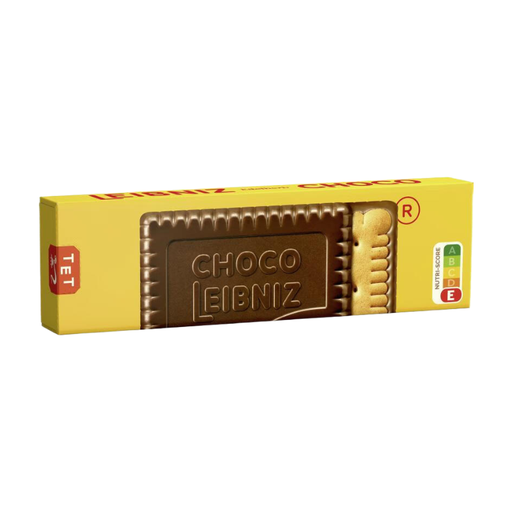 Image unavailable
An option for a relaxed ride or afterwards, when the flavour of dark chocolate is what you’re after.
The pack contains 125 g. For precise portion planning, check the nutritional information and work out how much you’ll actually take with you; check the ingredients and allergens against the current packaging.
Don’t automatically plan to rely on them as your sole source of fuel. The varieties considered here contain around 58 to 61 g of carbohydrates and approximately 25 g of fat per 100 g. A review published in 2015 in Ned Tijdschr Geneeskd gives 30 to 60 g of carbohydrates per hour as a guideline for intense exercise lasting 1 to 2.5 hours; you’ll also need to take your portion size and how well you tolerate it into account.
You can’t tell either way from the description “dark chocolate”. The varieties considered here contain milk ingredients; EDEKA also warns that its GUT&GÜNSTIG Schoko-Butterkeks Zartbitter may contain traces of nuts. Check the labelling on the specific pack.
Compare the ingredients, highlighted allergens and nutritional values per 100 g with the portion you plan to eat. The Verbraucherzentrale explains how packaged food is labelled in Germany. Before packing, it’s also useful to check the best-before date and storage instructions on the specific pack.
Keep the biscuits dry and, where possible, away from heat. Heat can affect the chocolate coating when you carry them in a rucksack or jersey pocket. Also follow the storage instructions on the pack.