Fans of very dark, pure chocolate bars
You want a pronounced cocoa flavour to enjoy during the match, and you’re open to bitterness, acidity and roasted notes. As well as the cocoa percentage, check the description of the specific variety.


If you’d like a bar with a pronounced cocoa flavour to enjoy while watching football, varieties labelled as containing 85% cocoa are a good place to start. The cocoa percentage alone won’t tell you whether a more intense or milder variety will suit your taste. Also compare the sugar per 100 g, ingredients and allergen information for the specific bar.
You want a pronounced cocoa flavour to enjoy during the match, and you’re open to bitterness, acidity and roasted notes. As well as the cocoa percentage, check the description of the specific variety.
You’re looking for a bar with at least 85% cocoa, but would prefer less acidity and a subtler smoky note. Lindt describes its EXCELLENCE Mild 85% in these terms; whether you like the flavour is a matter of personal taste.
Before sharing, it’s important for you to know which ingredients and possible traces are listed on the specific pack. A high cocoa percentage doesn’t automatically mean a bar is free from milk, soya or nuts.
First, choose your preferred cocoa percentage and flavour profile. Then check the format, ingredients and allergen information for the variety you actually plan to buy.
| Reason for buying | What to check | Who it matters to |
|---|---|---|
| Pronounced cocoa flavour | Compare the stated cocoa percentage and sugar in the nutritional information per 100 g. | If I want a pure bar with a pronounced cocoa flavour, that taste matters more to me than added ingredients or a mild profile. Around 36% of consumers share this priority. |
| Milder flavour with a high cocoa percentage | Read the product description for details on acidity and smoky notes; bars with the same cocoa percentage can be described differently. | I want plenty of cocoa, but pronounced acidity or smokiness would spoil my match-day snack. A milder profile comes first for around 29% of consumers. |
| Easy to share | Choose the pack and piece format only after checking the recipe and cocoa percentage. | When several people are sharing, I want to hand out pieces easily, even if the highest cocoa percentage isn’t my first priority. This is the main consideration for around 14% of consumers. |
| Ingredients and allergens | Check the ingredients list, declared allergens and possible traces on the specific pack. | Before I buy or share a bar, I need to know whether its information meets my requirements; its dark colour isn’t enough to go on. Around 21% of consumers make this their priority. |
The name alone doesn’t make varieties comparable: according to Ritter Sport, Dunkle Orange and Dunkle Kaffee Mandel each contain 55% dark chocolate. This refers to the proportion of dark chocolate in the product, not a cocoa percentage of 55%.
If you’re looking for a high-cocoa bar, check the cocoa percentage stated for the specific variety. Additions such as orange, coffee or almonds are a separate matter of taste.
Even an 85% bar can carry warnings about nuts, milk or soya. The product information for REWE Beste Wahl 85% also mentions possible traces of peanuts and gluten.
For each variety, check the current ingredients list and allergen and trace warnings on the pack itself, rather than assuming its ingredients are the same as another variety’s.
Individually portioned pieces can make sharing easier, but they don’t tell you anything about the recipe. Kinder describes its individually wrapped kinder Schokolade as milk chocolate with a milk filling and states that it contains 13% total cocoa ingredients.
First choose a type of chocolate that suits you based on its product information. Then decide which format will work best for your match night.
The EXCELLENCE dark chocolate range includes several stated cocoa percentages, making it a useful point of comparison for pure bars with a pronounced cocoa flavour.
The 85% dark chocolate is another high-cocoa bar with a stated percentage, offering a point of comparison for ingredients and nutritional information.
Dunkle Orange and Dunkle Kaffee Mandel are options if added flavours matter more to you than a pure high-cocoa bar.
Edel Zartbitter is worth considering if you like having individually portioned pieces that are easy to share.
The Milka Extra range considered here features Alpine milk chocolate with added ingredients, such as Lotus Biscoff or salted caramel and almond.
Kinder Schokolade is included here mainly to show the difference between a sharing-friendly bar format and a high-cocoa dark chocolate bar.
This selection includes an 85% bar described as having a milder flavour and a four-pack of Lindt Mild 90%. Alongside the cocoa percentage, your choice will depend on the flavour you prefer and the pack size you need.
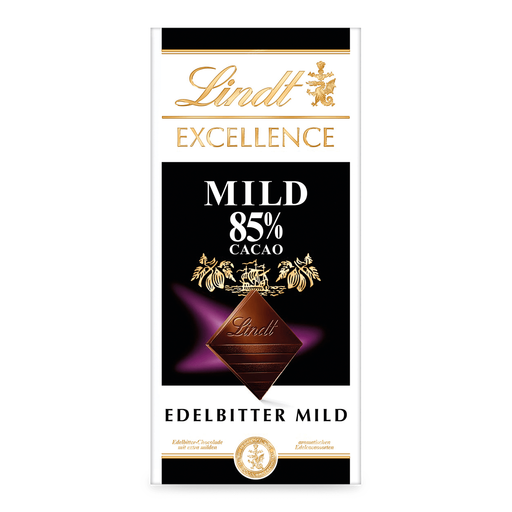 No image available
If you’re looking for a bar with a pronounced cocoa flavour but a milder taste to enjoy during the match, this variety could be a good fit.
85% cocoa and 100 g, according to the product title. Lindt describes the Mild variety as less acidic, with a subtler smoky note; check the ingredients and allergen information on the pack before sharing.
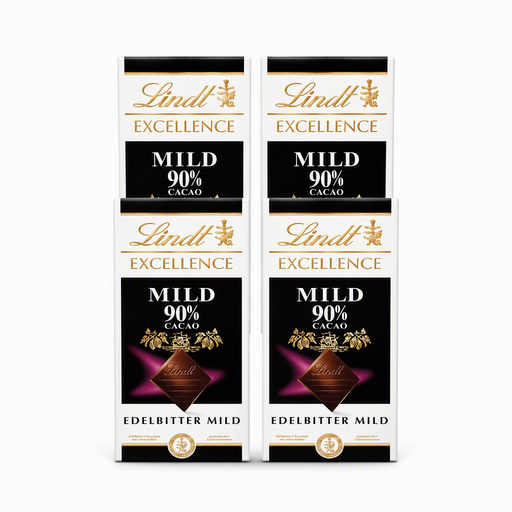 No image available
If you’re looking for several bars labelled as containing 90% cocoa for match night, this four-pack could be a good option.
Four 100 g bars, according to the product title. Check the ingredients and allergen information on the specific pack before sharing it with others.
No. The same cocoa percentage doesn’t determine the flavour profile. Compared with regular EXCELLENCE 85%, Lindt describes EXCELLENCE Mild 85% as less acidic and having a subtler smoky note; taste is still a matter of personal preference.
No. Lindt lists possible traces of nuts, milk and soya for its regular EXCELLENCE 85%; the REWE Beste Wahl bar considered here also carries trace warnings. Check the current information on the specific pack for each variety.
The ingredients list, nutritional information and allergen labelling can help you compare specific bars. The Federal Ministry of Agriculture, Food and Home Affairs explains that certain ingredients that can cause allergies must be declared on food packaging; also check the variety’s possible trace warnings.
Compare the sugar value in the nutritional information per 100 g, rather than relying on the word “dark” alone. Lindt lists 13.0 g of sugar per 100 g for EXCELLENCE 85%, while REWE lists 12.7 g per 100 g for Beste Wahl 85%. These figures relate to these specific products and aren’t a substitute for your own taste preference.