Fans of bold cocoa flavours
If you’re after a distinctly bitter taste for a late-night snack, check the stated cocoa content and the description of the specific variety. A high percentage doesn’t necessarily mean you’ll enjoy its flavour.


For a late-night snack, a 70% bar is a sensible starting point if you’d like to try dark chocolate but aren’t specifically looking for a very bitter variety. If you prefer a stronger cocoa flavour, consider 85% or more; among the Lindt bars compared here, the 85% version contains less sugar per 100 g than the 70% version. Make your choice based on the ingredients, nutrition information, allergen advice and pack size for the specific product – not just the percentage.
If you’re after a distinctly bitter taste for a late-night snack, check the stated cocoa content and the description of the specific variety. A high percentage doesn’t necessarily mean you’ll enjoy its flavour.
If you’re starting to explore dark chocolate, a clearly labelled 70% bar is a good place to begin. Still, check the ingredients and nutrition information rather than assuming the percentage tells you what it will taste like.
If particular ingredients or traces are important to you, rely on the labelling on the pack you choose. Dark chocolate bars can also carry warnings about milk, tree nuts or soya.
First, choose the kind of cocoa flavour you’re after. Then compare the specific ingredients and nutrition information. If you’re looking at different formats, the amount of chocolate in the pack matters too.
| What to consider | What to check | Who it matters to |
|---|---|---|
| Bitterness and cocoa flavour | Check the stated cocoa content and flavour description for the exact variety. | I mainly want bold cocoa flavours with my snack, and need to decide how bitter I’d like the bar to be. For around 45% of consumers, this flavour is the top priority. |
| Ingredients and allergens | Read the ingredients list, highlighted allergens and any traces advice on the specific pack. | If I need to avoid certain ingredients, the word ‘dark’ isn’t enough to guide me. Ingredients and allergen information are the main priority for around 33% of consumers. |
| Portion size and nutrition | Compare the pack size and the sugar and energy content per 100 g. | For a small evening snack, I want to be able to assess the pack size and nutritional information. Around 22% of consumers prioritise portion size and nutrition information. |
For Lindt EXCELLENCE, the 70% and 85% bars compared here list 30 g and 13 g of sugar per 100 g respectively. This difference applies to these two specific varieties, not to every bar with the same cocoa content.
Compare the nutrition information using the same reference amount, and consider how much you plan to eat.
A dark chocolate recipe doesn’t rule out allergenic ingredients or traces advice. The Lindt and REWE 85% bars checked here list different possible traces.
Before eating, read the ingredients and advice on the pack for the exact variety; a traces warning is not the same as an ingredient listing.
A 2019 article from Ritter Sport describes versions of its Kakao-Klasse range at the time. Their cocoa contents and recipes don’t confirm the composition of an Edelkakao-Klasse bar you choose today.
For each variety, check the current product name, cocoa content and ingredients list.
The EXCELLENCE range includes specific 70% and 85% bars in a 100 g format, making them easy to compare.
The 85% dark chocolate is a clearly labelled 100 g bar.
Kakao-Klasse is a product range whose cocoa content varies by variety.
Edel Zartbitter comes in pre-portioned pieces, if that format matters more to you than a confirmed high cocoa content.
REWE lists Milka Zartherb in its dark chocolate range.
Kinder Schokolade appears in REWE’s chocolate bar range, but that doesn’t make it a clearly labelled high-cocoa dark chocolate option.
This selection includes Lindt EXCELLENCE bars with 70%, 85% or 90% cocoa: individual 100 g bars and four-packs. The right option for you depends on the cocoa content you want, the format and the information on the specific pack.
 No image available
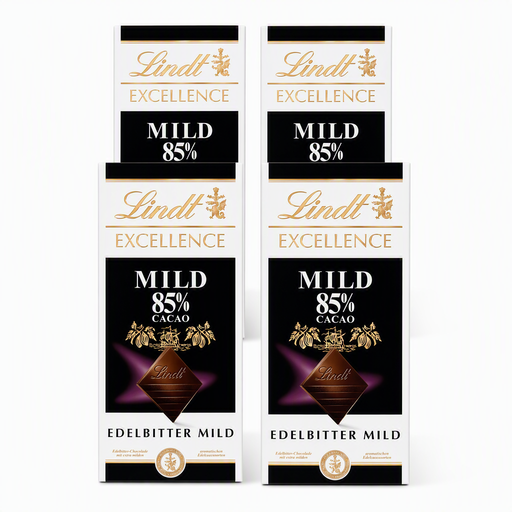
If you’re looking for an 85% variety in several individually wrapped bars, this four-pack gives you the format you want.
If you have allergies, check the ingredients and possible traces advice on the packs.
 No image available
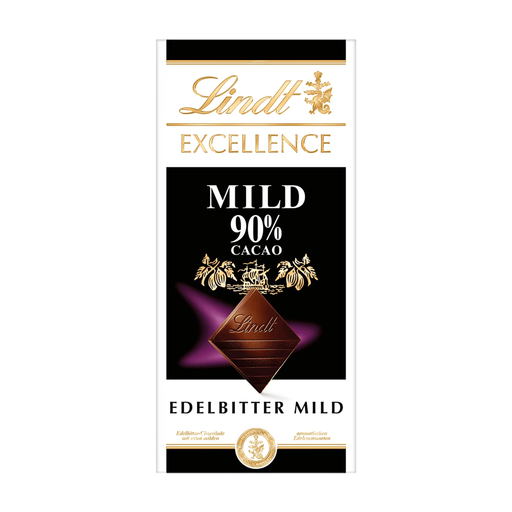
If you specifically want a bar with 90% cocoa, this is the individual 100 g option in the selection.
When comparing it with other varieties, check the nutrition information, ingredients and allergen advice on the pack.
 No image available
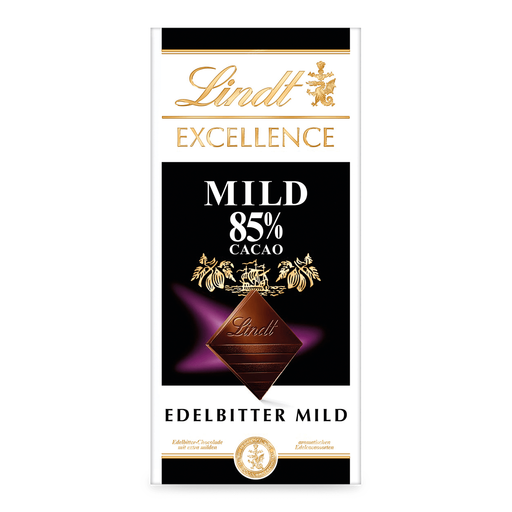
If you’d prefer a single 85% bar rather than a four-pack, this option is the format you’re looking for.
‘Mild’ is part of the variety name and doesn’t guarantee a particular level of bitterness; check the allergen advice on the pack too.
 No image available
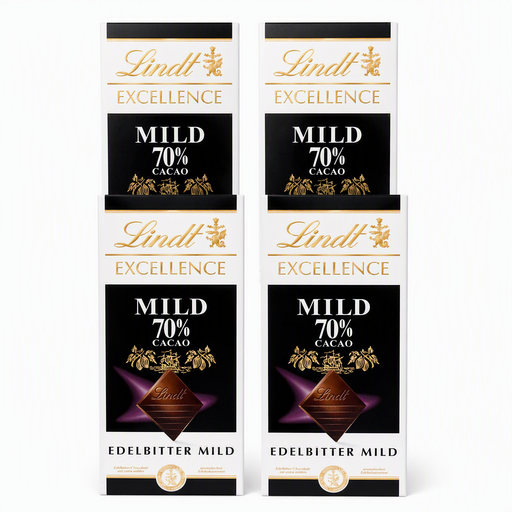
If you want to start with 70% cocoa and keep several bars individually wrapped, this four-pack gives you the format you’re after.
If you have allergies, check the specific pack. The product information lists soya lecithin as an ingredient and mentions possible traces of other allergens.
No, you can’t work out either from cocoa content alone for every bar. The Lindt EXCELLENCE 70% and 85% varieties compared here contain 30 g and 13 g of sugar per 100 g respectively. For a buying comparison, read the full nutrition information for each variety.
That depends on the labelling for the specific bar, not its dark colour. Read both the highlighted allergenic ingredients and any possible traces advice. The German Federation for Food Law and Food Science distinguishes between the labelling of allergenic ingredients and additional advice about possible traces.
Compare the ingredients, allergen information, net weight and nutrition information per 100 g. The German Federation for Food Law and Food Science says the nutrition table includes, among other things, energy, fat, saturates, carbohydrates, sugars, protein and salt. The figures for the variety you choose are what matter when comparing products.
No, cocoa content alone doesn’t tell you how a particular bar will affect your sleep. If you’re watching your caffeine intake in the evening, take other sources of caffeine into account too; the European Food Safety Authority considers caffeine from all sources together.