Choose dark chocolate to enjoy with tea by checking the stated cocoa percentage and the specific recipe, rather than relying on the word ‘dark’ alone. A bar described as mild, with 70% cocoa, can be a good starting point; if you prefer pronounced bitter cocoa notes, compare varieties with 74% or 81%. A higher cocoa percentage is no substitute for checking the sugar, fat, ingredients and allergens.
Which variety might suit you?
New to dark chocolate
If you fancy a dark bar with your tea but would rather avoid a pronounced bitterness, it’s worth comparing recipes described as mild. Lindt describes its EXCELLENCE Mild 70% as mild, but the percentage alone won’t determine whether you enjoy the taste.
For a stronger cocoa flavour
If you’re specifically looking for a more bitter bar, the stated cocoa percentages are a useful starting point. Ritter Sport offers 74% and 81% varieties in its Edelkakao Klasse range, describing them as aromatic and intense respectively.
For a closer look at ingredients and labelling
If particular ingredients or allergens matter to your choice, check the information for the specific variety rather than relying on the brand alone. To compare nutritional values, use the same basis for both bars, such as the figures per 100 g.
What to look for when buying
Start with the flavour you’re after, then compare the nutritional information and ingredients of the specific bars. The needs below each relate to the main factor shoppers consider when looking for dark chocolate to enjoy with tea.
| What matters |
What to check |
Who it matters to |
| Balanced flavour |
Compare the stated cocoa percentage and the description of the specific variety. |
I’d like to try dark chocolate with tea without a strongly bitter note dominating the flavour. Around 31% of shoppers put this balance first. |
| Pronounced bitterness |
Check the percentage; Ritter Sport offers Edelkakao varieties with 74% and 81% cocoa. |
A distinctly cocoa-forward flavour matters more to me than a mild taste description. Around 31% of shoppers prioritise this intensity. |
| Nutritional comparison |
Compare sugar, fat and energy using the same basis, such as per 100 g. |
Before choosing a bar, I’d like to compare its nutritional values with those of another recipe. This is the main consideration for around 23% of shoppers. |
| Ingredients and allergens |
Read the ingredients list, declared allergens and any ‘may contain’ warnings on the relevant pack. |
If I need or want to avoid particular ingredients, the labelling of the specific variety matters more to me than its flavour profile. Around 15% of shoppers make this their top priority. |
Common misconceptions
-
Assuming ‘dark’ tells you the exact cocoa percentage
The description alone won’t tell you whether a bar has the cocoa percentage you’re looking for.
Check the percentage on the specific pack if you want to compare, for example, a 70% bar with a variety containing more cocoa.
-
Assuming more cocoa means fewer calories
A higher cocoa percentage doesn’t determine the fat or energy content of an individual bar. A market comparison published by food-monitor in 2021 found that bars with very high cocoa content had less sugar on average, but more fat than the 50% products included in the comparison.
Compare the sugar, fat and energy figures per 100 g on the current packaging instead of trying to infer nutritional values from the cocoa percentage.
-
Assuming ‘dark’ means the ingredients are right for you
Dark chocolate can still contain ingredients or traces that you need to take into account. Another variety from the same brand isn’t a reliable guide.
Read the ingredients, declared allergens and any ‘may contain’ warnings on the pack of the variety you’re actually choosing.
-
Confusing filled snacks with high-cocoa bars
A dark chocolate component doesn’t make a filled snack a bar with a stated high cocoa percentage. According to kinder, kinder bueno contains 1.5% semi-dark chocolate.
If the cocoa percentage of the chocolate matters to you, compare bars with a clearly stated percentage rather than judging snacks by their dark chocolate accents.
Brands to consider
These examples can help you compare specific varieties and product types; the brand name alone doesn’t determine the cocoa percentage or ingredients.
Lindt
The EXCELLENCE 70% bars offer a direct comparison between a regular variety and one described as mild.
- Lindt states that EXCELLENCE 70% contains at least 70% cocoa and describes EXCELLENCE Mild 70% as mild.
- ‘Mild’ describes the flavour; it doesn’t mean the bar contains less sugar or has a lower energy value. Compare the nutritional information for each variety to check.
Ritter Sport
The Edelkakao Klasse range lets you compare stated cocoa percentages within a single product range.
- For the range launched in 2026, Ritter Sport lists varieties with 55%, 74% and 81% cocoa in 75 g bars.
- The flavour descriptions come from the manufacturer. When comparing pack sizes, remember that a 75 g bar isn’t the same as a 100 g bar.
Schogetten
Edel Zartbitter is a chocolate divided into individual pieces, for shoppers who value this format.
- Schogetten describes the variety as individual pieces.
- The name ‘Edel Zartbitter’ alone doesn’t confirm a particular high cocoa percentage. Schogetten states that the variety contains 47 g of sugar per 100 g.
Kinder
kinder bueno is a filled wafer snack, so it’s a different product type from a plain dark chocolate bar.
- kinder’s ingredient information makes the difference clear: the snack combines wafer with milk and hazelnut cream, among other ingredients.
- According to kinder, semi-dark chocolate makes up 1.5% of the product. If you’re looking for a bar with a high cocoa percentage, don’t treat the snack as equivalent.
Milka
With Milka, the exact variety matters if you’re looking for a dark bar rather than filled milk chocolate.
- For example, Milka explicitly describes Milka Extra Lotus Biscoff as a combination of Alpine milk chocolate and caramelised biscuit.
- To choose a bar with a high cocoa percentage, check the percentage and ingredients of the specific product; the brand name isn’t enough.
REWE
Here, REWE is a place to shop and compare specific chocolate varieties, not a chocolate brand.
- The range lets you compare information from different brands and recipes.
- Check the information and availability in your area rather than assuming a listing in the catalogue means a product is stocked in every shop.
Dark chocolate bars at Joybuy
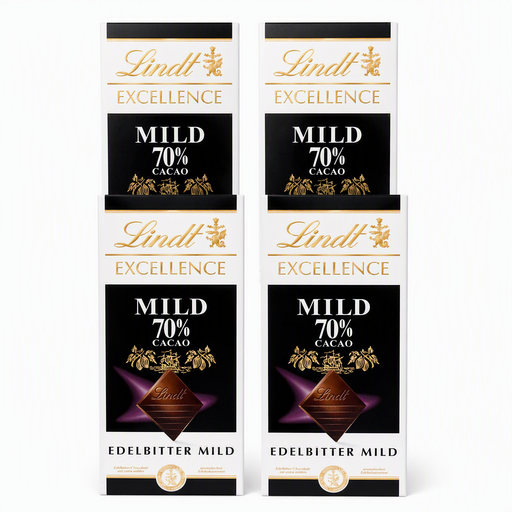
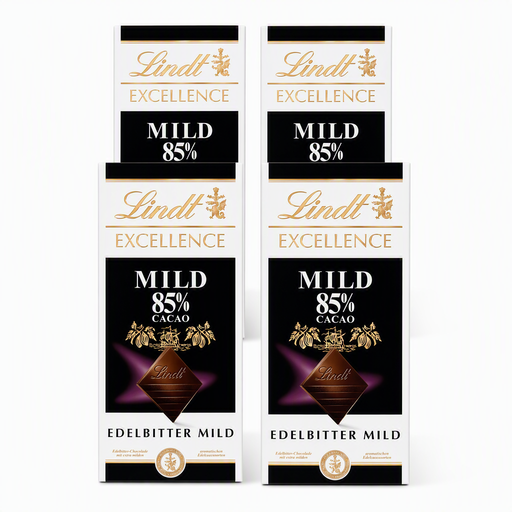
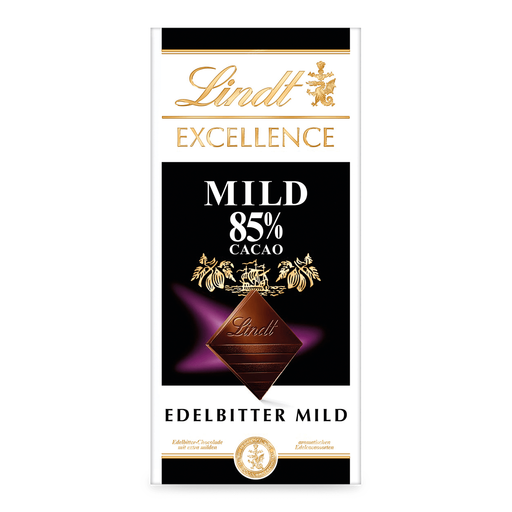
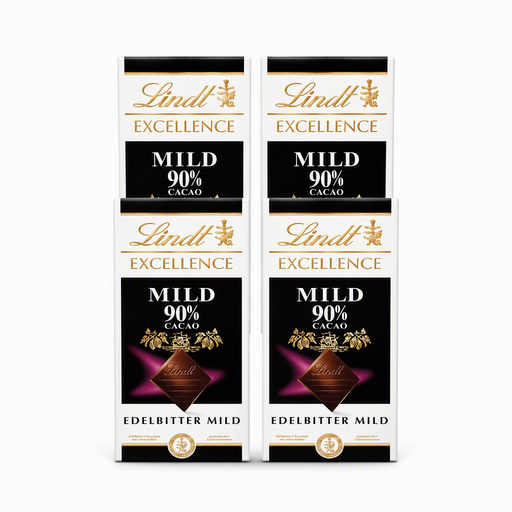
This selection includes Lindt EXCELLENCE bars with stated cocoa percentages of 70%, 85% or 90%. For the 85% and 90% varieties, ‘Mild’ is the variety name; it doesn’t promise that you’ll personally find the flavour mild. Check the number of bars in each multipack.
 No image available
Lindt EXCELLENCE Mild 70%, 4 × 100 g
A useful choice for comparing a dark variety described as mild with 70% cocoa. The pack contains four 100 g bars; check the nutritional and allergen information for this specific variety before choosing.
View at Joybuy
 No image available
Lindt EXCELLENCE Mild 85%, 4 × 100 g
For shoppers who’d like to compare a variety described as mild with 85% cocoa. The pack contains four 100 g bars; the cocoa percentage alone doesn’t tell you the fat or energy content.
View at Joybuy
 No image available
Lindt EXCELLENCE Mild 85%, 100 g
The same cocoa percentage and variety name, available as a single 100 g bar rather than a four-pack. Compare the pack format and the information on each product to help you decide.
View at Joybuy
 No image available
Lindt EXCELLENCE Mild 90%, 4 × 100 g
A 90% cocoa bar to consider if the variety name ‘Mild’ also appeals to you. The pack contains four 100 g bars; compare sugar, fat and energy using the nutritional information, not the percentage alone.
View at Joybuy
Frequently asked questions
Does ‘dark’ tell you the exact cocoa percentage?
No, the description alone doesn’t tell you the specific percentage. Check the cocoa percentage on each bar if you want to compare varieties with 70%, 80% or another amount.
Does chocolate with more cocoa automatically contain less sugar, fat and energy?
No, you can’t work out all three of these nutritional values from the cocoa percentage. A market comparison published by food-monitor in 2021 found that bars with at least 90% cocoa had less sugar on average, but more fat than the 50% products included in the comparison. For an accurate comparison, check the nutritional information per 100 g for the specific bars.
What should I look out for when it comes to allergens in dark chocolate?
Check the ingredients and allergen labelling for each specific variety, as well as any ‘may contain’ warnings. Dark chocolate isn’t automatically free from milk, soya or nuts; the information for another variety from the same brand is no substitute for checking.


