Who should consider their choice carefully

People training with little time before a session

You want to take a small snack with you and are wondering what portion you can manage before a workout. The German Nutrition Society describes carbohydrates as important for supplying energy during sport; the Australian Institute of Sport suggests low-fibre carbohydrate sources for people who find ordinary foods difficult to tolerate before exercise.

Fans of dark chocolate

You’re after a bittersweet chocolate flavour, but a butter biscuit coated in chocolate, an oat cookie and a wafer filled with hazelnut cream are all different products. The chocolate flavour alone tells you neither the nutritional value of the whole portion nor how easy it will be to digest before a workout.

People with specific ingredient requirements

Whether you’re looking for vegan ingredients or need to avoid certain foods, check the current packaging rather than relying on terms such as ‘dark chocolate’ or ‘no added sugar’. The ingredients list, highlighted allergens and any ‘may contain’ information each answer different questions.

What to look for when buying

First, think about how long you have before your workout and which portion you know you can tolerate. Then compare the flavour and ingredients using the information on the specific pack.

Criteria What to check Who should pay particular attention
Portion and digestibility Compare carbohydrates, fat and fibre per 100 g and for the portion you plan to eat. If I eat shortly before a workout, I want to stick to a portion I know I can tolerate. This is the main consideration for around 43 % of consumers.
Dark chocolate flavour Check whether it’s a chocolate coating, chocolate in a cookie or a wafer biscuit, and note the stated chocolate content. A pronounced dark chocolate flavour matters more to me than a particular cookie recipe. Around 29 % of consumers put flavour first.
Ingredients and labelling Read the ingredients list, allergen information and nutritional values; don’t assume ‘vegan’ means ‘allergen-free’. I need to check whether the ingredients meet my requirements before buying. This takes priority for about 28 % of consumers.

Common misconceptions

  • ‘Dark chocolate’ automatically means fewer calories

    The flavour or cocoa content doesn’t tell you the nutritional value of the whole cookie. EDEKA’s information on dark chocolate shows that a higher cocoa content doesn’t necessarily mean a lower energy content per 100 g.

    Compare the nutritional information on the specific pack and consider how much you actually want to eat.

  • Trying a new cookie for the first time just before a workout

    The oat cookies described by REWE and ALDI SÜD contain fibre and fat. The Australian Institute of Sport suggests low-fibre carbohydrate sources for people who find ordinary foods difficult to tolerate before exercise.

    If snacks before a workout tend to upset your stomach, stick to a portion you already know you can tolerate.

  • Assuming vegan, no added sugar and low-allergen mean the same thing

    These claims relate to different properties. REWE Bio’s vegan oat cookie may contain traces of milk and soya; Gullón lists skimmed milk powder and soya lecithin among the ingredients in its Pastas Avena Zero.

    Decide which ingredients matter to you, then check the ingredients list and allergen information on the current pack.

  • Assuming online information applies to every pack

    EDEKA notes that information online about its chocolate butter biscuit may differ from the packaging. ALDI SÜD says that different suppliers may provide its oat cookies.

    If particular ingredients or nutritional values are important to your choice, check them against the pack you’re buying.

Brands to help you choose

Bahlsen / LEIBNIZ

Bahlsen’s Ohne Gleichen Edelherb is a wafer option rather than a classic cookie.

  • Bahlsen describes it as wafers with hazelnut cream and intense dark chocolate – a different combination of biscuit and chocolate from a butter biscuit.
  • This option isn’t suitable if you have a hazelnut allergy, as it contains hazelnut cream. Use the current pack for a nutritional comparison.

REWE Bio

The dark chocolate oat cookies are worth considering if you’re looking for a vegan recipe with oats as an ingredient.

  • According to REWE, the product is vegan and lactose-free; it contains 32 % oats and 25 % dark chocolate.
  • REWE lists 23,5 g of fat and 6,3 g of fibre per 100 g, and says the product may contain traces of milk and soya. Take your portion size and the pack’s labelling into account when comparing.

GUT&GÜNSTIG bei EDEKA

The dark chocolate butter biscuit has a generous chocolate coating.

  • EDEKA states that this product contains 63 % dark chocolate.
  • According to EDEKA, it contains 25 g of fat and 37 g of sugar per 100 g. The listed allergens include wheat, milk and soya; it may contain traces of nuts.

BIO bei ALDI SÜD

The organic oat cookies with dark chocolate are another specific oat cookie option.

  • For the 200-g pack, ALDI SÜD lists 56,3 g of carbohydrates and 7,1 g of fibre per 100 g.
  • ALDI SÜD warns that products may vary because they come from different suppliers. Check the information on the pack you buy.

Gullón

Pastas Avena Zero is an oat biscuit for people considering products labelled ‘no added sugar’; it isn’t necessarily a dark cookie.

  • Gullón markets this variety as a biscuit with no added sugar.
  • Ingredients listed by Gullón include maltitol, skimmed milk powder and soya lecithin. The claim doesn’t replace checking the nutritional values or the ingredients.

Dark chocolate butter biscuits at Joybuy

If you’re looking for a butter biscuit with dark chocolate, this LEIBNIZ option could be worth considering. Whether it works as a pre-workout snack depends on the portion you choose and how well you tolerate it.
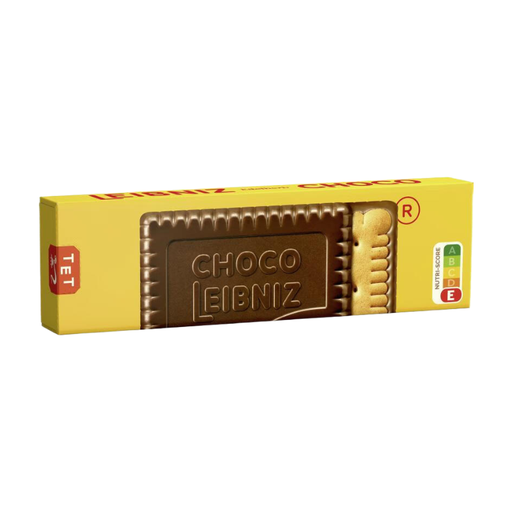
LEIBNIZ butter biscuit with dark chocolate, 125 g

LEIBNIZ butter biscuit with dark chocolate, 125 g

If you fancy a butter biscuit with dark chocolate before a workout, this 125-g pack offers just that. Check the pack for nutritional information for your planned portion, as well as the ingredients and allergens.

View at Joybuy

Frequently asked questions

Does a higher cocoa content make a cookie better before a workout?

No, you can’t judge whether it’s suitable from the cocoa content alone. Compare the nutritional values of the whole cookie and consider your portion and how long you have before your workout; EDEKA’s information on dark chocolate shows that more cocoa doesn’t automatically mean fewer calories per 100 g.

Are oat cookies always a good choice just before a workout?

Not necessarily: what matters is whether you can tolerate that particular portion before exercise. REWE and ALDI SÜD list 6,3 g and 7,1 g of fibre per 100 g respectively for the oat cookies mentioned; the Australian Institute of Sport suggests low-fibre alternatives for people who find ordinary foods difficult to tolerate before exercise.

Is ‘vegan’ enough to check for allergens?

No, vegan doesn’t automatically mean free from specific allergens or traces. REWE says its organic vegan oat cookies may contain traces of milk and soya; if you have specific requirements, check the information on the pack.

Which information should I rely on if product descriptions differ?

Check the pack you’re actually buying. EDEKA notes that information online about its chocolate butter biscuit may differ from the packaging, while ALDI SÜD says its oat cookies may come from different suppliers.