New to dark chocolate with coffee
If you’d like to avoid pronounced bitterness, a 70% bar specifically described as mild could be a good starting point. Lindt specifically recommends its EXCELLENCE Mild 70% as an accompaniment to coffee.


If you’re looking for dark chocolate to enjoy with coffee without a pronounced bitter taste, a 70% bar described as mild could be a good place to start. If you prefer stronger cocoa notes, compare varieties with a higher cocoa content. However, the percentage alone doesn’t tell you everything about the flavour, sugar, fat, ingredients or allergens.
If you’d like to avoid pronounced bitterness, a 70% bar specifically described as mild could be a good starting point. Lindt specifically recommends its EXCELLENCE Mild 70% as an accompaniment to coffee.
If you want the cocoa flavour to stand out, it’s worth comparing varieties with a higher cocoa content and reading their flavour descriptions. Ritter Sport describes its 81% Cocoa Class bar as having a strong cocoa flavour.
If certain ingredients or allergens are important to you, check the labelling on the specific bar. Compare sugar and fat using the nutritional information per 100 g, rather than assuming you know the recipe from the word ‘dark’.
First decide whether flavour, ingredients, format or particular ingredients matter most to you when choosing chocolate to enjoy with coffee. Then compare the details of the varieties that match your priority.
| What to consider | What to check | Who it matters to |
|---|---|---|
| Flavour and bitterness | Read the cocoa content and flavour description together; a 70% variety described as mild could be a good starting point. | If I want the chocolate and coffee flavours to work well together, I want to know whether the bar is described as mild or distinctly bitter. This flavour is the main consideration when buying for around 42% of consumers. |
| Sugar, fat and ingredients | Compare the nutritional information for sugar and fat per 100 g, along with the ingredients list. | I want to compare the ingredients in several dark chocolate bars rather than choosing based on cocoa content alone. This is the main concern for around 25% of consumers. |
| Pieces and texture | Choose between a bar, pre-portioned pieces and a filled wafer bar; if you’re choosing a bar, check its cocoa content separately. | For a coffee get-together, I want pieces that are easy to share, or I’d rather have a crunchy filling than a plain cocoa bar. Around 17% of consumers prioritise format and texture. |
| Ingredients and allergens | Read the ingredients list, highlighted allergens and any ‘may contain’ warnings on the pack you’re buying. | Before buying, I need to check that the specific chocolate meets my requirements for ingredients and allergens. This check comes first for around 16% of consumers. |
The description alone doesn’t make different bars easy to compare. The Schleswig-Holstein Consumer Advice Centre recommends checking the stated cocoa content and nutritional information.
Check the cocoa content on the specific pack, then compare the ingredients.
A comparison by the Schleswig-Holstein Consumer Advice Centre shows that a higher cocoa content is often associated with less sugar but more fat. Cocoa content alone therefore doesn’t tell you the nutritional values.
Compare the sugar and fat content per 100 g if these figures matter to you.
Dark chocolate can still contain ingredients or traces that matter when making your choice. The front of the pack is no substitute for checking the ingredients and allergen information.
Check the full labelling on every variety you buy, including any ‘may contain’ warnings.
A wafer or cream filling changes the ingredients. What Kinder says about classic kinder bueno also doesn’t necessarily apply to kinder bueno Dark.
If you’re looking for a high cocoa content, check the information for the specific variety rather than relying on ‘Dark’ in the name.
The EXCELLENCE range offers a classic and a specifically mild bar, both with 70% cocoa, making them useful for this comparison.
The Cocoa Class range is a useful guide if you want to compare bars with different cocoa contents.
REWE’s chocolate bar range lets you compare own-brand bars with different cocoa contents alongside branded varieties.
Edel Zartbitter is an option if pre-portioned pieces are what you want to enjoy with your coffee.
Milka Zartherb is listed as a darker option in REWE’s chocolate bar range.
kinder bueno Dark is better suited to comparisons of filled bars than of plain dark chocolate bars.
These bars address two questions to consider when enjoying chocolate with coffee: would you like to start with a 70% variety described as mild, or compare it with a mild 85% variety with a higher cocoa content? When choosing, pay particular attention to whether you want a single bar or a four-pack.
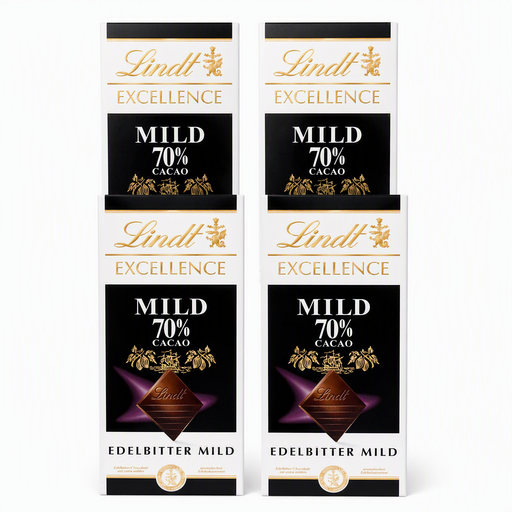 Image unavailable
A good choice if you’d like to start with a dark chocolate bar described as mild to enjoy with coffee. The pack contains four 100 g bars, each with 70% cocoa; bear the total quantity in mind when choosing.
Lindt states that EXCELLENCE Mild 70% contains 29 g of sugar per 100 g. If you have requirements relating to ingredients or allergens, check the labelling on the four-pack you buy.
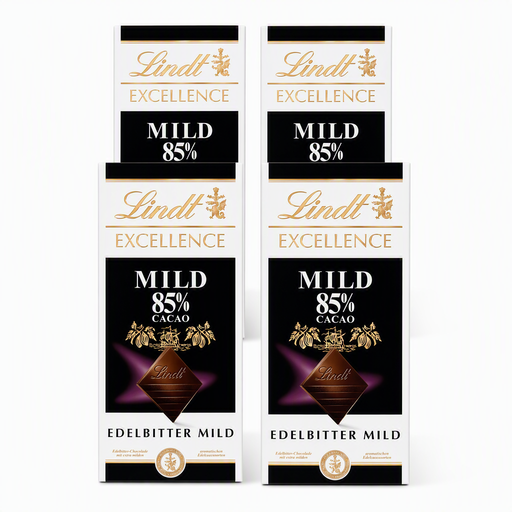 Image unavailable
For anyone weighing up a bar described as mild with 85% cocoa against the 70% variety. The pack contains four bars of 100 g each.
You can’t tell from the cocoa content alone whether you’ll enjoy this variety with coffee. Check the ingredients and allergen information on the four-pack too.
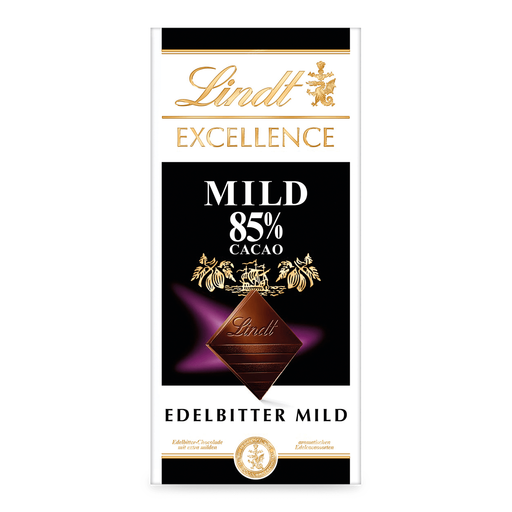 Image unavailable
For the same comparison of higher cocoa contents, if you’d prefer a single bar rather than a four-pack. This variety contains 85% cocoa and weighs 100 g.
Compare the flavour description with your coffee preferences and, if needed, read the ingredients and allergen information on the bar.
No. There isn’t one cocoa content that will suit everyone when pairing chocolate with coffee. If you want to avoid strong bitterness, you could try a variety described as mild. For stronger cocoa notes, compare higher cocoa contents and their flavour descriptions.
Read the ingredients list, highlighted allergens and any ‘may contain’ warnings on the specific pack. The Federal Ministry of Agriculture, Food and Home Affairs explains how the 14 most common causes of allergies and intolerances are labelled; the word ‘dark’ is no substitute for checking this information.
Store it somewhere dry and cool, at as steady a temperature as possible. Lindt recommends storing its chocolate at 14 °C to 18 °C and points out that heat and temperature fluctuations can affect its quality.