
Lieferung heute & morgen

Qualitätsgarantie

Willkommens-Angebote freischalten: KOSTENLOSE Lieferung | Bis zu 80 % RABATT | Kostenlose 30-Tage-JoyPlus-Testphase
App herunterladen
A Dashcam Hardwire Kit is a crucial component for unlocking the full potential of your car camera, especially for seamless 24-hour parking surveillance. However, the market for dashcam accessories is crowded, and the wrong dashcam connection cable can not only be useless but, in the worst-case scenario, damage your vehicle's electronics. Before you make a decision, you should understand the most common pitfalls that lead to unnecessary expense and frustration.
Many car owners invest in a hardwire kit to achieve a clean, cable-free installation and to activate parking mode. In doing so, they often encounter the same problems, which can be easily avoided with a little foreknowledge.
To avoid these problems, focus on three core technical features. These define the quality and safety of a hardwire kit and ensure your system functions as intended.
Before purchasing, you must check your dashcam's connector type. Modern models predominantly use the USB-C hardwire kit standard, while older devices often still rely on Micro-USB. Also, verify the input voltage specified by the dashcam manufacturer (e.g., 5V/2A). The hardwire kit must supply this voltage stably to ensure flawless operation.
A high-quality hardwire kit with a battery guard is essential for using parking surveillance. This feature, also known as a low-voltage cutoff, continuously monitors your car battery's voltage. If the voltage drops below a predefined threshold (typically 11.8V or 12.0V), the kit automatically cuts power to the dashcam. This ensures there is always enough energy left to start the engine.
A secure installation requires you to run the dashcam connection cable discreetly along the A-pillar and under the dashboard to the fuse box. A cable length of at least 3 metres (approx. 10 feet) is recommended for most cars and SUVs to provide flexibility during installation. Look for robust sheathing designed for in-vehicle use and the associated temperature fluctuations.
Based on these objective criteria, we have identified several products in the dashcam accessory space that are suited for specific user requirements.
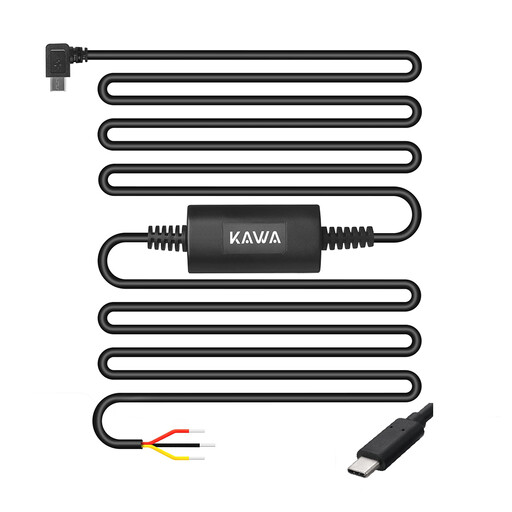
Why It's a Match: This kit is specifically designed for users of KAWA dashcams like the MINI ORB, D7, or MINI 7 Pro who want seamless integration and activation of the 24-hour parking mode.
It eliminates compatibility risks by being specifically engineered for KAWA models with USB-C. The integrated low-voltage protection at 11.8V reliably prevents the car battery from being drained.
Enables the use of specific features like time-lapse recording in parking mode via the KAWA app after correct installation.
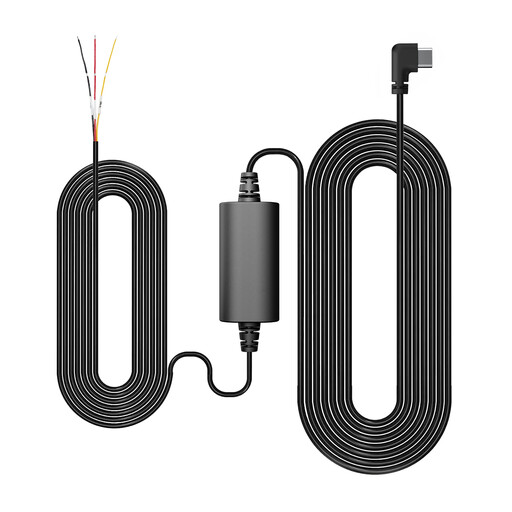
Why It's a Match: This kit is the designated solution for owners of a Botslab G980H series dashcam who need a reliable power supply for the 24-hour surveillance mode.
Specific development for the G980H models ensures compatibility. Low-voltage protection safeguards the car battery, and the 2.7-metre (9-foot) cable facilitates a clean installation in the vehicle.
Enables advanced parking mode functions such as smart time-lapse recording or event-triggered recording upon collision detection.
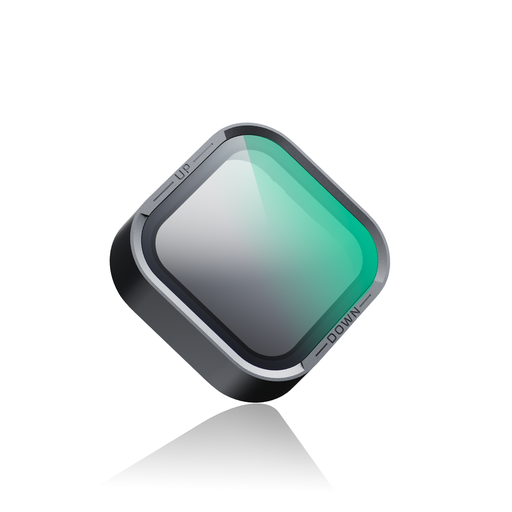
Why It's a Match: For users who demand not just a functional setup, but also high-quality recordings. This accessory is intended for owners of Botslab G980H multi-channel systems.
It addresses the often-overlooked pitfall of unusable footage. Reflections from the windscreen or wet roads can make licence plates and details illegible. A CPL filter for your dashcam significantly reduces this glare.
Improves colour saturation and contrast, resulting in clearer and more detailed recordings. It also serves as a protective layer for the camera lens.
We have compiled a complete, up-to-date list of products that fully meet these strict selection criteria and applicable safety regulations.
Yes, a kit without a battery guard, or one with a faulty one, can drain the battery. A functional hardwire kit with a battery guard is therefore essential. It measures the voltage and shuts off the dashcam before the battery reaches a critical state, ensuring your vehicle is always ready to start.
The installation should be done with care. Typically, the kit is connected to two fuse slots in the vehicle's fuse box: one for constant power (for parking mode) and one for ignition-switched power (which turns on/off with the engine). The ground wire is attached to a metal part of the car's body. If you are uncertain about your vehicle's electronics, consulting a professional installer is advisable.
Dashcams place high demands on memory cards because they overwrite data in an endless loop (loop recording). Use a high-quality microSD card rated Class 10/U3 with a "High Endurance" or "Video Monitoring" designation. These are designed for continuous write cycles. Some manufacturers, like 70mai with their 70mai 128GB MicroSD Card, offer cards that have been specifically validated for use with their own camera models to minimise compatibility issues.