Students working with local datasets
You work with notebooks, spreadsheets and traditional ML tasks on your own computer. The key considerations are how much memory your data needs and the specific workload involved.


For Python, spreadsheets and traditional ML methods, start by checking your dataset size, memory and processor rather than automatically opting for the biggest possible graphics card. pandas notes that data operations can require additional temporary memory, while scikit-learn says some methods can use multiple CPU cores. A mini PC or Mac mini takes up less desk space, while a tower may be worth considering if you have a specific GPU environment or future upgrades in mind. In either case, check software compatibility, configuration and space requirements.
You work with notebooks, spreadsheets and traditional ML tasks on your own computer. The key considerations are how much memory your data needs and the specific workload involved.
You switch between sitting and standing and need room for a screen, keyboard and study materials. The computer’s position and cables need to work with the desk’s movement.
You want to run models on your own GPU. First, check which backend your course project requires and what hardware is compatible with it.
A good fit if: local analysis and traditional ML tasks are your priority, and you have little desk space to spare.
Consider: specifications, ports and upgrade options vary by model and configuration.
A good fit if: the programmes and libraries you need run on macOS, and you want a compact computer with a separate screen.
Consider: PyTorch documents MPS as a separate GPU pathway; MPS is not automatically interchangeable with CUDA code.
A good fit if: you have specific plans for a dedicated GPU, additional drives or future hardware upgrades.
Consider: a larger case does not guarantee the specifications you want or that the system can be upgraded. Both depend on the configuration you choose.
| What matters to you | What to check before buying | Who should pay particular attention |
|---|---|---|
| Memory and processing power | Check your dataset size, the RAM actually installed and the processor in the specific model. pandas notes that intermediate steps can require additional memory, while scikit-learn describes parallel processing for certain methods. | When I work with local notebooks and datasets, I want to choose RAM and a processor that suit my workload. Around 33% of consumers say local data processing is their main concern. |
| Desk space and setup | Compare the case dimensions, placement, monitor ports and cable routing at both desk heights. The BAuA describes dynamically alternating between sitting and standing. | At a height-adjustable desk, I want to position my screen, input devices and cables so it’s practical to switch between sitting and standing. Around 25% of consumers prioritise having a flexible desk surface. |
| GPU and software compatibility | Match the operating system and GPU to the required backend for your specific course or project. PyTorch documents different execution pathways, including CUDA and MPS. | If my course project needs to run locally on a GPU, the specific hardware must support the required software pathway. Around 25% of consumers say local GPU projects are their main concern. |
| Overall cost and future use | Check what’s included, which peripherals you already own, and what’s installed and can actually be upgraded. ASUS lists accessible RAM and storage upgrades for the NUC 15 Pro+; this does not automatically apply to other mini PCs. | When I’m planning a complete workstation, I want to factor in the devices I’ll need and how I might use the computer in future. Around 17% of consumers prioritise manageable overall costs and future usability. |
For local data analysis, what matters is the RAM actually installed, not just the advertised maximum capacity.
Check the specifications of the complete model you’re buying, and find out whether and how its RAM can be upgraded.
Larger datasets may require additional memory.
PyTorch documents different GPU environments, including CUDA and MPS. Having a GPU does not by itself guarantee support for the backend your project needs.
Compare your course or project requirements with the operating system, GPU and supported backend.
According to COMPUTER BILD, the Geekom A5 Pro they tested did not come with a keyboard or mouse; the contents of the box may differ for other versions.
Check what devices you already have, which ports you need and what’s included with the specific configuration.
If you don’t already have them, you may need a monitor, input devices or suitable cables.
Even with a tower, available components and future upgrades depend on the specific configuration.
Check available slots, the power supply and the manufacturer’s specifications for your chosen model before planning GPU or storage upgrades.
ThinkCentre M75q Gen 5 Tiny: a compact Windows option for a workstation with limited desk space and a separate monitor.
Mac mini for compact macOS setups, provided the study tools you need run on macOS and, where relevant, with MPS.
Pro Max Tower T2: a larger, configurable option for planned upgrades or specific GPU requirements.
Z2 Mini G1a: a space-saving workstation with a specific configuration listed for Germany.
NUC 15 Pro+ for buyers considering a small computer with accessible RAM and storage.
This selection includes compact mini PCs and Mac mini configurations, as well as a tower for data science setups at a sit-stand desk.
 No image available
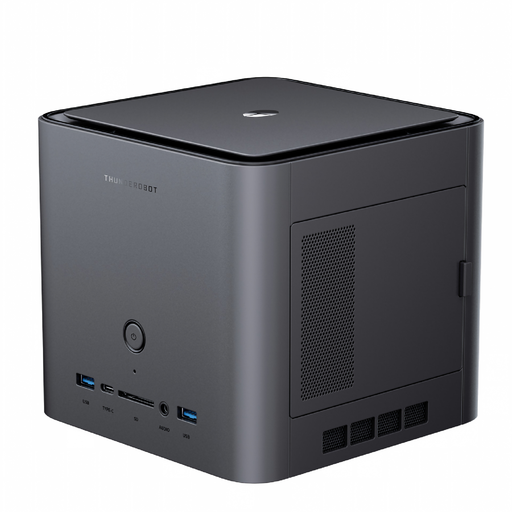
A tower option if you have room for a larger computer and want a Windows configuration with a separate monitor.
The listed configuration includes Windows 11 Pro, a Core Ultra 7 265, 32 GB DDR5, a 512 GB NVMe SSD and an NVIDIA RTX A400 with 4 GB.
Check that the listed GPU and ports suit your specific course project and monitor.
 No image available
Its compact design may suit a workstation with limited desk space, provided the listed configuration works with your study programmes.
The product title lists 128 GB LPDDR5X at 8000 MT/s and a 1 TB SSD.
Before buying, check compatibility with your operating system and the software tools you need.
 No image available
A compact macOS option if your study programmes run on macOS and its memory capacity suits your local projects.
The listed configuration includes a 12-core CPU, a 12-core GPU, 16 GB unified memory, a 256 GB SSD, HDMI and Thunderbolt 4.
For GPU projects, the required software pathway must be supported on macOS; according to the description, a keyboard and mouse need to be connected separately.
No image available
This Mac mini configuration may suit you if your programmes run on macOS and you want more unified memory and SSD storage than the 16 GB model offers.
Specifications include a 12-core CPU, a 12-core GPU, 24 GB unified memory, a 512 GB SSD, HDMI and Thunderbolt 4.
For GPU projects, check that the required backend is supported; according to the description, a keyboard and mouse need to be connected separately.
 No image available
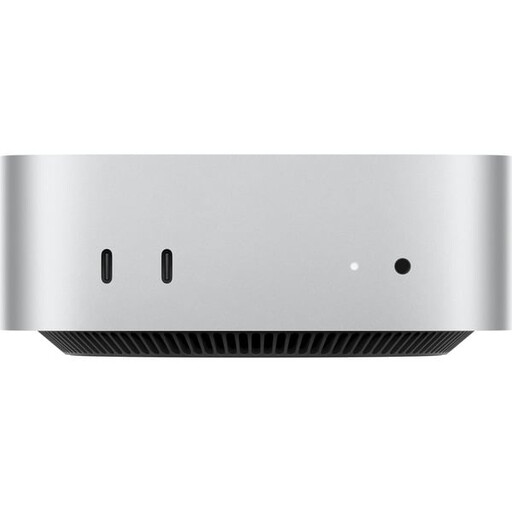
A compact macOS configuration for local projects if your software supports the GPU pathway you need and you want 1 TB of SSD storage.
The listed model includes a 12-core CPU, a 12-core GPU and 24 GB unified memory. The description says it supports up to three displays.
Compare the ports with your monitors and check your project’s software requirements.
Start with your actual workload when choosing a computer: pandas describes the memory requirements of in-memory analysis, and scikit-learn documents CPU parallel processing for certain methods. A dedicated GPU is therefore not a general requirement. If your course specifically uses GPU acceleration, check its software requirements separately.
Plan your screen, input devices, computer position and cables together for both sitting and standing. The BAuA describes dynamically switching between the two positions; this is not a recommendation to stand all the time. Also keep the ventilation openings clear, following the instructions for the device you buy.
Your statutory rights against the seller for faulty goods are separate from a voluntary guarantee. For purchase contracts entered into from 31 July 2026, the Verbraucherzentrale says that choosing a repair extends the statutory guarantee period once by twelve months. Online purchases also generally come with a 14-day right to cancel; exceptions and the specific start date of the period should be taken into account.
Relevant harmonised EU product regulations may require electrical and electronic equipment to carry the CE marking. According to the European Union, the manufacturer is responsible for ensuring that the product complies with the applicable requirements. A CE mark does not prove a computer’s performance or its suitability for your course project.