Students working with local datasets
If you use Python to process datasets, choose your memory capacity with your projects in mind. The pandas documentation notes that some operations may require additional copies in memory.


For studying data science by a bright window, a compact PC may be suitable if your Python work doesn’t require a local CUDA GPU and its RAM, SSD and ports meet the needs of your projects. If local CUDA computing is a course requirement, choose a computer with the right GPU and software environment. You’ll also need to plan your monitor position and glare protection, whatever type of PC you choose.
If you use Python to process datasets, choose your memory capacity with your projects in mind. The pandas documentation notes that some operations may require additional copies in memory.
When there’s a lot of daylight, monitor position and glare protection should be part of your workspace planning. The German Federal Institute for Occupational Safety and Health (BAuA) still considers glare protection important, even though modern screens make better use of daylight.
If your course requires CUDA computing on your own computer, compatibility depends on the specific GPU and software environment. NVIDIA lists a CUDA-capable GPU and other system requirements for CUDA on Windows.
A good fit if: You mainly programme and analyse data, and don’t need a CUDA GPU for local use.
Things to weigh up: Compare the RAM, SSD and monitor ports on the specific configuration. Integrated graphics don’t guarantee CUDA compatibility.
A good fit if: Your studies require local CUDA computing and the exact GPU is compatible with the software environment you’ll be using.
Things to weigh up: Make room for the case. A gaming GPU alone doesn’t prove that a PC is suitable for every project.
A good fit if: The software required for your course runs on Apple chips under macOS, and you want a compact computer with a monitor you can choose separately.
Things to weigh up: Check the software you need and the memory configuration before buying. Apple graphics aren’t the same as a CUDA-capable NVIDIA GPU.
| What matters | What to check before buying | Who should consider it? |
|---|---|---|
| Memory | Compare your project workflows with the installed RAM, and check whether the configuration you choose has documented upgrade options. File size alone doesn’t give you a universal minimum. | If I process local datasets in Python, I want to choose RAM to suit my workflows; around 26% of consumers put memory first. |
| Screen by a window | Check the screen finish and stand of the specific monitor, as well as where it can go in relation to the window and any existing blinds or curtains. Workplace regulations don’t automatically apply to a private study space. | If light or reflections make it hard to work by the window, I want to be able to position my monitor and sun protection accordingly; around 26% of consumers prioritise a low-glare workspace. |
| What’s included for your workspace | Check what’s included with the configuration you’re ordering, and whether it comes with a monitor, input devices and the operating system you need. | I want to know what else I need for a ready-to-use study space; around 21% of consumers pay particular attention to having everything they need for their workspace. |
| Local CUDA use | Check the course requirements against the exact GPU model, operating system and software version you plan to use. | If a project requires CUDA on my own computer, the specific hardware has to work with the software environment; around 16% of consumers prioritise local GPU compatibility. |
| Desk space and upgrades | Measure the space available and allow for your monitor and cables. Check the documentation for the configuration you’ve chosen to see whether the RAM and SSD can be upgraded. | If space by the window is limited, I want to plan the computer’s size and any future changes in advance; around 11% of consumers prioritise the space it takes up. |
Glare also depends on the screen and how it’s positioned, not on the computer’s processing power. The BAuA notes that distracting reflections on screens can be a source of glare.
Plan your monitor position and the direction of the light before deciding which type of PC to buy.
Depending on your workspace, you may also need a suitable monitor or sun protection.
For CUDA on Windows, NVIDIA lists a CUDA-capable GPU and other requirements. A product name alone doesn’t confirm that the specific configuration will work with your course software.
Check the exact GPU model and supported software environment against your course requirements.
If a project requires CUDA, you may need a different computer or GPU.
RAM, SSD and graphics can vary between configurations. A review of one specific device doesn’t automatically confirm the specifications of another configuration you can buy.
Compare the full model number and key specifications of the exact configuration you plan to order.
The ThinkCentre M75q Gen 5 Tiny is an example of a compact Windows desktop with integrated graphics.
The Pro Mini 400 G9 is a compact desktop range, while the OmniDesk range also includes larger desktop PCs.
The A5 Pro 2026 Edition is a compact Windows PC with a monitor available separately.
The Mac mini is a compact macOS alternative, provided the study software you need runs on Apple chips.
The ERAZER Bandit P20 is an example of a Windows desktop with dedicated NVIDIA graphics to consider when checking local GPU requirements.
These desktop PCs are tower configurations for a study space with an external display. Before buying, check that their specifications meet the needs of your projects.
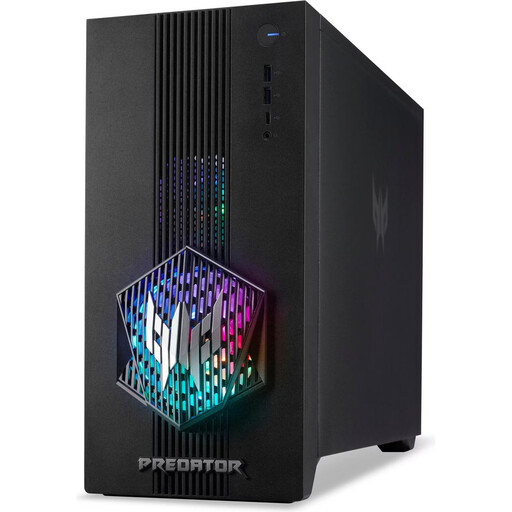 No image available
This configuration is worth considering if you’re planning local GPU work and want a tower; check the exact GPU model against your course requirements.
Core Ultra 5 225F, 16 GB DDR5, 512-GB SSD, NVIDIA GeForce RTX 5060 and Windows 11 Home.
The product description also lists Wi-Fi 7 and USB-C.
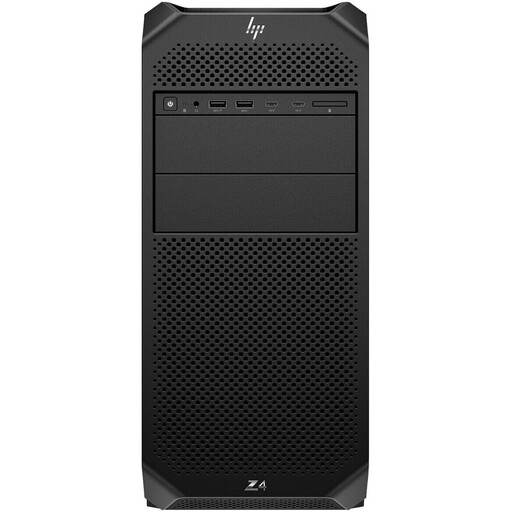 No image available
The listed NVIDIA graphics may be useful for local GPU projects; check that your software environment supports the exact model.
Xeon W3-2535 at 3.5 GHz, 64 GB RAM, 1 TB SSD, NVIDIA RTX 4000 Ada and Windows 11 Pro.
DisplayPort and HDMI outputs are listed. A monitor isn’t included in the stated package contents.
 No image available
This tower configuration has a stated amount of memory for data analysis and multitasking; its listed Intel graphics aren’t specified as a CUDA GPU.
Core Ultra 7 265, 32 GB DDR5 at 5600 MHz, Intel graphics and Windows 11 Pro.
The description lists several DisplayPort outputs. A monitor isn’t included in the stated package contents.
 No image available
The listed specifications may suit local data processing; check that Intel graphics will be sufficient for the software and workloads involved in your studies.
Core Ultra 9 285, 64 GB DDR5 at 5600 MHz, 1-TB M.2 SSD, Intel graphics and Windows 11 Pro.
DisplayPort and HDMI are listed as video outputs. A monitor isn’t included in the stated package contents.
 No image available
The dedicated NVIDIA graphics may be useful for GPU work; check the exact GPU against the requirements of your course software.
Intel Core Ultra 7 265, 32 GB DDR5, 512-GB NVMe SSD and NVIDIA RTX A400 with 4 GB.
DisplayPort and HDMI are listed; the keyboard and mouse are included according to the package contents. A monitor isn’t listed.
No, not for pandas alone. The pandas documentation focuses mainly on memory requirements, as some operations can create additional copies. If your course requires CUDA on your own computer, you’ll also need to check its GPU and software requirements.
First, check where light or reflections are causing problems on your screen, and whether you can reposition your monitor or sun protection. The BAuA still considers glare protection important; workplace requirements aren’t a blanket legal obligation for a private study space.
Before buying, check the video outputs, what’s included and the documentation for your exact PC configuration. Lenovo describes access to the RAM and SSD on the ThinkCentre M75q Gen 5 configuration reviewed here; that doesn’t mean every mini PC is equally easy to upgrade.
For faulty goods, the European Union explains that you have at least two years of legal protection against the seller; an additional manufacturer’s warranty doesn’t replace these rights. Online purchases also generally come with a 14-day right to cancel, subject to exceptions and the applicable time-limit rules.
Check whether you already have a suitable monitor, keyboard, mouse and the operating system you need, or whether they’re included. RAM and SSD specifications can also vary between configurations in the same product range.