For Python, data analysis and many traditional machine-learning tasks, start by checking the RAM, CPU and ports you need; a dedicated GPU isn’t automatically essential. If a course requires local GPU training on a particular platform, your hardware and software must be compatible. A compact computer saves desk space, while a suitably configured tower can offer more options for a GPU and future upgrades.
Which desktop is right for you?
Students working on local data projects
If you work with Python, spreadsheets and traditional machine-learning methods, choose RAM and a CPU to suit your data and tasks. pandas explains the limits of in-memory analysis with large datasets, while scikit-learn documents methods that can use multiple CPU cores.
Students with compulsory GPU tasks
If your course requires local GPU training on a specified platform, check the exact GPU, operating system and supported software. PyTorch documents MPS for compatible macOS systems; this does not mean CUDA is supported.
Students short on desk space
If your computer will stay at a dedicated home workstation, consider not only the case size but also the monitor connections you need and the upgrades supported by the specific model.
What should you look for when buying?
Compact Windows mini PC
A good fit if: You mainly programme and analyse data locally, have limited desk space and aren’t required to use a specific dedicated GPU.
Things to consider: Check the RAM, storage, ports and upgrade options for the individual device. A compact form factor doesn’t mean it’s suitable for GPU training.
Mac mini
A good fit if: macOS is compatible with the tools used on your course and you’re looking for a compact desktop for Python work. PyTorch documents MPS for supported macOS systems.
Things to consider: MPS isn’t CUDA. Check the course environment you need, as well as your preferred memory and SSD configuration.
Windows or Linux tower
A good fit if: You need a specific supported NVIDIA GPU for local CUDA tasks or are planning to upgrade your hardware in future.
Things to consider: A tower takes up desk space. Check the GPU, power supply, operating system and upgrade options for the exact configuration. A product range offering GPU options doesn’t mean every listing includes a suitable GPU.
| Criteria |
What to check before buying |
Who this matters most to |
| RAM and CPU |
Consider the size of your course datasets and intermediate results; check the RAM and CPU in the specific configuration. |
When I work locally with Python and larger datasets, I want to choose RAM and a CPU suited to my workload. Around 33 % of consumers put data analysis first. |
| GPU compatibility |
Compare your course requirements with the GPU, operating system and supported framework installation. |
If my assignments require local GPU training on a specified platform, the configuration needs to match those requirements exactly. Around 27 % of consumers prioritise tasks that require a GPU. |
| Desk space and connections |
Check that the case size and monitor connections suit your workspace and existing screens. |
With a small desk, I need a suitable case and the right connections for my monitor. Around 20 % of consumers prioritise desk space and connections. |
| Total cost and upgrade options |
Check what’s included and the exact specification; find out whether you can upgrade the device you’ve chosen later on. |
If I want to pay only for the features I actually need and allow for future requirements, I compare the complete configurations. Around 20 % of consumers prioritise total cost and future upgrade options. |
Avoid common buying mistakes
-
Assuming data science always requires GPU training
CPU-based data analysis and GPU training are different requirements. If you buy a powerful graphics card without needing it for your course, you may end up paying for features your study workflow doesn’t require.
First, check whether your assignments explicitly require a specific local GPU platform.
-
Confusing the advertised top specification with the specific listing
A product range may include GPU options, while a particular configuration for sale may have integrated graphics. If the specification isn’t right for you, you may need to upgrade or replace the device later.
Check the GPU, RAM and operating system details for the specific device.
-
Choosing RAM based on file size alone
In-memory processing can require extra copies of data, so the original file size alone won’t tell you how much RAM you need.
Take your actual workload into account, and consider memory-efficient ways of working with larger datasets.
Key brands at a glance
Lenovo
The ThinkCentre M75q Gen 5 range is a compact Windows PC option for workspaces where desk space is limited.
- Lenovo PSREF lists connections including HDMI, DisplayPort and Ethernet.
- Specifications and regional availability vary by model. The product range alone doesn’t guarantee a dedicated GPU for local CUDA tasks.
Apple
The Mac mini (2024) is a compact macOS desktop available in different M4 and M4 Pro configurations.
- Apple Support documents different memory, SSD and display connection options.
- PyTorch documents MPS subject to certain requirements; this does not confirm CUDA support or compatibility with every course environment.
Dell
The Pro Tower QCT1250 is a configurable tower range for a dedicated Windows workstation.
- Dell lists different features depending on the configuration.
- The configuration described has Intel UMA graphics rather than a dedicated training GPU. Check the upgrade options for the device you choose.
HP
The Z2 Tower G1i is a workstation range for buyers who need a specific tower configuration, potentially including a GPU.
- HP describes NVIDIA GPU options and potential upgrades.
- HP notes that components vary by configuration; the top specifications shown in adverts don’t automatically apply to every listing.
Joybuy desktop PCs for your home office
The Joybuy picks below are tower PCs for a dedicated Windows workstation, including configurations with dedicated graphics and Intel graphics.
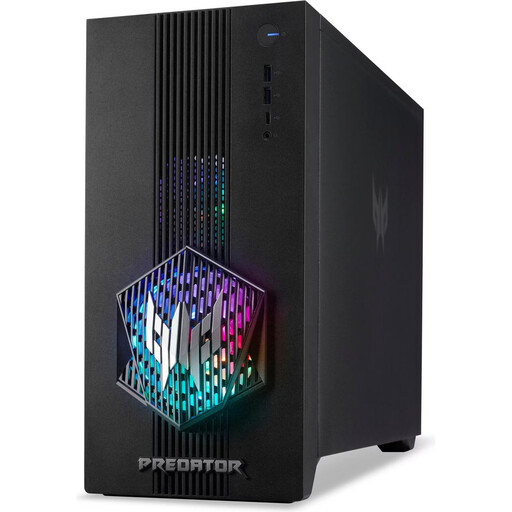 Image unavailable
Acer Predator Orion 3000, 16 GB, 512 GB, RTX 5060, Windows 11 Home
For local data work, this configuration has a 10-core processor and 16 GB of DDR5 RAM.
The listing specifies an NVIDIA GeForce RTX 5060 with 8 GB of GDDR7, a 512 GB SSD and Windows 11 Home. If you’re planning to run GPU tasks locally, check that the required platform matches your course environment.
View at Joybuy
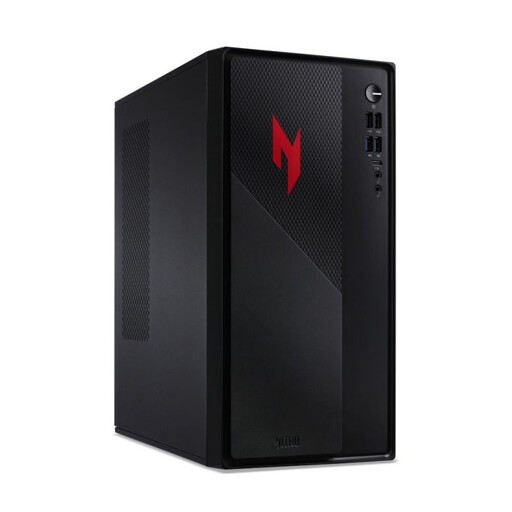 Image unavailable
Acer Nitro 20 N20-100, 32 GB, 1 TB, Windows 11 Home
For local projects, this configuration has an 8-core processor and 32 GB of DDR4 RAM.
The listing describes a dedicated NVIDIA graphics card with 8 GB of GDDR7, a 1 TB SSD and an HDD. Before buying, check whether the exact GPU is supported by your course software.
View at Joybuy
 Image unavailable
HP Z2 Tower G1i, Core Ultra 7 265, 32 GB DDR5, Windows 11 Pro
For local data analysis, this configuration has a 20-core processor and 32 GB of DDR5 RAM.
Intel graphics are listed, along with DisplayPort outputs and Windows 11 Pro. If your tasks require a dedicated GPU, check the exact configuration.
View at Joybuy
 Image unavailable
HP Z1 Tower G1i A40T1ET#ABD, Core Ultra 9 285, 64 GB DDR5
For local data work, this configuration has a 24-core processor and 64 GB of DDR5 RAM.
The specifications list Intel graphics, a 1 TB M.2 SSD and Windows 11 Pro. No dedicated GPU is specified, so check that the graphics meet your course requirements.
View at Joybuy
 Image unavailable
Lenovo ThinkStation P2 Tower Gen2, Core Ultra 7 265, RTX A400 4 GB
For local data projects, this configuration has a 20-core processor and 32 GB of DDR5 RAM.
It also includes an NVIDIA RTX A400 with 4 GB of graphics memory, a 512 GB NVMe SSD and Windows 11 Pro. Check that this GPU and software version meet your assignment requirements.
View at Joybuy
Frequently asked questions
Do I definitely need a dedicated graphics card for data science?
Not necessarily: scikit-learn documents methods that use CPU cores. If local GPU training is specifically required, check support for the exact GPU and framework.
What should I check before setting up my computer for my course?
Check the required Python packages, operating system and, where relevant, GPU platform against the framework’s installation guidance. Also make sure the ports on your specific computer are compatible with your monitor.
What ongoing costs and support should I plan for?
Check whether a monitor and any accessories you need are included, and what comes with your chosen configuration. A voluntary manufacturer’s warranty is separate from your statutory rights against the seller if goods are faulty.
What rights apply when buying a desktop PC online in Germany as a private consumer?
Consumers generally have the right to cancel an online purchase, usually within 14 days of receiving the goods; exceptions and the terms of the specific contract should be considered. The Verbraucherzentrale explains these rules. For ordinary movable goods, claims for defects generally become time-barred two years after delivery, as set out in § 438 BGB. These are statutory rights, not an additional manufacturer’s warranty.


