Students using two screens
If you want to view code or a notebook alongside your study materials, the computer’s specific configuration needs to work with both monitor connections. Microsoft explains how to set up multiple screens in Windows.


For studying data science with two screens, choose a desktop whose specific configuration can drive both displays independently and has the right connections for your monitors. A suitably specified computer without a dedicated GPU may be enough for Python and many standard study tasks. If your course requires local CUDA tasks, you’ll need a compatible GPU and software environment. Whether a mini PC or an expandable desktop is a better fit for your workspace also depends on storage, available space and which components are included.
If you want to view code or a notebook alongside your study materials, the computer’s specific configuration needs to work with both monitor connections. Microsoft explains how to set up multiple screens in Windows.
For Python analysis and standard machine-learning exercises, the installed RAM, processor and potential for upgrades are important factors. scikit-learn explains that some methods can use multiple CPU cores, while data that doesn’t fit in RAM may require a different processing strategy.
If your course specifically requires local CUDA tasks, your hardware and software environment need to be compatible. NVIDIA lists a CUDA-capable GPU as a requirement for its CUDA environment.
Start by checking your course requirements and how both screens will connect. Then choose the processing power, upgrade options and form factor that suit your study space. scikit-learn describes how certain methods can be run in parallel, while NVIDIA requires a compatible GPU and software environment for CUDA.
| Consideration | What to check before buying | Who is it important to? |
|---|---|---|
| Two independent displays | Display support for the specific configuration and suitable video outputs for both monitors. | If I want to see code and study materials on separate screens at the same time, I need the right configuration; around 29% of consumers are likely to put this compatibility first. |
| CPU and memory | Match the installed and upgradeable RAM, processor and scale of your tasks to your needs. | Anyone working with local datasets and standard computing tasks should pay particular attention to the CPU and RAM; around 23% of consumers are likely to prioritise this. |
| Local GPU tasks | Check your course requirements, supported GPU, operating system and software versions together. | If my course specifically requires local CUDA tasks, the whole environment needs to be compatible; around 18% of consumers are likely to prioritise this compatibility. |
| What’s included and setup | Check whether RAM, an SSD and an operating system are included with the version you’ve chosen. | Anyone looking for a computer that’s ready to use will want to know in advance about missing components and any extra setup; around 18% of consumers are likely to prioritise a complete package. |
| Space and upgrade options | Check the dimensions and the documented RAM, SSD and expansion options for the specific model. | If my study space is limited, a compact design matters, but I still need to make sure it has the features I need; around 12% of consumers are likely to prioritise the space it takes up. |
The connection types, independently supported displays and monitor inputs all need to be compatible. Two ports alone don’t confirm that your preferred setup will work.
Before choosing cables or adapters, check the details for the specific configuration and the inputs on both of your monitors.
Depending on the combination of connections, you may need suitable cables or adapters.
A kit may be supplied without pre-installed storage; some versions may also be missing RAM or an operating system.
Check what’s included with the exact version and allow for any missing components and their installation.
Make sure you plan for any missing components and the extra setup involved.
PyTorch also offers a CPU-only installation. Local CUDA tasks, on the other hand, require a CUDA-capable GPU and a compatible software environment.
First, check whether your course actually requires local CUDA or other GPU tasks.
The HP Pro Mini 400 G9 was listed with the identifiers D6B240EA and CP9G3EA#ABD as different configurations. Sharing a model-series name doesn’t prove that they’re the same test unit.
Compare the full model identifier and specifications with the exact computer on offer.
The ThinkCentre M70q Gen 5 and ThinkStation P3 Tower represent different desktop form factors.
The A5 Pro 2026 Edition is a compact mini PC to consider if you have limited desk space.
The Cubi NUC 1M is a mini PC series with documented display and memory connections.
The Mac mini is a compact macOS alternative, provided the study software you need runs on it.
The NUC 14 Pro series includes both mini PCs and kits.
This selection includes desktops and compact computers for local study tasks. To check whether a model can drive both screens independently, refer to the specifications for the exact configuration and the connections on your monitors.
 No image available
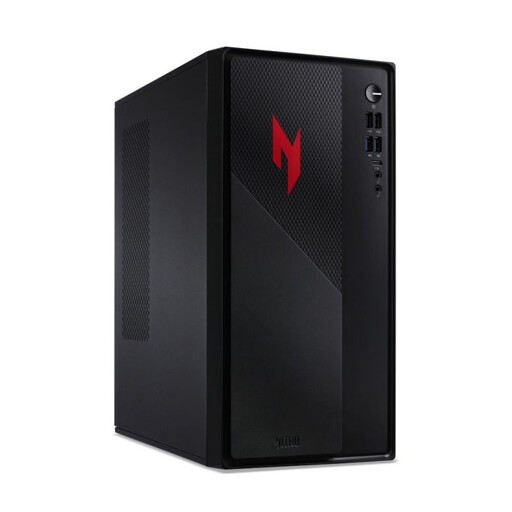
For local study tasks that benefit from dedicated graphics. First, check whether this specific configuration can drive both monitors independently.
With 32 GB RAM, a 1 TB SSD, NVIDIA RTX 5060 with 8 GB GDDR7 and Windows 11 Home. The listed video outputs are three DisplayPort connections and one HDMI connection.
 No image available
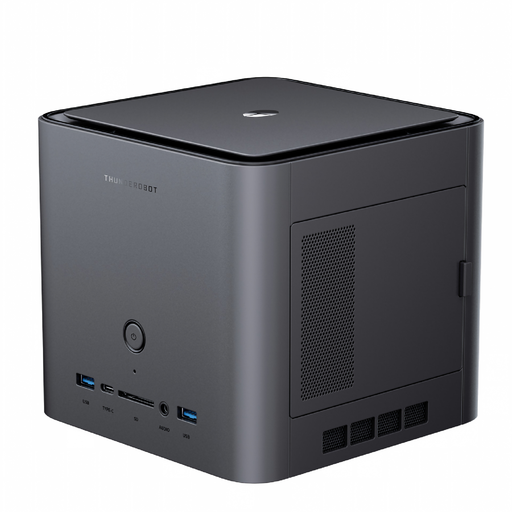
Its compact design could be useful for local data analysis. Check separately whether this specific configuration supports both monitors.
The product title lists 128 GB LPDDR5X memory at 8000 MT/s, a 1 TB SSD and Wi-Fi 7.
 No image available
A compact macOS option, provided your study programmes are compatible. Check that its display support meets your monitors’ requirements.
With a 12-core CPU, 12-core GPU, Thunderbolt 4 and HDMI. The connections alone don’t confirm that your specific dual-monitor setup is supported.
 No image available
A compact option for local study tasks, provided the software you need runs on macOS.
Product details state support for up to three external displays, 24 GB unified memory and a 512 GB SSD. Check compatibility with the connections on both your monitors.
 No image available
A compact macOS option for local study tasks, provided the programmes you need are compatible with the operating system.
With a 12-core CPU, 12-core GPU, 32 GB unified memory and a 512 GB SSD. Product details state support for up to three external displays; check that the specific connections work with your monitors.
Connect both compatible screens and select ‘Extend’ rather than ‘Duplicate’ in Windows display settings. If a screen isn’t detected, you can use the ‘Detect’ option in settings. Also check the connections and cables.
No, not just because of your subject: PyTorch also offers an installation for CPU-only use. If a course requires local CUDA tasks, you’ll need a CUDA-capable GPU and a compatible software environment.
Check whether RAM, an SSD and an operating system are included with the version you’ve chosen, and allow for any missing components and their installation. ASUS’s NUC 14 Pro overview distinguishes between mini PCs and kits, so check what’s included for the specific model.
For goods bought from a trader in the EU, the legal minimum guarantee is generally two years from the date you receive them. If something is faulty, contact the seller about your legal remedies; the circumstances of your individual case will determine what applies.
For eligible distance purchases from a trader in the EU, you generally have a 14-day right to cancel. Legal exceptions and the terms of the specific purchase apply; cancelling a purchase is different from making a claim about a fault.