Students with limited desk space
If you share your workspace, the case should fit the space available and connect to your monitor using the ports you already have.


If you mainly code and analyse data, and share your desk with others, a compact desktop with suitable RAM and the right monitor connections is a sensible place to start. For large local datasets, the exact RAM and storage configuration matter; if your projects specifically require CUDA, you’ll need a suitable NVIDIA GPU configuration, which is more commonly found in a larger tower. In every case, check the exact variant and make sure it’s compatible with your course software.
If you share your workspace, the case should fit the space available and connect to your monitor using the ports you already have.
If you process data locally, compare your actual memory needs, any intermediate copies and the expansion options available in the specific configuration. The pandas documentation notes that some processing steps require extra memory for intermediate copies.
If your coursework requires GPU computing, check before buying whether CUDA is specifically required or whether a suitable macOS MPS workflow could work. MPS support does not mean a project is compatible with CUDA.
A good fit if: you mainly code and work on CPU-based exercises, and want to keep desk space to a minimum.
The trade-off: A compact design alone doesn’t tell you whether the RAM, storage or GPU will meet your needs.
A good fit if: your course tools run on macOS and you prefer a compact desktop.
The trade-off: Check the exact memory and SSD configuration, as well as project compatibility; MPS is not the same as CUDA.
A good fit if: your studies require local CUDA use or you’re specifically planning to add components.
The trade-off: Check that the variant you choose actually includes the GPU you need; a tower takes up more space on a shared desk.
| Buying criteria | What to check before buying | Who should pay particular attention? |
|---|---|---|
| Space and monitor connection | Check that the case, space for cables and power supply, and ports on the specific variant all work with your existing monitor. | If I share a desk, I want my computer to take up little space and work with my monitor. Around 36% of consumers put space first. |
| RAM for data analysis | Factor in the size of your datasets and the programmes you use at the same time; check the RAM and documented upgrade options for the exact variant. | When working with larger local datasets, I want to avoid processing being slowed down by the memory needed for intermediate steps. Around 29% of consumers prioritise local data processing. |
| Complete workstation set-up | Check your existing peripherals against the RAM, SSD, operating system and ports included in the specific offer. | If I want to keep using my existing devices, the computer and accessories need to suit my workspace. Around 21% of consumers prioritise a complete configuration. |
| GPU workflow | Check your course requirements for libraries and backends, then compare them with the GPU model and specification of the exact variant. | If a project requires local GPU computing, the hardware needs to support the required backend. Around 14% of consumers prioritise local GPU work. |
Analysing local spreadsheets and running a course project with CUDA have different requirements. A general claim about GPU features doesn’t tell you whether the required backend is supported.
First, make a note of the course software and required backend. Then check the computer’s exact configuration against those requirements.
Even a compact computer needs to work with your existing monitor and input devices.
Check the ports, peripherals you already own and what’s included with the specific variant together.
If your existing devices aren’t compatible or aren’t included, you may need to buy extra accessories.
RAM, storage and, for towers, the GPU can vary between configurations.
Compare the full model and configuration details with your course requirements, rather than relying on the product family name alone.
The ThinkCentre M75q Gen 5 family offers a mini PC option for desks with limited space. The ThinkStation P3 Tower Gen 2 is a separate tower option.
The Mac mini with M6 is a compact macOS option if the study tools you need run on the platform you choose.
The Dell Pro Micro QCM1250 is a compact desktop family to compare with your existing monitor and the study programmes you need.
The HP Pro Mini 400 G9 is a mini desktop option, while the HP Z2 Tower G1i offers a separate workstation route.
The models below include compact mini PCs, a Mac mini and an SFF workstation for study and data analysis. The key considerations are the exact configuration, your course software and the space available.
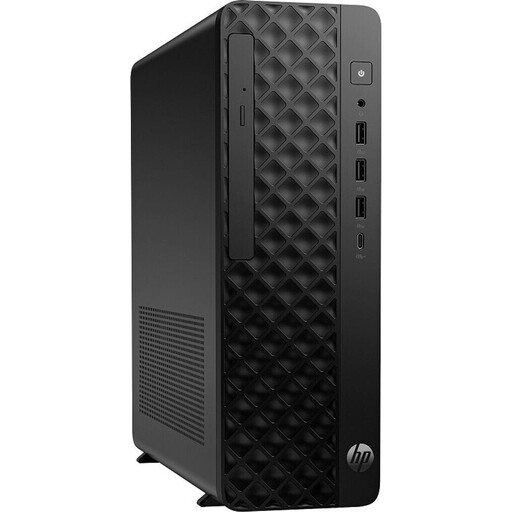 No image available
This SFF workstation could be a good choice if you need a suitably specified workstation for local tasks and have checked that it fits your desk.
The listed variant features a 20-core Core Ultra 7 265K, 32 GB DDR5-5600 RAM, a 1 TB M.2 SSD and an RTX A400 with 4 GB. Check that your course software supports this specific GPU and the workflow you need.
Windows 11 Pro is listed as the operating system.
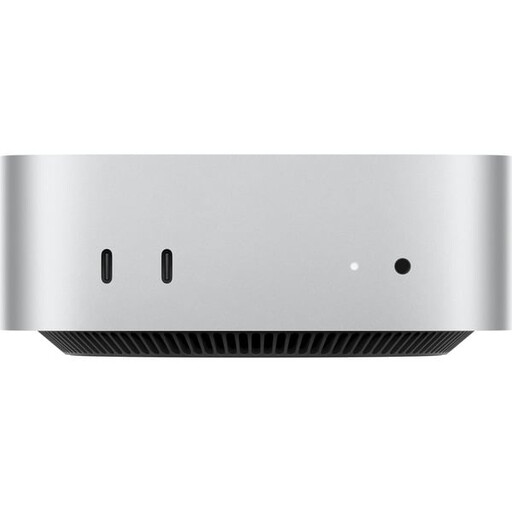 No image available
This compact desktop is well suited to a shared workspace if your study tools run on macOS.
The product variant features an M6 with a 12-core CPU and 12-core GPU, 24 GB of unified memory and a 1 TB SSD.
Check that your course software is compatible; PyTorch MPS does not prove CUDA compatibility.
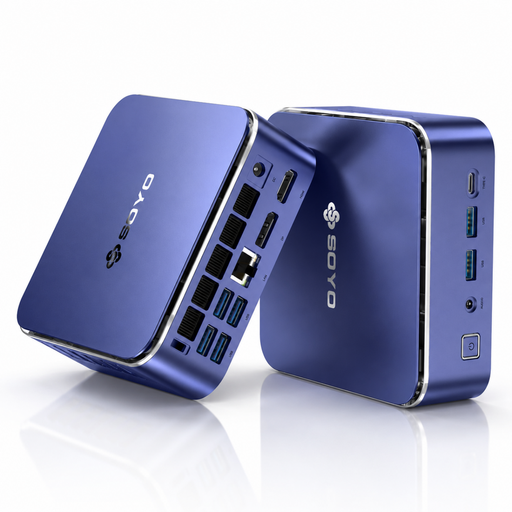 No image available
Its compact design could work well on a shared desk; check that the configuration meets the needs of your local datasets and study programmes.
The product details list a Ryzen 5 7535HS, 16 GB LPDDR5 RAM, a 512 GB NVMe SSD and Windows 11 Pro.
Whether the RAM is enough for your datasets and the programmes you use at the same time depends on your actual workload.
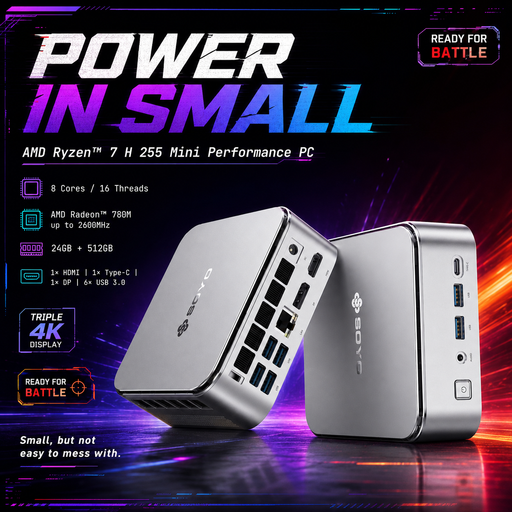 No image available
This mini PC is a compact option if you’re looking for a Windows desktop for study and local data processing.
The product details list an 8-core, 16-thread Ryzen 7 H 255, 24 GB LPDDR5 RAM and a 512 GB PCIe 3.0 SSD.
Before choosing, check that the specific configuration suits your datasets and course tools.
 No image available
The compact mini PC design can help save space on a shared desk; also check that it’s suitable for your study programmes.
The product details list a 6-core, 12-thread Ryzen 5 7640HS, 24 GB LPDDR5 RAM and a 512 GB PCIe 4.0 SSD.
The listed Radeon 760M alone doesn’t prove that a particular GPU workflow or CUDA is supported.
Not necessarily: the scikit-learn documentation also describes CPU parallelisation. If a specific course requires CUDA or another GPU workflow, check that course’s platform and hardware requirements.
Compare the size of your data and the programmes you use at the same time with the RAM in the specific configuration. The pandas documentation notes that intermediate copies may need extra memory, even when datasets are smaller than the total RAM capacity.
Measure the available space, including room for cables and the power supply, and check that your monitor inputs match the ports on the specific variant. Lenovo lists HDMI and DisplayPort, among other connections, for the ThinkCentre M75q Gen 5; some features may vary by model.
If a product is faulty, contact the seller about your statutory consumer rights; a manufacturer’s warranty is separate. The Verbraucherzentrale explains that goods are generally covered by a two-year statutory warranty period. The details depend on the specific purchase and fault.
For a distance contract with a consumer, § 312g BGB generally provides a right to cancel under § 355 BGB; statutory exceptions may apply in individual cases. The Federal Ministry of Justice and the Federal Office of Justice list the relevant legislation.