For Python, Jupyter and standard data analysis, your course software, RAM, display and budget should guide your choice – not an ‘AI’ label alone. A dedicated GPU that works with your framework becomes important mainly when a project requires local, GPU-accelerated training. This can mean compromising on portability and cost. Before buying, check the exact configuration and keyboard layout.
Which specification is right for you?
Students working on local data analysis
If you run code and analyse data on your own laptop, first check the software and datasets used on your course, along with the RAM and storage in the exact configuration. The Computer Science student society at the University of Göttingen and the University of Kassel offer course-related guidance.
Students on a tight budget
If you’re weighing up whether your current device will do or you need to buy a new one, start by checking the actual requirements of your classes. The Data Science and Computer Science student society at the University of Göttingen advises new students to get to know their needs first.
Students working on local AI projects
If you want to run GPU-accelerated projects locally, check that the framework support you need matches the GPU in the exact laptop configuration. PyTorch recommends an NVIDIA GPU for full CUDA support on Windows, but it isn’t required for every use of PyTorch.
What should you look for when buying?
First, find out which software and tasks your course involves. Then compare the exact specifications, and only after that decide whether you need a compatible GPU for a specific project.
| What you’re looking for |
What to check before buying |
Who should pay particular attention? |
| RAM and local data analysis |
Check your course software and typical datasets; check the RAM and SSD in the exact version, and whether they can be upgraded. |
If you use your development environment, browser and data at the same time, you’ll need enough headroom for local analysis. Around 36% of consumers prioritise these types of analysis tasks when buying a laptop. |
| Purchase cost and lifespan |
Check your current device against your course requirements; if buying new, assess the specifications, what’s included and any optional warranties separately. |
If you want to keep costs down, first check whether your current computer can handle the tasks ahead. Around 29% of consumers put purchase cost first. |
| Portability and working in a small space |
Check the screen size, ports for any monitor you already own, keyboard layout and battery life for your needs. |
If you work at a small desk and take your laptop to campus, consider whether the screen gives you enough room to work and whether the device is practical to carry. Around 21% of consumers prioritise portability and their workspace in a student room. |
| Local GPU training |
Check which framework and level of acceleration your project requires; make sure the GPU in the exact configuration supports the installation option you need. |
If a project requires local, GPU-accelerated training, you’ll need a proven match between the framework and GPU. Around 14% of consumers put this compatibility first. |
Common buying mistakes
-
An ‘AI laptop’ is automatically right for every course project
A general AI or workstation label doesn’t tell you whether the specific GPU supports the framework features you need. PyTorch recommends an NVIDIA GPU for full CUDA support on Windows, but not for every use of PyTorch.
Before deciding, check your course requirements against the framework you’ll use and the exact GPU model.
A GPU that doesn’t support the features you need in your framework could mean unnecessary expense.
-
Every version of a model has the same specifications
RAM, SSD and other features can vary by product number. For example, Lenovo’s listed specifications for the ThinkPad E14 Gen 7 apply to the specific product number 21SX000RGE.
On the product page, check the full product number, RAM, SSD and keyboard layout of the version you’ve selected.
-
Included accessories and warranties are the same as your statutory rights
What’s included can vary by version. For example, a Joybuy product page for a MacBook Air M5 states ‘No charger’. Your statutory rights against the seller are separate from any additional warranty on offer.
Check what’s included with the exact version and assess optional services separately from your statutory rights.
If a compatible power adapter isn’t included, you may need to buy one separately.
Key brands at a glance
Lenovo
The ThinkPad E14 Gen 7 is a documented compact Windows option for comparing specific configurations.
- For product number 21SX000RGE, Lenovo lists a 14-inch display, 16 GB RAM, a 512 GB SSD and integrated Intel graphics.
- These specifications don’t automatically apply to other versions. Integrated graphics alone don’t confirm suitability for local CUDA projects.
Apple
The MacBook Air M5 and MacBook Neo are different macOS options for studying on the move; make sure the software you need for your course is compatible with macOS.
- For the MacBook Air M5 base specification considered here, Apple lists 16 GB of unified memory and a 512 GB SSD. For the MacBook Neo, Apple lists 8 GB of unified memory and either a 256 GB or 512 GB SSD, depending on the version.
- Manufacturer battery-life claims don’t guarantee a particular runtime during data analysis. Also check that the GPU framework you need is compatible.
HP
The ZBook range can be a useful comparison if specific local tasks have higher requirements.
- HP positions the 14-inch ZBook 8 G1i for 3D, AI and multitasking.
- This manufacturer positioning doesn’t confirm that every configuration offers the GPU or CUDA support you need.
Dell
The Dell Pro 14 PC14250 is another 14-inch Windows range to consider when comparing compact work devices.
- Dell lists Intel Core Ultra processors for the range.
- Specifications vary by configuration. Check the RAM, graphics, display and accessories on the specific product listing.
Laptops available at Joybuy
This selection includes laptops for local study tasks and different workspace needs – from compact devices to configurations with larger displays or more RAM.
 No image available
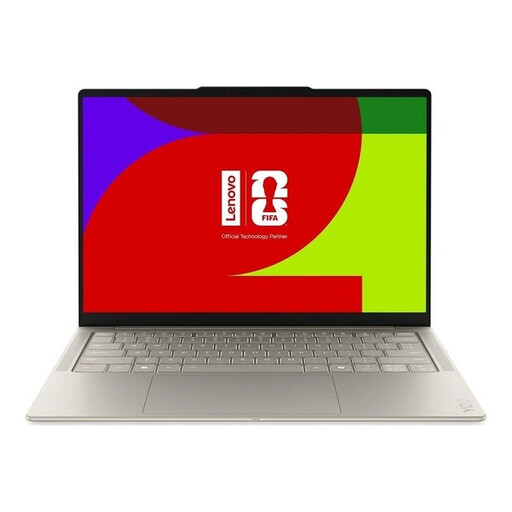
Lenovo Yoga Slim 7i Aura Edition, 14-inch, Core Ultra 7 355, 16 GB RAM, 1 TB SSD
These listed specifications are worth comparing if you want to work on local study tasks and files on a compact device.
14-inch 2.8K OLED display, Intel Arc Graphics, Windows 11 Evo; listed weight is 1.14 kg.
Joybuy
 No image available
Acer TravelMate TMP216-41-TCO, Ryzen 3 PRO 7335U, 16 GB RAM, 512 GB SSD
The 16-inch display could be a good fit if you want more screen space for working with code and data in your student room.
16-inch WUXGA IPS display, AMD Radeon 660M and Windows 11 Pro Education. The specifications also include USB4, HDMI and RJ-45.
Joybuy
 No image available
Lenovo ThinkPad E16 Gen 3 21ST, Ryzen 7 250, 32 GB RAM, 1 TB SSD
These listed specifications are a useful comparison if you use several applications at once for local data analysis.
16-inch WUXGA IPS display, integrated AMD Radeon 780M and Windows 11 Pro. An NVIDIA GPU for PyTorch CUDA on Windows isn’t listed for this configuration.
Joybuy
 No image available
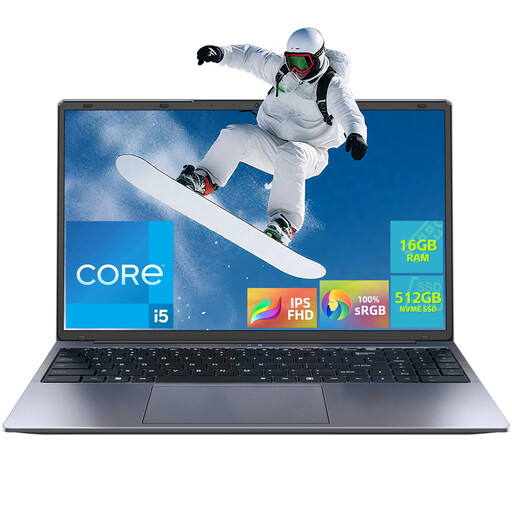
Laptop with 16-inch FHD display, Intel Core i5-8210Y, 16 GB RAM, 512 GB SSD
This configuration includes storage for local study tasks and project files; check the processor specifications against your course software requirements.
Intel Core i5-8210Y with 2 cores and 4 threads, up to 3.6 GHz, integrated Intel UHD Graphics and Windows 11 Pro.
Joybuy
 No image available
HONOR MagicBook X16 AMD 2025, Ryzen 5 6600H, 16 GB RAM, 512 GB SSD
The 16-inch display is an option if you prefer more screen space when working with code.
AMD Ryzen 5 6600H and German keyboard.
Joybuy
Frequently asked questions
Do I need to buy a new laptop before my first term?
No, not just because of your subject. The Data Science and Computer Science student society at the University of Göttingen advises new students to wait a few weeks or months before deciding what they need. Also check whether your course requires specific software.
Do I definitely need an NVIDIA GPU for Python and PyTorch?
No, not for every use of PyTorch. PyTorch recommends an NVIDIA GPU for full CUDA support on Windows, but doesn’t make one a general requirement. Check which framework and type of setup your specific module needs.
How can I avoid conflicts between Python packages?
Start by using the versions specified for your course. The scikit-learn installation guide recommends using a separate environment to avoid conflicts with packages from other projects.
What should I check about what’s included and my rights when buying online?
Check what’s included with the specific version, as a Joybuy product page for a MacBook Air M5, for example, states ‘No charger’. When you buy online from a business seller, you generally have a 14-day right to cancel from the date of delivery; statutory exceptions may apply. Your statutory rights if goods are faulty are separate from any optional warranty.
Do I need special approval to use a laptop in a student room?
Personal approval to use a laptop isn’t normally a buying consideration. However, electrical and radio-enabled devices must meet product requirements. The Federal Network Agency lists correct CE marking and details of the responsible economic operator in the EU among the formal checks; a product description alone isn’t official proof of compliance.


