Hosts serving several glasses
If you plan the amount of drink you need first, compare the jug with your recipe quantity and check the permitted fill level. Bosch lists a 1.5-l glass jug for the MMB6177S; Philips gives the HR3030/00 a 2-l container.


For several glasses, a countertop blender with a jug suited to your recipe is an obvious choice; for smaller quantities and limited storage space, a compact smoothie maker may be a better fit. Compare the stated container capacity with the permitted fill level for your recipe. Pitted dates and a high wattage alone are no reliable guide to texture: IMTEST tested a fibre smoothie, not a date smoothie.
If you plan the amount of drink you need first, compare the jug with your recipe quantity and check the permitted fill level. Bosch lists a 1.5-l glass jug for the MMB6177S; Philips gives the HR3030/00 a 2-l container.
If an even consistency matters more to you than the motor’s stated power, check the ingredients used in any test: IMTEST described the result of a fibre smoothie test, which does not tell you how the blender handles dates.
A compact blending cup can be more practical for small batches, though serving several guests may mean blending in multiple batches. nutribullet lists a 0.9-l cup for the Pro NB907MAW, while WMF gives the Kult X Mix & Go a capacity of 0.6 l.
First, check that the container and permitted fill level suit the quantity in your recipe. Then consider the consistency you want, how much cleaning is involved and how much space the blender takes up.
A good choice when: You want to blend for several guests in as few batches as possible. Philips lists a 2-l container for the HR3030/00, while Bosch gives the MMB6177S a 1.5-l jug.
The trade-off: A larger jug takes up more worktop and storage space. Its stated capacity is not necessarily the permitted fill level for every recipe.
A good choice when: You usually make small portions and have limited space. The manufacturers list capacities of 0.9 l for the nutribullet Pro NB907MAW and 0.6 l for the WMF Kult X Mix & Go.
The trade-off: If you’re serving several guests, the smaller cup may mean blending in multiple batches.
A good choice when: You want a jug for guests and a smaller cup for other occasions. Bosch lists a 1.5-l jug and a 0.6-l travel cup for the MMB6177S.
The trade-off: An extra container needs storage space and must also be cleaned. Check whether it’s included with the specific model.
| Buying consideration | What to check | Who it matters most to |
|---|---|---|
| Drink quantity per batch | Compare the recipe quantity with the permitted fill level of the specific container. | If you’re hosting several guests, you’ll want to make the planned quantity in as few batches as possible. Around 36% of consumers put drink quantity per batch first. |
| Consistency with dates | Remove the stones from the dates and follow the recipe and blender instructions when preparing your smoothie. | If an even date smoothie texture matters more to you than wattage alone, look for test conditions that are relevant to your needs. Around 29% of consumers prioritise consistency. |
| Cleaning | Check each part individually to see whether the manufacturer says it is dishwasher-safe. | After your guests have left, you’ll want as few parts as possible to wash by hand. Around 21% of consumers put ease of cleaning first. |
| Worktop and storage space | Compare the appliance dimensions and cup size with the space you have and the number of portions you usually make. | If your kitchen is short on space, you may prefer a format that’s easy to store, even if that means blending in extra batches when needed. Around 14% of consumers prioritise space requirements. |
The motor’s stated power alone doesn’t show how smooth a date smoothie will be. IMTEST tested a fibre smoothie, not dates.
Take the ingredients and conditions of any test into account. Remove the stones from the dates, and follow the recipe and instructions for the amount of liquid and the fill level.
Bosch and WMF each list a capacity of 0.6 l for their respective cups. A smaller container may mean extra blending batches when you’re serving several guests.
Estimate the total recipe quantity in advance and check the permitted fill level of the specific container.
A Joybuy listing for the Braun PowerBlend 9 gave JB9040BK in the title, but JB901AI and 3 l in the specifications. Braun lists the German version as JB901AN-JB9040BK and gives the PowerBlend 9 range a capacity of 2.0 l.
Compare the full model number, container and what’s included. For the specific appliance, also check which details apply to materials that come into contact with food and which EU requirements apply.
According to Bosch, the VitaPower MMB6177S comes with a jug and a separate travel cup.
The 5000 Series HR3030/00 is a countertop blender with a 2-l glass container, according to Philips.
The PowerBlend 9 JB9040 is a countertop blender that has been tested with a different type of smoothie.
The Pro NB907MAW is a personal blender for smaller batches.
The Kult X Mix & Go is a compact blender with a drinking cup.
This selection includes countertop and table blenders with stated container capacities from 1.0 to 1.5 l. Compare the stated capacity with the permitted fill level for your recipe.
 No image available
The stated 1.5-l blending jug offers a larger batch option than the 600-ml drinking bottle, which is also listed. For dates, check the permitted fill level in the instructions.
800 W; 1.5-l blending jug; 600-ml drinking bottle; 300-ml chopper cup; two speeds and pulse function; removable parts stated to be dishwasher-safe.
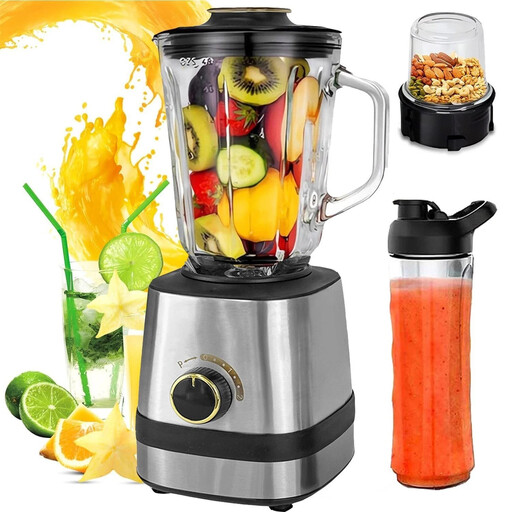 No image available
The blending jug and bottle give you two container sizes for preparing drinks; check the permitted fill level for your date recipe.
800 W; 1.5-l container; 600-ml bottle; six blades.
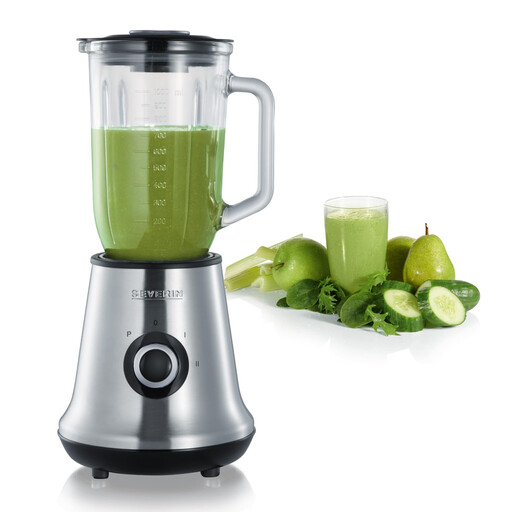 No image available
The 1.0-l glass jug could suit a smaller group of guests, provided the recipe quantity stays within the permitted fill level.
1.0-l glass jug; 500 W; two speed settings and pulse function; filling opening with measuring cup.
 No image available
The stated 1.5-l container is an option for making a larger batch; compare the recipe quantity with the permitted fill level.
600 W; 1.5-l container; three speed settings.
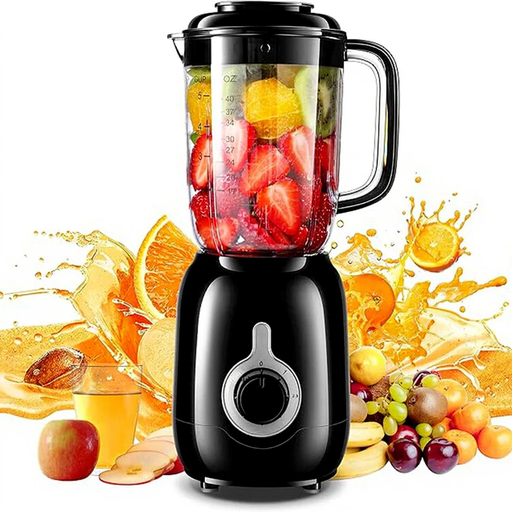 No image available
The 1.2-l blending container could work for smoothies served to guests, as long as the recipe quantity is within the permitted fill level.
1.2-l blending container; 500 W; two speed settings and pulse function; four stainless steel blades.
Yes. The date smoothie recipe referenced here uses pitted dates. Follow your blender’s instructions for the rest of the preparation and the permitted fill level.
First, estimate the total quantity in your recipe and compare it with the permitted fill level of the specific container. A cup stated as 0.6 l and a 1.5-l jug are intended for different quantities; the stated capacity isn’t necessarily the permitted fill level for every recipe.
Check the guidance for each part individually. Philips describes some parts of the HR3030/00 as dishwasher-safe; that doesn’t automatically apply to the whole appliance or to other models.
The relevant EU rules on food-contact materials apply to any parts that come into contact with your smoothie; EUR-Lex, the European Union’s law database, explains this framework. Electrical blenders must meet the applicable EU product regulations and carry a CE marking where one is expressly required. According to Your Europe, the CE marking is not an independent test of blending performance.