
Lieferung heute & morgen

Qualitätsgarantie

Willkommens-Angebote freischalten: KOSTENLOSE Lieferung | Bis zu 80 % RABATT | Kostenlose 30-Tage-JoyPlus-Testphase
App herunterladen
As the days grow shorter and natural sunlight wanes, many people feel tired, unmotivated, and experience the so-called "winter blues." A daylight lamp can be an effective tool to compensate for the lack of light and boost well-being. However, the market is crowded and confusing, and not every device delivers on its promises.
Many buyers invest in a model that proves ineffective due to technical flaws or misleading advertising. This guide will help you understand the crucial criteria and avoid common purchasing traps, enabling you to make an informed decision.
Before you make a purchase, you should be aware of the most common issues that lead to disappointment and wasted money.
To find an effective lamp to combat fatigue, you should carefully examine three technical specifications. These determine the quality and utility of the device.
Illuminance, measured in lux, is the most critical factor. For an application intended to compensate for a lack of daylight, an intensity of 10,000 lux is recommended. However, the crucial detail is the distance at which this value is achieved. Reputable manufacturers state this clearly, for example, "10,000 lux at a 15 cm distance." The greater the distance for the same lux rating, the more flexible and comfortable the lamp is to use.
A daylight lamp is more than just a bright light. Models designated as certified medical devices have undergone rigorous testing procedures. This certification ensures the device meets its stated specifications and is safe to use. The most important safety feature is guaranteed protection from UV radiation. Never purchase a device without the explicit UV-free label.
A good daylight lamp simulates the full spectrum of natural sunlight, but without the harmful UV components. The colour temperature, measured in Kelvin (K), should be in the range of 5,300 K to 6,500 K, which corresponds to cool, crisp daylight. This helps to inhibit the production of the sleep hormone melatonin in the morning and regulate your internal clock.
Not everyone needs a medical-grade therapy device. Depending on the intended use, other high-quality light sources can also be beneficial. Here are some options for different user profiles.
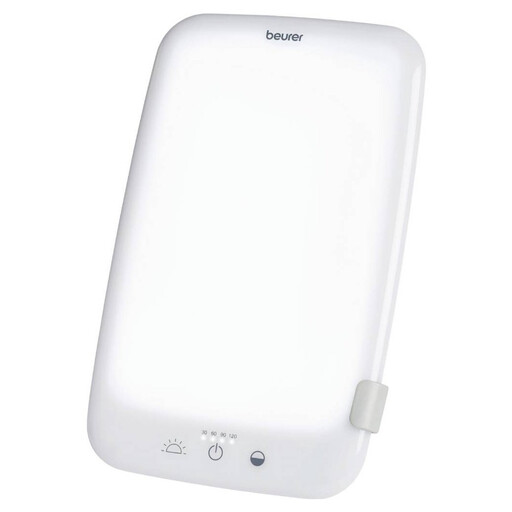
Why This Fits Their Persona: This model is designed for individuals seeking an effective solution for the winter blues and seasonal fatigue. It is ideal for daily use at a desk or breakfast table.
According to the manufacturer, the Beurer TL35 delivers 10,000 lux at a practical distance of 15 cm. It is certified as a medical device, guaranteed UV-free, and flicker-free, thereby avoiding all common purchasing pitfalls.
Certified medical device; three colour temperature modes (Therapy, Active, Relax); integrated timer with automatic shut-off.
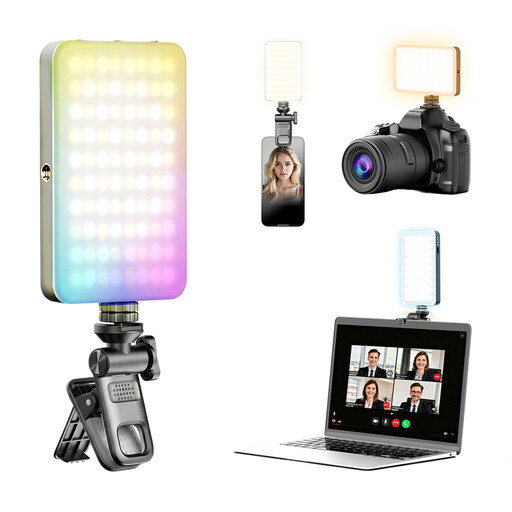
Why This Fits Their Persona: Ideal for creatives and remote workers who need a compact, versatile light source. It is not intended for light therapy but enhances lighting for video conferences, photography, or focused work.
This product is not marketed as a therapy lamp, thus avoiding false expectations. The focus is on adjustable light quality (colour temperature and CRI) for visual tasks, not on a high lux rating for therapeutic purposes.
Extremely compact and portable; wide colour temperature range (2,500–9,000 K); RGB mode for creative effects; battery-powered for mobile use.
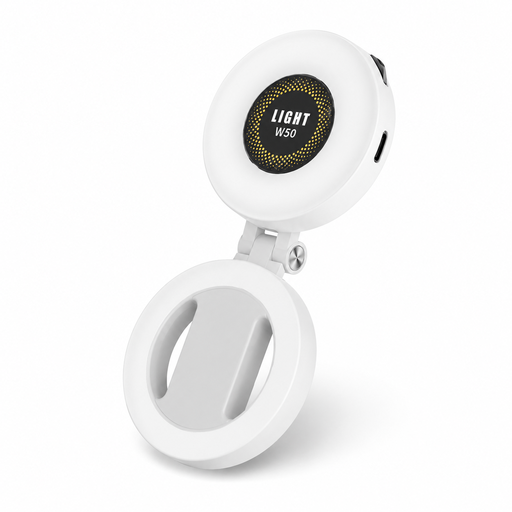
Why This Fits Their Persona: Perfect for anyone who needs high-quality lighting on the go for selfies, vlogs, or video calls. The magnetic mount makes it extremely practical for use with smartphones.
This fill light is clearly positioned as an accessory for photography and video. It makes no therapeutic claims, instead delivering adjustable, flattering illumination with a high Colour Rendering Index (CRI 95+).
Magnetic attachment for smartphones; integrated mirror for makeup touch-ups; three colour temperatures (incl. daylight 5600K); very lightweight and pocket-friendly.
We have compiled a complete, real-time list of products that fully satisfy these strict selection criteria and UK safety regulations.
The general recommendation for a 10,000 lux lamp is 20 to 30 minutes of daily use. The best time for this is in the morning after waking up to support your natural day-night rhythm. Adhere to the manufacturer's recommended distance and avoid looking directly into the light source.
Yes, if used incorrectly. Since the lamp simulates bright daylight, it can suppress the production of the sleep hormone melatonin. Using it late in the evening or at night can therefore lead to difficulty falling asleep. Use should be limited to the morning or early forenoon.
A conventional desk lamp and a daylight lamp differ on three key points: