If you have tall windows, first check how the specific TV model handles direct reflections. RTINGS.com often recommends Mini LED LCD TVs as a starting point for bright rooms, but the panel type alone doesn’t prove that a TV has suitable anti-reflection properties. OLED is still an option if you can control the light while watching and dark scenes matter particularly to you. Viewing distance, viewing angle and the version of the film you’re watching can also affect your choice.
What matters to different viewers
Watching during the day in front of large windows
If you watch films in natural daylight, reflections on the screen are an important consideration. RTINGS.com recommends checking how the specific TV handles reflections in bright rooms with large windows.
Animation fans who can control the lighting
If you can dim the room when needed, contrast and dark scenes matter alongside bright colours. RTINGS.com describes HDR as displaying a wider range of brightness and colour gradations, provided the film and playback equipment support it.
Watching together from the sofa
If you often watch with other people or sit off to the side, consider screen size, viewing distance and viewing angle together. The Verbraucherzentrale (German consumer advice centre) lists lighting conditions and viewing angle as factors that affect picture quality in your room.
What to look for when buying
For a room like this, with daylight coming through tall windows, start by considering what matters most to you when choosing a TV.
| Priority |
What to check when buying |
Who it matters most to |
| Reflections and daylight |
Check reflection tests for the exact model and see how the picture looks from your usual seat. Brightness with light-coloured content is no substitute for checking reflections. |
If I watch during the day with the curtains open, I want to be able to spot distracting window reflections early. Around 31% of consumers put avoiding reflections first. |
| Colour and dark scenes |
Check whether your version of the film includes HDR, and compare bright colours and dark scenes in your usual room lighting. |
If vivid animation and dark scenes that are easy to make out both matter to me, I want to assess them together. Around 25% of consumers prioritise colour and contrast in films. |
| Screen size and seating |
Measure your viewing distance and available space; check how the picture looks from seats off to the side, too. |
If we watch together from the sofa, I want the picture to look good from the seats we actually use. Around 19% of consumers put watching together first. |
| Motion during camera pans |
Assess camera pans using a suitable film source and compare the motion settings to find what you prefer. |
If judder during slow camera pans particularly bothers me, I want to assess playback with film footage rather than relying on a refresh-rate figure alone. Around 13% of consumers prioritise motion handling. |
| Upfront and ongoing costs |
Compare the EU energy label for the exact model, and factor in how long you plan to use it and any delivery or installation services on offer. |
If I’m weighing up the purchase price and running costs together, I want to include the energy information for the exact model. Around 12% of consumers put total costs first. |
Common buying misconceptions
-
Judging the panel technology instead of the specific TV’s reflection handling
Even a bright TV can show a noticeable reflection of a window directly opposite it.
Check tests for direct reflections on the full model, and consider where you plan to position it separately from its panel technology.
-
Assuming peak HDR brightness applies to every scene in a film
An advertised peak figure doesn’t automatically tell you how bright large areas of animation or dark scenes will look in daylight.
Compare different types of content and tests of the full model. Also check whether your version of the film includes HDR.
-
Confusing a voluntary guarantee with your statutory rights
Statutory rights and a voluntary guarantee involve different parties and may be subject to different terms.
Keep your proof of purchase and check the terms of any voluntary guarantee separately from your statutory rights.
Brands and specific product ranges
Sony
The BRAVIA 9 II and BRAVIA 9 are specific ranges worth considering for a bright living room.
- Sony lists RGB LED technology for the BRAVIA 9 II and X-Anti Reflection for the BRAVIA 9.
- These are manufacturer claims for specific models, not independent confirmation of reflection handling across every screen size.
TCL
The C8K and Q8C ranges are examples of TCL’s QD Mini LED selection.
- TCL promotes local dimming and HDR brightness in these ranges.
- Peak figures apply to specific models or sizes and are no substitute for a test of direct reflections.
LG
The OLED evo C6 is an OLED alternative if you can also control the room lighting while watching.
- For the OLED55C68LA, LG lists Brightness Booster and OLED black levels.
- These manufacturer claims don’t prove that the model handles direct window reflections better than a particular Mini LED TV.
Samsung
The Neo QLED range includes Mini LED models; the QN70H is a specific 65-inch example.
- Samsung describes the GQ65QN70HAUXZG as a Neo QLED with Mini LED.
- The range name alone doesn’t tell you how well the TV performs in measured anti-reflection tests; check the full model.
Hisense
The 65U8Q adds a specific Mini LED model to the selection.
- Hisense lists Mini LED PRO and 4K resolution for the 65U8Q.
- Manufacturer brightness claims aren’t an independent measure of how the picture will look with your windows.
Joybuy TVs for daytime viewing
This selection features Mini LED LCD TVs for watching films in daylight. For each model, check reflection handling on the full TV and make sure the screen size suits your viewing distance.
 No image available
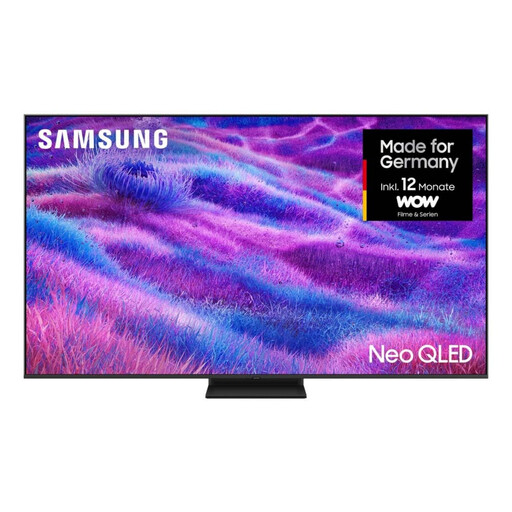
Samsung Neo QLED QN80F, 85 inches
The 85-inch version is an option if this screen size suits your viewing distance and available space.
The product name lists 4K, Mini LED HDR and Quantum Matrix Technology Core.
View at Joybuy
 No image available
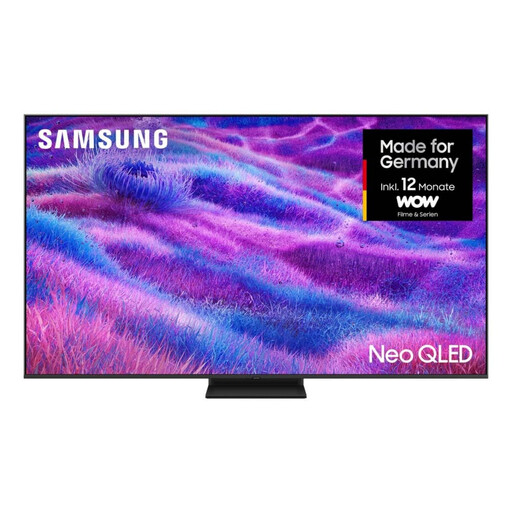
Samsung Neo QLED QN80F, 75 inches
The 75-inch version may suit you if it fits your viewing distance and available space.
The product name lists 4K, Mini LED HDR and Quantum Matrix Technology Core.
View at Joybuy
 No image available
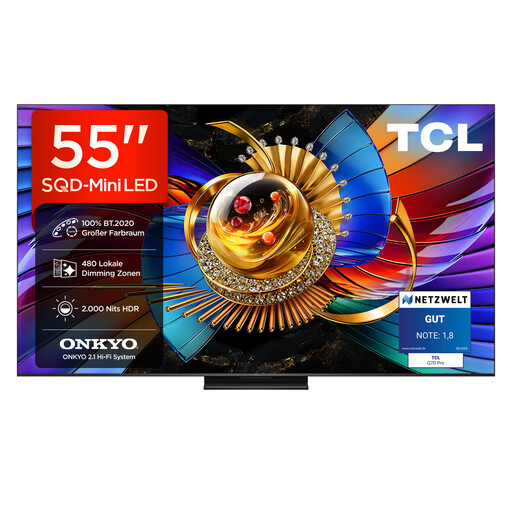
TCL 55Q7D PRO, 55 inches
Consider the 55-inch version in relation to your viewing distance and available space; also check reflection handling on the full model.
The product name lists 4K SQD Mini LED, 480 Local Dimming Zones, 2,000 Nits HDR, Anti-Reflection and 144 Hz. The Anti-Reflection label is no substitute for an independent reflection test.
View at Joybuy
 No image available
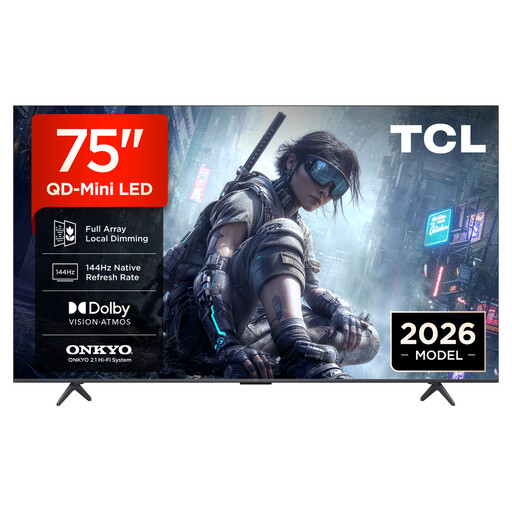
TCL 75T8D, 75 inches
Assess the 75-inch version in relation to your viewing distance and available space.
The product name lists QD Mini LED, 4K HDR, Dolby Vision, HDR10+ and 144 Hz.
View at Joybuy
 No image available
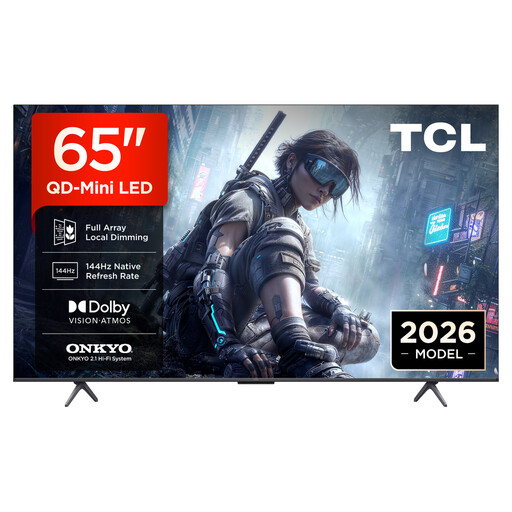
TCL 65T8D, 65 inches
See how the 65-inch version fits your room, viewing distance and available space.
The product name lists QD Mini LED, 4K HDR, Dolby Vision, HDR10+ and 144 Hz.
View at Joybuy
Frequently asked questions
Does a higher refresh rate automatically reduce judder in animated films?
No. The result also depends on the film’s frame rate and the TV’s processing. Watch camera pans using a suitable source, then compare the motion settings to find what you prefer.
What should I check first if I have tall windows opposite the TV?
From your usual seat, check whether the window is reflected in the screen when it’s switched off or showing a dark picture. A test of direct reflections on the specific model is more informative than the panel type alone; the TV’s position and your ability to control the light coming through the windows also matter.
How do I compare energy costs and my rights after buying?
For a new TV, compare the EU energy label and information for the specific model. Use your actual viewing time and electricity tariff to estimate energy use. Your statutory rights against the seller are separate from any voluntary guarantee. Online consumer purchases generally come with a right to cancel, usually within 14 days of receiving the goods; the Verbraucherzentrale explains this general rule.
What requirements apply to TVs newly sold in the EU?
Electronic displays sold on the EU market are subject to energy labelling and ecodesign requirements, as described by the European Commission. These don’t set an additional minimum brightness for private purchases. Dispose of an old TV separately as waste electrical and electronic equipment.


