
Lieferung heute & morgen

Qualitätsgarantie

Willkommens-Angebote freischalten: KOSTENLOSE Lieferung | Bis zu 80 % RABATT | Kostenlose 30-Tage-JoyPlus-Testphase
App herunterladen
A daylight lamp may be appealing if you receive little natural light in autumn and winter, struggle to get going in the morning or work indoors for many hours. However, choosing the right one is not simply about a high lux rating. The measuring distance, light quality, ease of use and safe operation are all important.
If you search for a light therapy lamp, a 10,000-lux daylight lamp or a lamp for tiredness, you will also come across inconsistent marketing claims. The following criteria can help you distinguish between promotional promises and verifiable product features.
Illuminance decreases significantly as the distance increases. A rating of 10,000 lux is therefore only meaningful if it clearly states the distance at which it is achieved. For the models presented here, for example, the figures refer to 10 cm, 15 cm or a recommended range of 20 to 40 cm.
A lamp delivering 10,000 lux at a very short distance may be less flexible in everyday use than a model with a larger illuminated area and more comfortable positioning. Always check:
Search terms such as lamp for winter depression or UV-free light therapy are often used. However, a daylight lamp is not a substitute for diagnosis or treatment. Seasonal dips in mood, persistent low mood and severe exhaustion should be assessed by a doctor.
If you have an eye condition, diabetes with possible retinal changes or are taking photosensitising medication, it is advisable to seek medical advice before use. Regardless of the model, avoiding direct eye contact with the light source is one of the basic safety precautions.
Timers, multiple colour modes and app connectivity can be useful, but they are not essential for everyone. A device that tips over on the desk, illuminates too small an area or is awkward to operate is often used less regularly. For many households, a stable base, straightforward one-button operation and automatic switch-off are more relevant than connected features.
A 10,000-lux daylight lamp should always be assessed together with its stated distance. The Beurer TL 35 specifies 10,000 lux at 15 cm, while the Beurer TL 20 delivers around 10,000 lux at 10 cm. The manufacturer’s recommended distance is also important for practical use.
A larger illuminated area can make positioning easier, as your face does not need to be aligned precisely with a small spot of light. Nevertheless, the lamp should not be directed straight at your eyes.
An LED daylight lamp with explicitly stated UV-free operation may be appealing to users who want to avoid ultraviolet radiation. However, UV-free light does not mean that every application is suitable for everyone. If you have a known eye condition or are taking relevant medication, a medical assessment is required.
A flicker-free daylight lamp can improve visual comfort during extended use. Look for a clear product statement such as “flicker-free”, rather than relying solely on general terms such as “pleasant light”.
A timer and automatic switch-off are practical for a regular morning routine. According to the product specifications, the TL 35 offers session lengths of 30 to 120 minutes and three colour modes. The TL 20 is more compact, features adjustable positioning and has one-button operation.
Before buying, you should also check the power supply, cable length, dimensions and positioning options. A model for the office needs to be assessed differently from a lamp intended to stand on a small bedside table in the morning.

Why this product suits this profile: This compact LED model is ideal for users looking for an uncomplicated daylight lamp for a desk or small living areas.
The lux rating is linked to a measuring distance of around 10 cm. This makes the marketing claim easier to assess, rather than considering it independently of the distance.
LED technology, stated UV-free and flicker-free light, adjustable positioning and one-button operation.
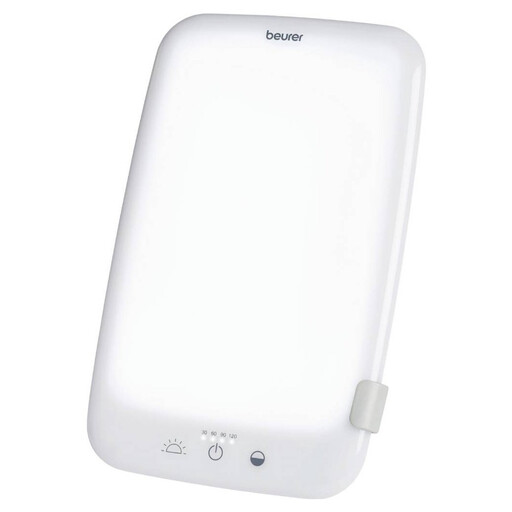
Why this product suits this profile: This model is aimed at people who prefer a larger illuminated area, several colour modes and timed use in the office or at home.
The 10,000-lux rating is explicitly linked to a distance of 15 cm. UV-free operation and flicker-free performance are also stated, making key selection criteria easy to verify.
Light panel measuring approximately 23.6 × 14.5 cm, three colour modes, a timer from 30 to 120 minutes and automatic switch-off according to the product specifications.
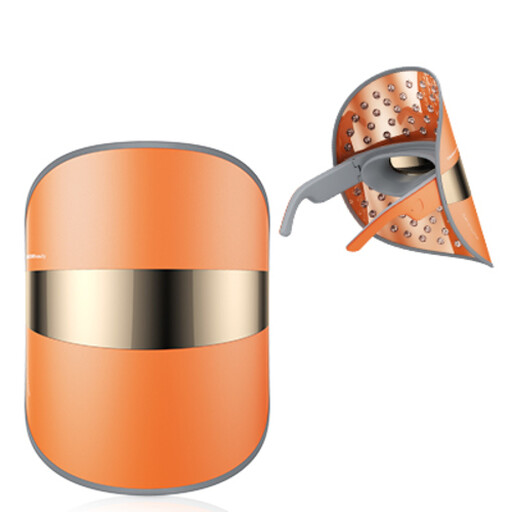
Why this product suits this profile: This is not a conventional daylight lamp. Instead, it is aimed at beauty and wellness enthusiasts looking specifically for an LED facial mask.
The product type is clearly distinguished: an LED beauty mask is not automatically intended for use as a light therapy lamp or for illuminating a room.
Specialist facial mask for beauty applications; check the product description for details of the light modes, usage duration and protection before buying.
We have put together a complete, regularly updated list of products that fully meet these strict selection criteria and the safety regulations applicable in the EU.
Place the daylight lamp on a stable, dry surface and maintain the distance specified in the manual. Do not stare directly at the light source. Use in the morning is often recommended, but the exact duration depends on the manufacturer’s instructions and your personal tolerance.
You should seek medical advice before use if you have an eye condition, retinal changes or diabetes, or are undergoing treatment with photosensitising medication. Stop using the lamp if you experience symptoms such as eye irritation or headaches. Do not cover the ventilation slots, and do not continue using damaged cables or power supplies.
This depends on the model. The lux rating is only meaningful when considered together with the measuring distance. The TL 35 specifies 10,000 lux at 15 cm, while the TL 20 delivers around 10,000 lux at 10 cm. The information in the relevant instruction manual remains decisive.
There is no single duration that applies to every device. The TL 35 specifies a timer range of 30 to 120 minutes. For the TL 20, follow the recommended usage duration in the manual. Do not begin with longer sessions than advised, and avoid looking directly into the light source.
LED technology is generally designed to consume comparatively little energy. The actual running costs depend on the specific model’s power consumption, daily usage time and electricity tariff. For a realistic estimate, you can calculate: power consumption in kilowatts × operating hours × electricity price.