
Lieferung heute & morgen

Qualitätsgarantie

Willkommens-Angebote freischalten: KOSTENLOSE Lieferung | Bis zu 80 % RABATT | Kostenlose 30-Tage-JoyPlus-Testphase
App herunterladen
As a Joybuy Product Recommendation Officer, I analyse market information to provide you with objective and practical buying advice. This guide will help you find the right battery storage solution for your balcony power station, without getting lost in marketing hype.
Owners of a balcony power station know the scenario: on sunny days, you generate more electricity than your household consumes. This surplus is often fed into the grid without compensation, while in the evening and at night, you have to buy expensive electricity from your utility provider. A DC-coupled balcony power station battery offers an efficient solution. It stores the excess energy directly from the solar panels so you can use it exactly when you need it. This allows you to increase your self-consumption, lower your electricity bill, and take another step towards energy independence.
Retrofitting a storage system requires attention to a few technical details. The following points will help you make an informed decision.
When searching for a solution to retrofit a solar battery, you'll encounter the terms AC and DC coupling. For balcony power stations, a DC-coupled solar battery is typically the more efficient choice. The direct current (DC) generated by the solar panels is stored directly in the battery (which is also DC). There is no conversion to alternating current (AC) and back again, which minimises energy losses. The result is a higher overall system efficiency, as more of the generated solar energy actually makes it into the battery.
The right storage capacity depends on your nightly electricity consumption. A 2kWh LiFePO4 battery is a common starting point for many households to cover baseline needs during the evening hours. However, consider future-proofing: an expandable solar battery is a flexible solution. You can start with a smaller, more affordable unit and increase the capacity later with additional battery modules if your energy needs grow.
Modern storage systems offer more than just storing energy. A key feature is zero feed-in. A PV system battery with zero feed-in ensures that no excess energy is fed into the public grid. This is not only important for maximising self-consumption but can also be a regulatory requirement. Other smart features like time-of-use scheduling allow you to charge or discharge the battery at specific times when electricity prices are at their highest or lowest.
Here is a selection of products that cover different needs—from all-in-one solutions with backup power to dedicated retrofit batteries.
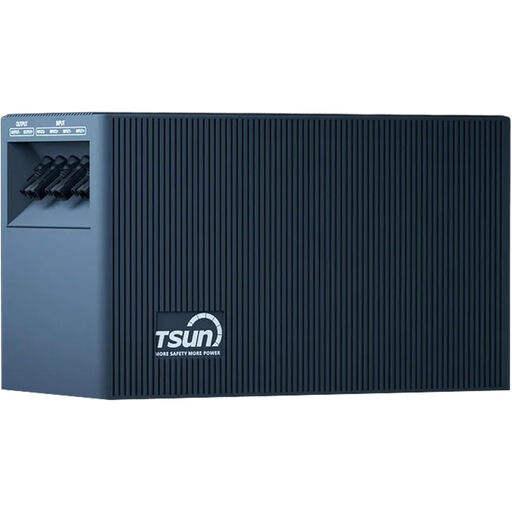
Why it stands out: The TSUN SolarCan is a system designed specifically for balcony and residential PV systems. As a DC-coupled solution, it integrates seamlessly into existing setups. Its strength lies in its smart energy management with zero feed-in and the ability to expand its capacity modularly from 2 kWh up to 10 kWh.
Pros:
Who it's for: For balcony power station owners looking for a dedicated, scalable, and intelligent storage solution to specifically maximise self-consumption and adapt to future needs.
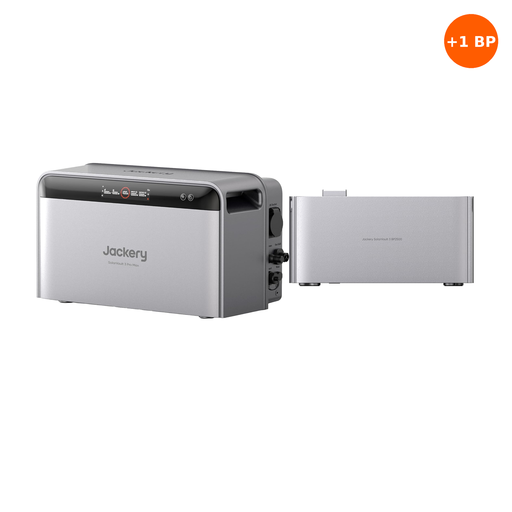
Why it stands out: The Jackery SolarVault 3 Pro Max is a powerful all-in-one solution that combines storage with a backup power function. With a total capacity of 5.04 kWh and four MPPT trackers, it is designed for demanding applications and a high solar yield.
Pros:
Who it's for: For users who want an all-in-one solution with very high capacity and PV input power, and who also value a reliable backup power supply for essential home appliances.
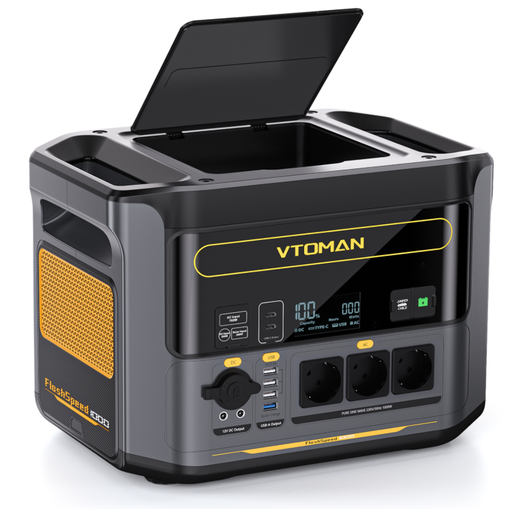
Why it stands out: The VTOMAN FlashSpeed 1000 stands out for its flexibility and portability. While it can serve as a home battery, it is also designed for mobile use when camping or in an RV. Its extremely fast charging time and the option to expand its capacity make it a versatile companion.
Pros:
Who it's for: For users who need a flexible and portable energy solution that can be used both at home to increase self-consumption and on the go for recreational activities or as an emergency reserve.
After optimising your home's energy efficiency, you might also want to enhance the ambiance of your outdoor area. Atmospheric lighting can transform your balcony and garden into a relaxing retreat, which you can power with your self-generated solar electricity.
Discover our selection of Warm White Outdoor Decorative Tree Lights to give your balcony a special atmosphere.
1. What is the advantage of a DC-coupled battery for a balcony power station? A DC-coupled battery is connected directly to the solar panels. The generated direct current (DC) is stored in the battery without conversion losses. This leads to higher efficiency compared to AC-coupled systems, where the current must be converted multiple times. As a result, more of your self-generated energy is made usable.
2. Can I easily retrofit a solar battery myself? Many modern storage systems, especially those for balcony power stations, are designed as "plug-and-play" solutions. This means the installation is simplified and can often be done by the user. However, it is crucial to follow the manufacturer's installation manual carefully and ensure that all components (solar panels, battery, inverter) are compatible with each other. If you are unsure, a qualified professional should always be consulted.
3. What does zero feed-in mean and why is it important? Zero feed-in (or Zero Export) is a feature of the energy management system that prevents excess solar power from being fed into the public grid. The battery is controlled to release only as much energy as is currently being consumed in the household. This is important for making 100% use of your self-generated power and for complying with the regulations of some grid operators who do not provide for or compensate for feed-in from small-scale systems.