
Lieferung heute & morgen

Qualitätsgarantie
App herunterladen
Kategorien
Selecting the right memory is a fundamental step when building or upgrading a high-performance PC. For systems based on the AMD AM5 platform with Ryzen 7000 processors, a specific configuration has proven to be particularly effective: a DDR5 6000 32GB Kit. This specification hits the performance sweet spot where the memory clock operates in sync with the processor's Infinity Fabric Clock (FCLK). The result is minimized latency and maximized data throughput. This article breaks down the technical parameters relevant to choosing such a kit and presents a selection of models designed for this purpose.
The decision to purchase a 32GB DDR5 memory kit should be based on an analysis of objective technical specifications. The following parameters are of critical importance for performance and compatibility with AMD Ryzen 7000 systems.
For AMD's Ryzen 7000 series, a clock speed of 6000 MT/s (Megatransfers per second) is considered the "sweet spot." This is because at this speed, the CPU's memory controller can typically maintain a 1:1 clock ratio with the 3000 MHz Infinity Fabric (FCLK). This synchronous operation avoids the performance penalties that can arise from asynchronous clock rates, thereby ensuring an optimal balance of bandwidth and latency.
CAS Latency (Column Address Strobe Latency), often listed as a CL value, measures the delay in clock cycles between a memory command being sent and the data being available. A lower CL value means a faster response time. For a DDR5 6000 kit, a value of CL30 or CL32 is an indicator of high performance. The true latency in nanoseconds is calculated from the CL value and the clock speed. For demanding applications and DDR5 gaming RAM, lower latency can make a tangible difference in system responsiveness.
AMD EXPO (Extended Profiles for Overclocking) is a memory overclocking profile developed by AMD, specifically designed for the AM5 platform. RAM modules with EXPO certification contain pre-defined settings for clock speed, timings, and voltage. Users can activate this profile in their motherboard's BIOS/UEFI with a single click to achieve the advertised performance stably and without manual configuration. Searching for AMD EXPO RAM is therefore a worthwhile filter for users of RAM for Ryzen 7000.
A 32GB kit, consisting of two 16GB modules, represents the current standard for gaming PCs and workstations. This capacity offers ample headroom for modern games, demanding multitasking, and content creation applications. Operating in dual-channel mode, where both modules are installed in the designated slots, doubles the theoretical bandwidth between the memory and the CPU's memory controller, which is essential for overall system performance.
A memory module's height is a practical consideration that should not be overlooked. Modules with tall, elaborate RGB heatsinks can interfere with large CPU air coolers. Low-profile modules offer greater compatibility in this regard, especially in compact (Small Form Factor) systems. The heatsink itself serves to dissipate operational heat, which aids stability under sustained load or during overclocking.
Based on the technical criteria outlined above, here is an analysis of specific products engineered for use in AMD systems.
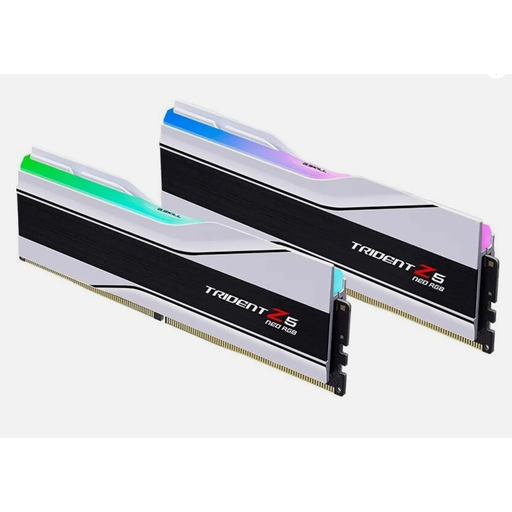
Why we're analyzing this product: This G.Skill 32GB DDR5 kit combines the target performance metrics of 6000 MT/s and a low CAS latency of CL30 with customizable RGB lighting. It is explicitly equipped with AMD EXPO profiles for simple configuration on Ryzen systems.
| Specification | Details | | :--- | :--- | | Model Number | F5-6000J3036F16GX2-TZ5NRW | | Total Capacity | 32GB (2 x 16GB) | | Speed | 6000 MT/s | | CAS Latency (CL) | 30-38-38-96 | | Voltage | 1.35V | | Profile | AMD EXPO, Intel XMP 3.0 | | Lighting | Synchronizable RGB LED |
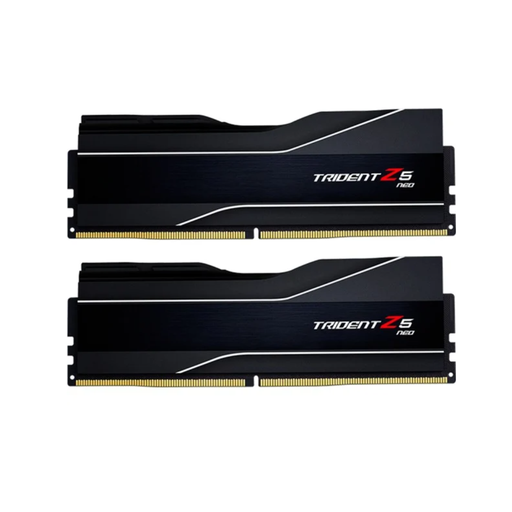
Why we're analyzing this product: This variant of the Trident Z5 Neo series also offers 6000 MT/s, but with a CAS latency of CL32. It forgoes RGB lighting, focusing instead on a clean, functional aesthetic with a matte black heatsink.
| Specification | Details | | :--- | :--- | | Model Number | F5-6000J3238F16GX2-TZ5N | | Total Capacity | 32GB (2 x 16GB) | | Speed | 6000 MT/s | | CAS Latency (CL) | 32-38-38-96 | | Voltage | 1.35V | | Profile | AMD EXPO 1.0 | | Lighting | None |
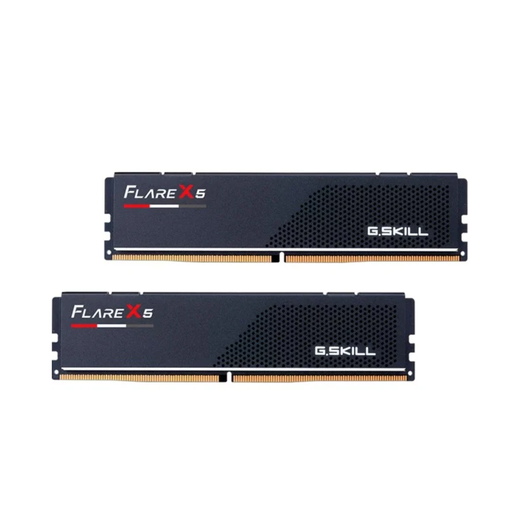
Why we're analyzing this product: The Flare X5 kit is specifically engineered for compatibility and performance. It combines the sought-after specifications of 6000 MT/s and DDR5 6000 CL30 with a low-profile design, making it a highly practical choice.
| Specification | Details | | :--- | :--- | | Model Number | F5-6000J3038F16GX2-FX5 | | Total Capacity | 32GB (2 x 16GB) | | Speed | 6000 MT/s | | CAS Latency (CL) | 30-38-38-96 | | Voltage | 1.35V | | Height | 33mm (Low Profile) | | Profile | AMD EXPO |
The models presented here represent a curated selection tailored to specific requirements. The memory market is dynamic, offering a wide variety of alternatives with different designs, latencies, and price points. For a broader overview of available memory modules and other hardware, we invite you to visit our main category for PC Components.
1. Is DDR5-6000 the optimal speed for AMD Ryzen 7000? Yes, for most use cases, a speed of 6000 MT/s is considered the sweet spot for the Ryzen 7000 series. It typically allows for synchronous 1:1 operation of the memory controller with the CPU's Infinity Fabric Clock (FCLK), which minimizes latency and maximizes system performance.
2. What is the practical difference between CL30 and CL32 in a DDR5 6000 32GB kit? The difference lies in the memory's response time. CL30 has a delay that is two clock cycles shorter than CL32. In benchmarks and latency-sensitive applications like competitive gaming, this can lead to measurably better results. For everyday tasks, the difference is often negligible, but for enthusiasts aiming for maximum performance, CL30 is the preferred choice.
3. Do I absolutely need RAM with AMD EXPO for a Ryzen 7000 system? It is not strictly required, but it is highly recommended. AMD EXPO RAM significantly simplifies the process of running the memory at its advertised speed and stability. Without EXPO, the clock speed, timings, and voltage would need to be configured manually in the BIOS, which can be complex and may not always lead to a stable result. EXPO provides a reliable "set-and-forget" solution.