If you regularly grind several portions for family breakfast, an electric grinder with a suitably sized grounds container is usually more convenient. For smaller amounts, a manual grinder may be enough. Choose a grind setting to suit your brewing method, and allow time to clean the grinding path when switching between caffeinated and decaffeinated beans: a second bean hopper alone won’t prevent residue. This guide is based on manufacturers’ information, not an independent performance comparison.
Which grinder is right for you?
Families making several cups of coffee
If you grind decaffeinated beans for several people in the morning, the dosing and grounds capacity should match what you actually need. Rommelsbacher and Melitta specify different portion and dosing features for their respective models; these are manufacturers’ claims, not independent capacity tests.
Households with two types of beans
If you switch between decaffeinated and caffeinated beans, bear in mind that some grounds may remain in the grinding path. Rommelsbacher specifically notes that when you change beans in the EKM 400, some of the previous type may remain in the grinder.
Breakfast with different brewing methods
If you make filter coffee, for example, and occasionally espresso, check that the grind settings on the specific model suit your brewing methods. Rommelsbacher, Melitta and GRAEF each describe these settings for certain models.
What should you look for when buying?
Electric grinder with adjustable burrs
A good fit if: you often make several portions of filter coffee or French press and want to adjust the grind to suit.
Bear in mind: Dosing features don’t replace emptying and cleaning the grinder when you change beans.
Manual grinder
A good fit if: you tend to grind small amounts, don’t want to use a power socket where you grind, and don’t mind turning the handle.
Bear in mind: You may need to refill and grind several times to make enough for a family breakfast.
Electric blade grinder
A good fit if: ease of use matters more to you than having a directly adjustable grind setting.
Bear in mind: According to the manufacturer, the grind size of the Rommelsbacher EKM 100 depends on how long you grind for. This offers less direct adjustment than the burr grinders described here.
| Buying priority |
What to look for |
Who is it especially important to? |
| Quantity and dosing |
Compare the amount of grounds produced per cycle and the grounds container capacity with what you need for breakfast. |
When I’m grinding for several people, I don’t want to assume that the number of cups alone tells me how much coffee grounds I’ll get. Around 36% of consumers put the right quantity and dosing first. |
| Changing beans |
Check which parts of the grinding path are accessible and can be removed for cleaning. |
When I switch between decaffeinated and caffeinated beans, I want to account for possible residue in the burrs. Around 29% of consumers prioritise dealing with leftover beans when switching varieties. |
| Grind size and brewing method |
Check the settings available for the brewing methods you actually use. |
When I use different brewing methods, I need settings that suit the way I make my coffee. Around 21% of consumers put the grind setting for their brewing method first. |
| Manual operation |
Consider whether you want to grind your usual amount by hand and whether you’re happy to turn the handle several times if needed. |
When I prefer to grind smaller amounts by hand, I’m happy to do the extra work myself. Around 14% of consumers prioritise manual grinding over making several portions with an electric grinder. |
Common misconceptions
-
Confusing the bean hopper with the grounds container
For the EKM 400, Rommelsbacher specifies a 220 g bean hopper and a 130 g grounds container. These figures refer to two different containers.
Compare the grounds capacity with the amount you need for breakfast, rather than looking only at the size of the bean hopper.
If the grounds container is too small for the amount you need, you may have to grind in additional batches.
-
Assuming a second bean hopper keeps the beans completely separate
Rommelsbacher notes that beans from the previous variety may remain in the burrs after you change the hopper on the EKM 400.
Check how accessible the grinding path is, and empty and clean the grinder according to the instructions for the specific model. Changing the hopper alone doesn’t prove that no residue will be left behind.
Emptying and cleaning the grinder can take extra time when you switch varieties.
-
Assuming the number of grind settings tells you which brewing methods a grinder suits
Manufacturers specify different adjustment ranges and usage recommendations for their models. The number of settings alone isn’t an independent comparison of grind quality.
Follow the recommendations for the specific model and check that its settings suit the way you actually make your coffee.
Adjusting the settings and testing them with your own beans and brewing method may take time.
Key brands at a glance
Rommelsbacher
The EKM 400 is an electric grinder with adjustable conical burrs and portion dosing; the EKM 100 is a blade grinder with different controls.
- According to Rommelsbacher, the EKM 400 offers up to 12 adjustable portions and a 130 g grounds container.
- According to the manufacturer, an additional bean hopper won’t stop beans from the previous variety remaining in the burrs. On the EKM 100, the grind size depends on how long you grind for.
Melitta
According to Melitta, the Calibra combines built-in scales with a cup-count programme for different brewing methods.
- Melitta specifies 39 grind settings and a removable burr ring.
Comandante
The C40 Mk4 is a manual option for smaller amounts of coffee.
- According to Comandante, it comes with two catch jars, each with a 40 g capacity.
- You may need to grind several times to make enough for a larger family.
GRAEF
According to GRAEF, the CM800 is an electric grinder with conical burrs and a portafilter holder.
- GRAEF specifies 40 grind settings and fine adjustment on the upper burr.
Related products at Joybuy
The following Joybuy picks are electric coffee grinders with adjustable grind settings. Also check that the grounds container, dosing and cleaning suit the amount you need for breakfast and the way you switch between types of beans.
 No image available
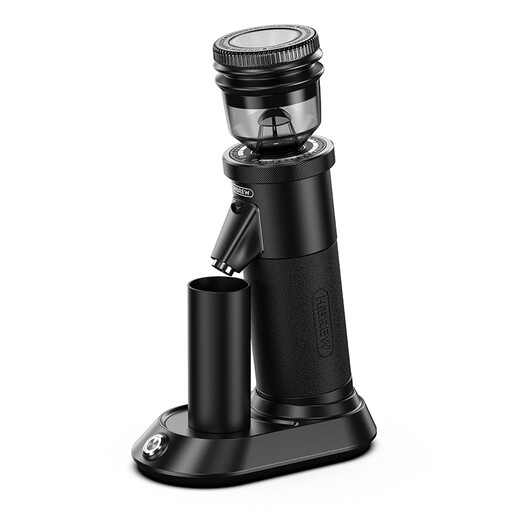
HiBREW G5A coffee grinder
For households that like to switch between brewing methods; the product title specifies 36 grind settings.
The title also mentions two grinding speeds and an anti-static function.
View at Joybuy
 No image available
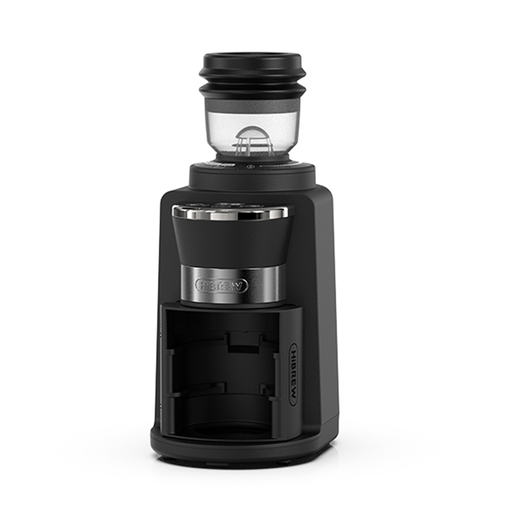
HiBREW G3A coffee grinder
For repeated brews with automatic or manual operation; the product title mentions a memory function.
40 mm conical burrs and 31 grind settings, according to the product title.
View at Joybuy
 No image available
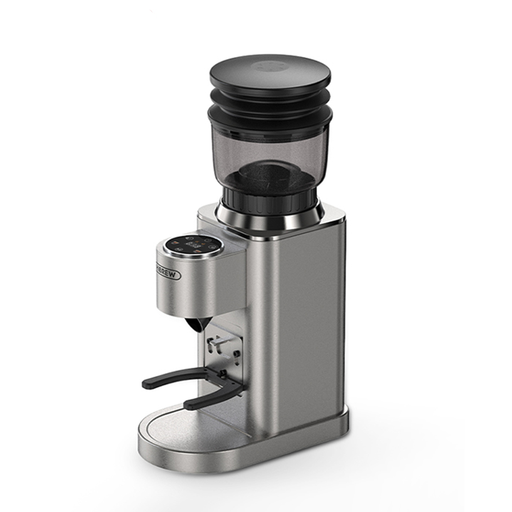
HiBREW G7 coffee grinder, silver
For households that want to grind into a removable container or straight into a portafilter, depending on how they’re making their coffee.
The product title specifies stainless steel conical burrs, 48 grind settings and a portafilter holder.
View at Joybuy
 No image available
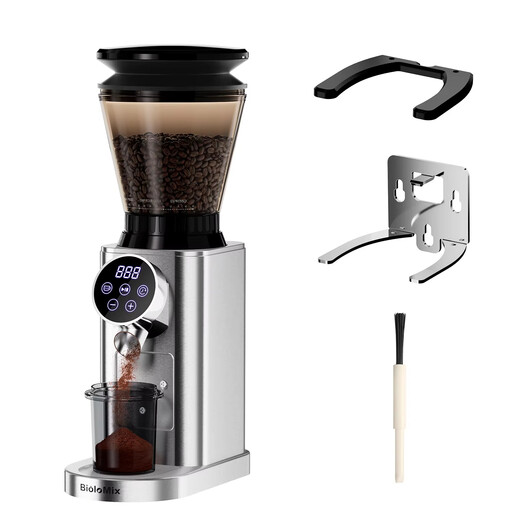
BioloMix CG210 coffee grinder
For consistent dosing, the product title specifies an electronic timer and a cup selection from 2 to 12.
The title specifies conical burrs and 48 grind settings.
View at Joybuy
Frequently asked questions
Is a second bean hopper enough when switching between types of beans?
Not necessarily. Rommelsbacher notes that beans from the previous variety may remain in the burrs when you change the hopper on the EKM 400. Empty and clean your grinder according to its instructions; a second hopper alone doesn’t guarantee that the beans will be kept separate.
Is decaffeinated roasted coffee completely caffeine-free?
No. Under the German Coffee Ordinance, coffee can only be described as decaffeinated green or roasted coffee if it contains no more than 1 g of caffeine per kg of dry coffee matter. This labelling limit doesn’t tell you whether a shared grinder will transfer residue.
How can I clean the grinder without damaging the burrs?
Follow the instructions for your specific model, and unplug an electric grinder before working on the burrs. Melitta says the Calibra has a removable burr ring. Baratza recommends brushing loose particles out of the grinding chamber and chute on its own grinders; this care advice isn’t a general recommendation for other manufacturers’ products.
How can I tell if a grinder suits several brewing methods?
Check the settings and recommendations for your specific model and the brewing methods you actually use. The number of grind settings alone doesn’t prove independently measured grind quality or guarantee that every setting will suit your brewing method.
Is the CE mark an independent quality seal?
No. The European Union explains that the manufacturer uses the CE mark to indicate that the product meets the relevant EU requirements; there is no central EU body that certifies a product simply because it carries the mark. The requirements that apply to a particular appliance must be assessed on a product-by-product basis.


