Keep decaf grinding separate
If you share an office kitchen with people who also grind caffeinated beans, you could set aside a grinder exclusively for decaf. Baratza notes that grounds can remain in the grinding chamber and chute.


When both caffeinated and decaffeinated beans are ground in the office, a grinder used exclusively for decaf gives you a clearly separate grinding path. If you share a grinder, switching beans and cleaning it need to be practical, as grounds can remain in the grinding chamber and chute. Then decide between a hand grinder for individual portions and an electric grinder for more frequent use. Also check that its settings suit the brewing methods used in your office.
If you share an office kitchen with people who also grind caffeinated beans, you could set aside a grinder exclusively for decaf. Baratza notes that grounds can remain in the grinding chamber and chute.
If you grind coffee near workstations, weigh up a hand grinder and electric models for the specific place where you’ll use it. Eureka promotes the Mignon Zero as having a noise-reducing design, but this doesn’t tell you how loud it will be in your particular office.
If your office makes both espresso and coarser-ground coffee, check the documented adjustment ranges and how easy it is to switch between them. Baratza describes the Encore ESP as having separate settings ranges for espresso and coarser brewing methods.
First, decide whether decaf will have its own grinding path. Then compare noise, suitable grind settings, and the effort involved in using and cleaning the grinder against your office’s day-to-day needs.
| Priority | What to check before buying | Who it matters most to |
|---|---|---|
| Keeping beans separate | Check whether you can reserve a grinder for decaf. If it’s shared, the grinding chamber and chute should be accessible, and cleaning should fit into the team’s routine. | If we also grind caffeinated beans in the office, I want to keep decaf separate with its own clearly designated grinding path. Around 36% of consumers put this first. |
| Grinding noise | Take the location and time of day into account. Manufacturers’ claims about noise-reducing technology are no substitute for assessing the specific model in your office. | If I’m grinding near workstations, I want to keep disruption to a minimum, so I weigh up a hand crank against the convenience of a motor. Around 29% of consumers prioritise a quieter grinding experience. |
| The right grind size | Find out which brewing methods your team uses and compare them with the documented adjustment ranges. The right setting depends on the grinder, the beans and the brewing equipment. | If we make espresso and filter coffee in the office, I want to find suitable settings for both without assuming that more steps automatically mean better results. Around 21% of consumers put suitability for their brewing methods first. |
| Ease of use and cleaning | Agree on who will portion the beans and clean the grinder after use. Also check which parts of the specific model can be accessed, as described in its instructions. | With several people using the grinder, I want a routine everyone can follow, including portioning and cleaning. Around 14% of consumers prioritise easy shared use and maintenance. |
Even a single-dose grinder can leave grounds in the grinding chamber and chute. Eureka’s claims of low retention for the Mignon Zero are manufacturer claims, not proof that it leaves no grounds behind.
If keeping beans separate matters, plan for a dedicated grinding path for decaf. Otherwise, agree on a specific cleaning routine as a team.
A shared grinder can take time to empty and clean; a second grinder needs extra space.
F.A.Z. Kaufkompass assessed electric and manual grinders in separate tests. Those results don’t automatically tell you how well a grinder handles switching between caffeinated and decaffeinated beans.
First decide how you’ll keep beans separate, how many portions you’ll grind and which brewing methods you use. Then use test results to assess the type of grinder that suits you.
Chestnut C3 and C3S Pro are different model names. The Joybuy product page describes the C3S Pro, so don’t assume its specifications also apply to the C3.
Before buying, check the full model name and the features included with that particular model.
The Mignon Zero is an electric single-dose grinder with 55 mm burrs.
The C40 Mk4 is a manual grinder for individually dosed portions.
According to Baratza, the Encore ESP has separate adjustment ranges for espresso and coarser brewing methods.
According to Graef, the electric CM800 offers 40 grind settings and a removable upper burr.
The Chestnut C3 is a compact hand grinder; Timemore specifies a 38 mm steel burr set.
This selection includes manual and electric coffee grinders that could be set aside as a dedicated grinding path for decaffeinated beans.
 No image available
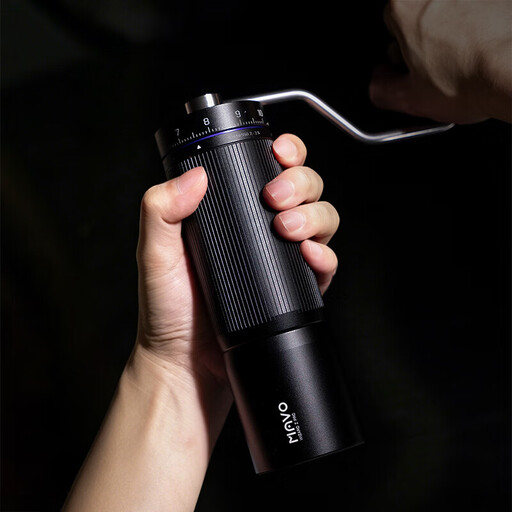
As a manual grinder, it can be assigned to a separate decaf grinding path; you’ll need to turn the crank to use it.
According to the product description, the external adjustment ring offers 100 settings per rotation. The stated grind range runs from espresso to cold brew.
 No image available
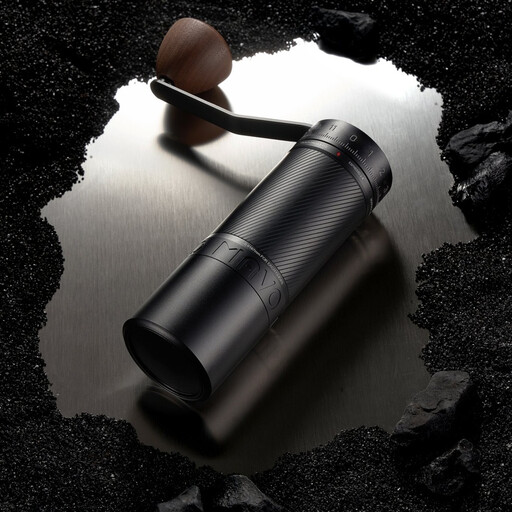
As a manual grinder, it can be reserved for a dedicated decaf grinding path, though you’ll need to grind by hand.
The product description specifies external adjustment with 120 clicks per rotation and a grind range from espresso to cold brew.
 No image available
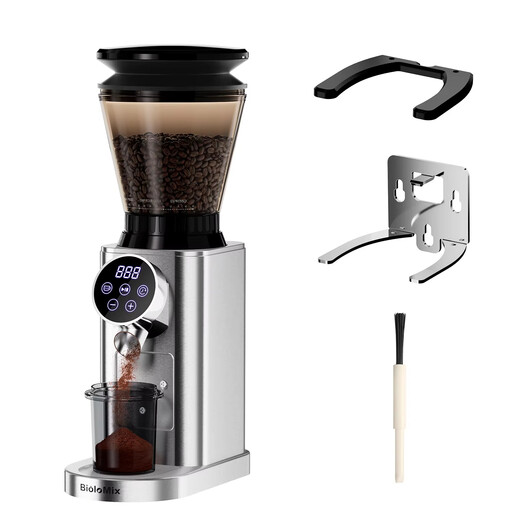
An electric grinder could be set aside for decaf; check that its controls and noise level are suitable for your office.
The product specifications list 48 settings, a conical burr set, touchscreen, timer and a cup selection from 2 to 12. The casing is described as stainless steel.
 No image available
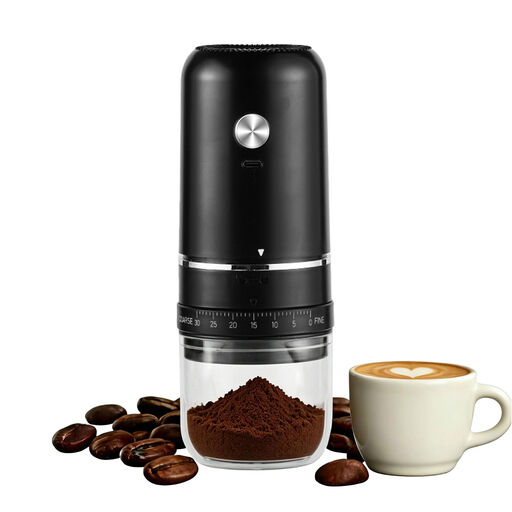
This electric grinder is described as a model for the office and travel, and could be set aside for a dedicated decaf grinding path.
The product description lists 30 grind settings, USB-C charging and a grind range from espresso to cold brew. It also describes a detachable design with a reverse function for cleaning.
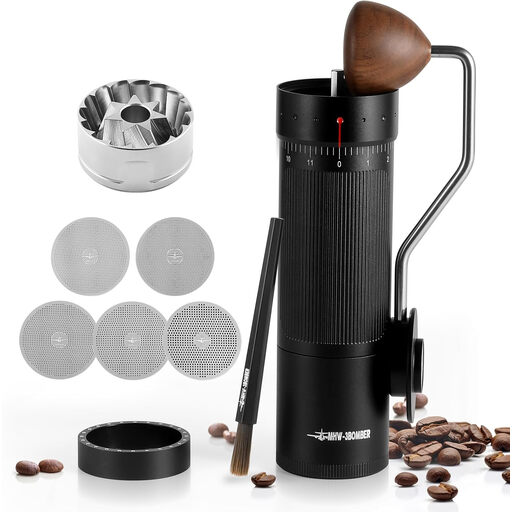 No image available
This manual grinder can be assigned to a dedicated decaf grinding path; grinding requires turning the crank.
The product description specifies external adjustment with 60 clicks per rotation and a catch jar with a capacity of 20 g. It lists settings for espresso, drippers and French press.
No. Section 2 of the German Coffee Ordinance sets a maximum of 1 g of caffeine per 1 kg of dry coffee matter for raw and roasted coffee labelled accordingly. The Federal Ministry of Justice and the Federal Office of Justice list this requirement for labelling; it doesn’t mean that a grinder previously used for other beans will be free of residue.
Follow the instructions for the specific model. Baratza describes brushing out the grinding chamber and chute after removing accessible parts; unplug electric grinders before clearing a blockage. The instructions for the Eureka Mignon Zero range warn against immersing the appliance, cable or plug in liquid.
Compare the information on the rating plate with the power supply available, and follow the model’s setup and safety instructions. Also check whether your office has internal rules for electrical appliances.
Check the terms of the specific offer and who enters into the purchase contract with the retailer. A voluntary manufacturer’s warranty is different from your statutory rights. Consumer-sale rules require the buyer to be a consumer and the seller to be a business, so they don’t necessarily apply to a business purchase. The Verbraucherzentrale explains the difference between statutory rights and a guarantee.