Which grinder suits you?

Decaf drinkers who switch between beans

If you switch between decaffeinated and regular beans, it’s important to have easy-to-reach areas for cleaning and to consider grounds left in the grinding chamber and outlet. Eureka describes a blow-out mechanism for the Mignon Zero; Baratza notes that grounds can remain in the grinding chamber and outlet.

Filter coffee drinkers short on space

If you grind small quantities and want to put your grinder away after use, capacity, handle design and room for filling all matter. 1Zpresso describes the Q as having a folding handle and a capacity of around 15–20 g.

Decaf espresso drinkers

For espresso, the specific grinder needs to offer a fine enough setting for your portafilter. Its footprint and the effort involved in dosing matter too. Baratza lists separate adjustment ranges for espresso and coarser brewing methods on the Encore ESP.

What to look for when buying

What matters when buying What to check Who cares most about it?
Space and storage Measurements, including the grinder’s height and room for filling; for hand grinders, allow space to turn the handle too. When I have very little worktop space in a small kitchen, I want to be able to put the grinder away after use. Space is the top priority for around 33% of consumers.
Grounds left behind when switching beans Access to the grinding chamber and outlet, as well as the cleaning instructions for the specific model. When I switch between regular and decaffeinated beans, I want to be able to remove any leftover grounds. Switching beans is the top priority for around 27% of consumers.
Grind size for your brewing method Check the stated grind range and adjustment steps against your espresso, filter coffee or other brewing method. I need a grind size that can be adjusted to suit my portafilter or filter coffee method. Getting the right grind size is the top priority for around 20% of consumers.
Ease of use and care Check the dosing method, removable parts and care instructions for the specific version. If I grind often, I want to keep the repeated effort involved in using and cleaning the grinder manageable. Ease of use is the top priority for around 20% of consumers.

Avoiding buying pitfalls

  • Assuming “single dose” means no grounds are left behind

    Even a grinder designed for single servings can retain grounds in the grinding chamber or outlet. A blow-out mechanism does not guarantee that no grounds will remain after you switch beans.

    Check how easy it is to reach the grinding chamber and outlet, and follow the cleaning instructions. If even small amounts of carry-over are unacceptable to you, consider using a separate grinder for decaf.

    Repeated brushing takes extra time; purging the grinder by grinding beans can use up coffee.

  • Measuring only the footprint

    You also need to be able to fill, use and clean a grinder. Its height, the space needed to turn a handle and access to removable parts can all be crucial in a small kitchen.

    Measure the available space, including height and room to move, and compare it with the dimensions of the specific version.

  • Treating a place on a product list as proof that it’s available

    Rommelsbacher lists the EKM 300 as no longer part of its range. Its appearance on a comparison list therefore doesn’t prove that the grinder is currently available.

    Before buying, check the exact version and the seller’s current product page.

Key brands at a glance

1Zpresso

The Q hand grinders are a stowable option for smaller servings; 1Zpresso positions the Q for pour-over brewing.

  • According to 1Zpresso, the Q has a folding handle, can be dismantled without tools and holds around 15–20 g.
  • These specifications don’t confirm that the Q is suitable for every portafilter.

Timemore

The C3 and C3s hand grinders are worth considering for single servings; handle designs and adjustment mechanisms vary across the range.

  • Timemore lists a 20 g capacity for several C3 versions and finer espresso adjustment on ESP versions.
  • Check the exact model rather than assuming specifications for the range apply to every grinder.

Baratza

The Encore ESP is an electric option for anyone looking to use one grinder for both espresso and coarser brewing methods.

  • Baratza Germany lists separate adjustment ranges and dimensions of 13 × 15 × 34 cm.
  • A single-dose hopper described as an accessory doesn’t prove that no coffee is left behind after grinding.

Eureka

Eureka positions the Mignon Zero as an electric single-dose grinder for frequent changes between beans.

  • The manufacturer describes a blow-out mechanism and promotes its low retention.
  • The manufacturer’s claims don’t guarantee that no grounds will be left behind or specify a particular noise measurement.

Melitta

The Molino is an electric grinder with a bean hopper and quantity selector for repeated servings.

  • Melitta lists 17 grind settings, a bean hopper holding up to 200 g and removable parts.
  • According to Melitta, the quantity selector starts at two cups; a filled hopper is worth bearing in mind if you switch to decaf often.

Graef

The CM800 is an electric grinder with adjustment options for several brewing methods.

  • Graef lists 40 settings and fine adjustment at the upper burr.
  • Check the specific settings to decide whether it suits your brewing method.

Joybuy products for small kitchens

The selection focuses mainly on compact hand grinders for small servings and easy storage, alongside a rechargeable option for anyone who’d rather not turn a handle.
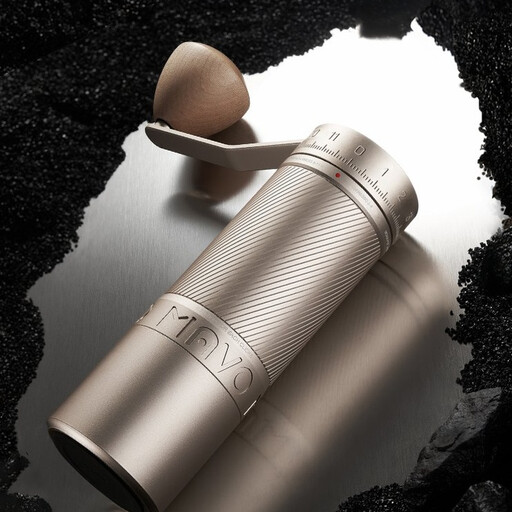
MAVO Phantom PRO hand coffee grinder in Starlight Silver

MAVO Phantom PRO hand coffee grinder, Starlight Silver

A manual grinder for small kitchens, if you’re happy to grind each serving by hand.

Model: Phantom PRO. Finish: Starlight Silver. Stainless steel burrs, according to the product name.

View at Joybuy
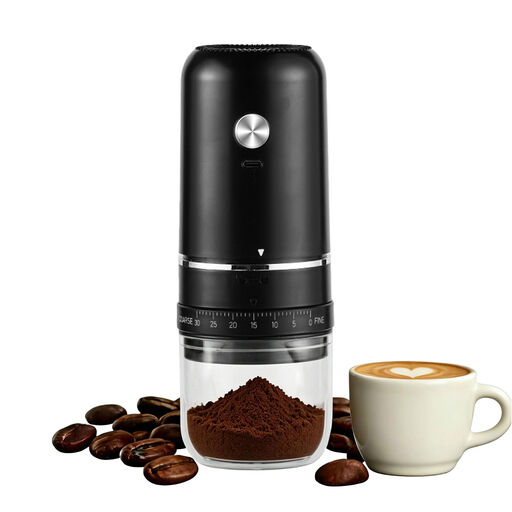
Rechargeable electric coffee grinder with 30 grind settings and USB-C

Rechargeable electric coffee grinder, 30 settings, USB-C

A rechargeable alternative if you’d rather grind without turning a handle.

The product name lists 30 adjustable grind settings, USB-C and a range from espresso to cold brew. According to the product description, the body should not be cleaned directly with water.

View at Joybuy
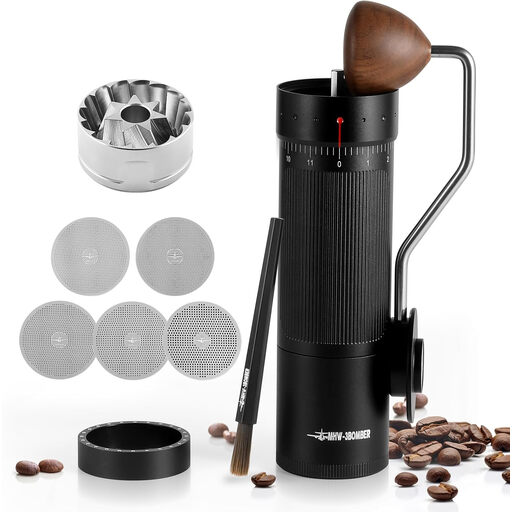
MHW-3BOMBER R3 hand coffee grinder, model G5847-OS

MHW-3BOMBER R3 hand coffee grinder, G5847-OS

A hand grinder for small servings, if you don’t mind turning the handle.

The product name lists external grind adjustment and five sieves. For care, the product description recommends using a brush and advises against cleaning the burrs directly with water.

View at Joybuy
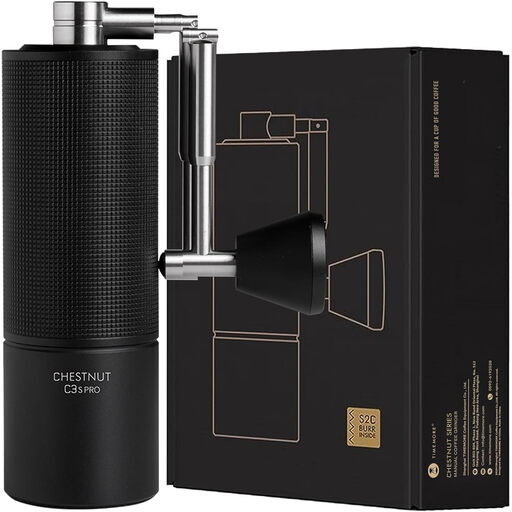
TIMEMORE Chestnut C3S Pro hand grinder with 25 g container and folding handle

TIMEMORE Chestnut C3S Pro, 25 g, Black

A hand grinder that’s easy to store, if a folding handle and the stated capacity suit your routine.

The product name lists a 25 g bean container and a folding handle. You’ll need to grind each serving by hand.

View at Joybuy
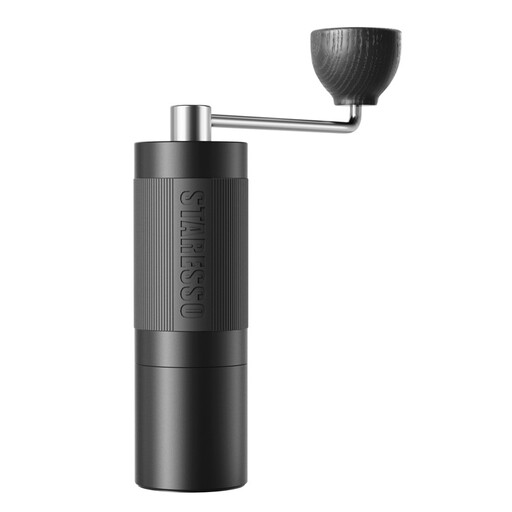
STARESSO D6 PLUS hand coffee grinder with 20 g capacity

STARESSO D6 PLUS hand coffee grinder, 20 g

A hand grinder for single servings, if you’re happy to dismantle it and clean it dry after grinding.

The product name lists a 20 g capacity, a stainless steel conical burr and internal grind adjustment. The product description recommends cleaning it with a dry brush.

View at Joybuy

Frequently asked questions

Do I need a special grind size for decaffeinated beans?

Not simply because the beans are decaffeinated. Choose a grind size to suit your brewing method and adjust it if needed. When switching beans, it may also be worth removing any accessible leftover grounds.

Can I grind decaf and regular coffee in the same grinder?

Yes, you can grind both types in the same grinder, but grounds can remain in the grinding chamber and outlet. Clean accessible areas as instructed, and don’t assume that purging the grinder proves the next serving will be caffeine-free. If even small amounts of carry-over matter to you, consider using separate grinders.

How do I clean a hand or electric grinder?

Follow the instructions for your specific model, as care requirements vary from grinder to grinder. For the Q series, 1Zpresso describes using a brush and air blower and says not to wash or soak it. Baratza recommends brushing out the grinding chamber and outlet, and unplugging its grinders before clearing a blockage.

What happens if a product develops a fault after purchase in Germany?

Your statutory rights against the seller are separate from any voluntary manufacturer’s or retailer’s guarantee. If a product is faulty, the first step is for the seller to put things right by repairing or replacing it. Check the additional guarantee terms for the specific model.

Can a broken electric coffee grinder go in general waste?

No. In Germany, waste electrical equipment must be collected separately. Check with the Federal Environment Agency and your local authority for collection points and the return options offered by the relevant retailer. A purely mechanical hand grinder is not classed as waste electrical equipment simply because it is a coffee grinder.