What should you look for when buying?
Portafilter machine with steam wand
A good fit if: you want to portion out ground decaf precisely and control the milk texture yourself.
The trade-off: dosing and using the portafilter remain part of your routine. The De’Longhi Dedica Duo froths milk manually, while Sage says the Bambino Plus BES500 has an automatic steam wand.
Bean-to-cup machine with milk system
A good fit if: you want fewer manual steps to make your drink and the decaf option on your chosen model suits your routine.
The trade-off: The De’Longhi Rivelia features Bean Switch and a ground coffee option, but that doesn’t guarantee there’ll be no residue. Philips recommends cleaning LatteGo after every use.
Original capsule machine with a separate milk frother
A good fit if: you want to choose individual decaf portions and don’t mind having a second appliance for the milk. Nespresso labels Volluto Decaffeinato as a capsule for the Original system.
The trade-off: A separate frother takes up space and needs cleaning; regular use also means ongoing spending on compatible capsules.
The percentages refer to consumers who want to make a decaffeinated flat white on weekdays and take it with them for later.
| Priority |
What to check when buying |
Who cares most about this? |
| Making decaf separately |
Check how decaf is added and how you switch between coffees on the specific model; don’t assume that switching beans leaves no residue. |
If I want to make decaf as well as regular coffee, the way it’s added needs to suit my routine. Around 29% of consumers make switching to decaf their top priority. |
| Taking a milk drink with me |
Plan storage around when you’ll actually drink it, and use a clean, easy-to-clean cup. The German Federal Institute for Risk Assessment recommends keeping perishable foods cool, even when you’re on the go. |
If I’m not having my flat white until my lunch break, I need to plan how to transport it hygienically. Around 29% of consumers put storage first. |
| Shortening the morning routine |
Check which steps are automated on the model and which parts need cleaning after you’ve made your drink. |
If I’m short on time in the morning, I want to make espresso and milk with as few steps as possible. Around 24% of consumers prioritise a quick morning routine. |
| Ongoing costs and maintenance |
Compare coffee or capsules and model-specific maintenance on the same per-portion basis. |
If I use the machine regularly, I want to take ongoing costs and maintenance into account. Around 18% of consumers focus mainly on these ongoing expenses. |
Joybuy products for this topic
This selection includes bean-to-cup, portafilter and capsule machines for making a decaffeinated flat white with milk.
 No image available
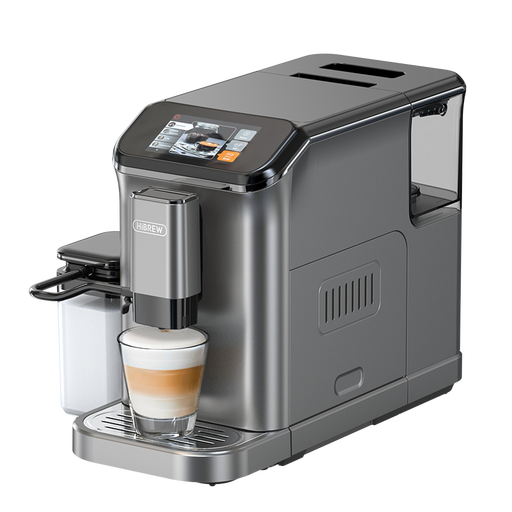
HiBREW H16 fully automatic espresso machine with grinder
Worth considering if you’re looking for an automated morning routine with an integrated grinder and cappuccino milk system.
The product name lists six coffee options and a touchscreen. If you want to use pre-ground decaf, check first that the intended way of adding it suits your routine.
View at Joybuy
 No image available
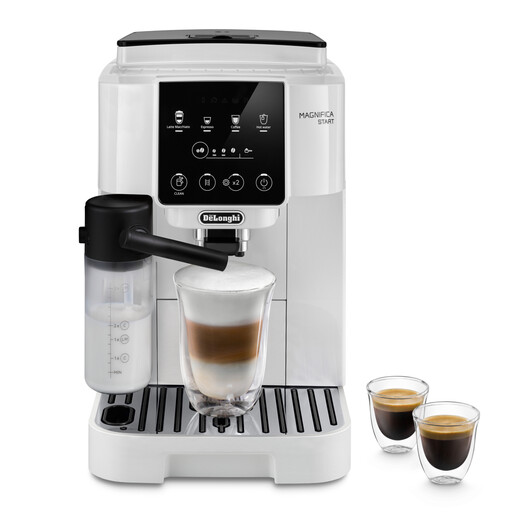
De’Longhi Magnifica Start Milk ECAM220.61.W
An option if you prefer a bean-to-cup machine with a milk system and can set up the decaf option to suit your recipe.
This model is described as having a bypass for pre-ground coffee. Check the manual to find out how to use it for individual portions of decaf.
View at Joybuy
 No image available
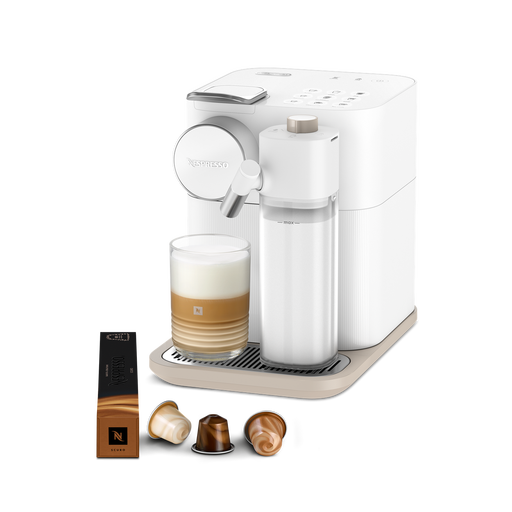
Nespresso Gran Lattissima EN640.W
A good fit for a routine based on choosing individual capsule portions and making a milk drink at the touch of a button.
Flat White and the Original capsule system are listed for this model. Nespresso labels Volluto Decaffeinato as a decaf capsule for the Original system; check that it’s compatible with your machine’s capsule system.
View at Joybuy
 No image available
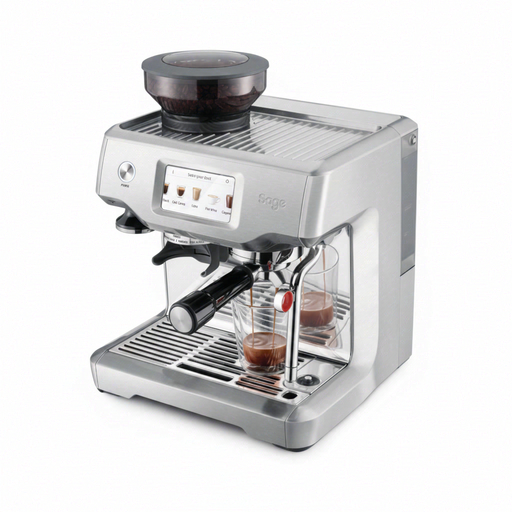
Sage Barista Touch with integrated grinder
Worth considering if you want to combine a portafilter routine with an integrated grinder and automatic milk frothing.
The product name lists a flat white recipe, plus adjustable milk temperature and texture. Dosing and tamping with the portafilter are still extra steps.
View at Joybuy
 No image available
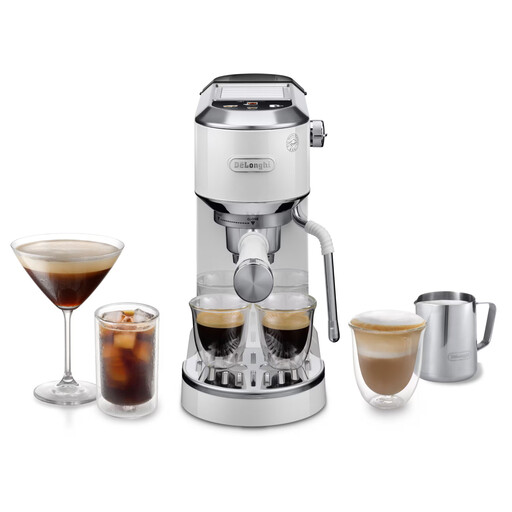
De’Longhi Dedica Duo EC890.WI, white
A good fit if you want to portion out ground decaf precisely and froth the milk manually.
The product description lists a width of 15 cm. It’s designed for brewing with ground coffee, tamping in the portafilter and manual milk frothing; no grinder is listed.
View at Joybuy
Frequently asked questions
Is decaffeinated roasted coffee completely caffeine-free?
No. Section 2 of Germany’s Coffee Ordinance sets a maximum of 1 g of caffeine per 1 kg of dry coffee matter for green and roasted coffee labelled ‘decaffeinated’. This is a labelling rule for coffee, not a feature of the espresso machine.
Can I make a flat white in the morning and drink it from a thermal cup at lunchtime?
A thermal cup alone doesn’t prove that your drink will stay hygienic for a particular length of time. The German Federal Institute for Risk Assessment recommends keeping perishable foods cool, even when you’re on the go; for longer storage, hot food should be cooled quickly to below 7 °C. Plan storage around how long you’ll actually be transporting and keeping the drink.
How should I clean reusable cups and the milk system?
The German Federal Institute for Risk Assessment recommends regularly washing reusable cups with hot water and washing-up liquid or, if the manufacturer allows it, putting them in the dishwasher and then drying them thoroughly. Philips recommends rinsing LatteGo after every use; follow the instructions for your specific machine.
Who is responsible if my espresso machine is faulty?
In Germany, the retailer is responsible for the statutory guarantee. The consumer advice organisation Verbraucherzentrale says it generally lasts for two years from delivery; this is separate from any voluntary manufacturer’s guarantee.
Will decaf capsules fit every Nespresso machine?
No. Nespresso explicitly labels Volluto Decaffeinato as a capsule for the Original system. Check the capsule system used by the specific machine before buying; the ‘Original’ label doesn’t prove compatibility with other systems.


