If you specifically want to drink decaf
If you want to make decaf rather than caffeinated espresso during the renovation, check which coffee format the machine takes and whether it’s compatible with your chosen decaf.


For the occasional flat white at a temporary coffee station, choose a machine that can make decaf in a format that suits you and is practical to clean where you plan to use it. A portafilter machine gives you more control over your coffee dose and milk texture, while a capsule machine pre-portions the coffee and a bean-to-cup machine can take care of some of the preparation steps for you. Before you buy, check the coffee format and milk function, as well as how much room you’ll need to fill and clean the machine.
If you want to make decaf rather than caffeinated espresso during the renovation, check which coffee format the machine takes and whether it’s compatible with your chosen decaf.
When worktop and cleaning space are limited, it’s not just the machine’s width that matters: check its depth and whether you can easily access the water tank and milk system.
If the combination of espresso and finely textured milk matters to you, compare manual steam wands with automatic milk functions, and check what cleaning they require.
A good fit if: you want to measure out your own ground decaf and texture the milk yourself.
Bear in mind: Dosing, frothing and cleaning afterwards all take a bit of effort. A slim machine doesn’t automatically leave enough room for a cup and milk.
A good fit if: you want pre-portioned decaf espresso and to prepare milk on the machine. Nespresso offers Arpeggio Decaffeinato capsules for its Original system.
Bear in mind: You’re tied to the capsule system’s coffee format, and you should also check how to clean the milk function.
A good fit if: you want drinks with fewer preparation steps and have enough space for the machine.
Bear in mind: Philips lists the LatteGo 5400 EP5447/90 as 246 mm wide and 433 mm deep; the milk system should be cleaned after every use.
| What to consider | What to look for | Who it matters most to |
|---|---|---|
| Decaf coffee | Check the coffee format and system compatibility. If you’re considering a bean-to-cup machine with a bean hopper, find out how you’ll actually use decaf with it. | If I specifically want decaf espresso, I first check that the coffee format is compatible. Around 33% of consumers put decaf first. |
| Space and workflow | Measure the width and depth, and check that you’ll have room to access the tank, cup, milk and parts that need cleaning. | For a temporary station, I want to be able to reach the machine and accessories easily without losing my cleaning space. Around 27% of consumers give space and workflow top priority. |
| Milk texture | Compare steam wands and milk systems, including their adjustment options. A flat white recipe alone won’t tell you whether the texture will suit your preferences. | If the milk is what makes a flat white for me, I look at how it’s frothed and adjusted. Around 20% of consumers prioritise milk texture. |
| Cleaning and ongoing costs | Factor in cleaning after milk drinks and the cost of decaf that’s compatible with the machine. | For a temporary coffee station, I want to keep on top of regular cleaning and make sure I have the right coffee format. Around 20% of consumers put care and ongoing costs first. |
Choosing a drink doesn’t determine whether it’s made with decaf or caffeinated coffee.
Check which coffee format the specific model takes. With a capsule machine, the decaf capsule must be compatible with the system.
Even a slim machine needs room to operate, fit a cup and milk, and clean its parts.
Check the depth and make sure you can access the parts you’ll need to fill and clean where you plan to put it.
You may need extra room at your temporary coffee station for milk and cleaning.
Automatic milk systems still need looking after. Philips recommends cleaning LatteGo after every use, while Sage provides its own guide to cleaning the Bambino Plus steam wand.
Choose a milk system that’s practical to clean at your temporary coffee station.
The Bambino Plus SES500 is aimed at people who want to dose their own coffee and texture milk manually or automatically.
The Creatista Plus combines the Original capsule system with an automatic steam wand.
The LatteGo 5400 EP5447/90 bean-to-cup machine lists flat white as a drink and uses a LatteGo milk system.
The Dedica Duo EC890.M is a slim portafilter machine with a manual steam wand.
The Joybuy options below include an Original capsule machine and bean-to-cup machines with milk systems. For each model, check that its coffee format suits your decaf and find out how to clean the milk function.
 No image available
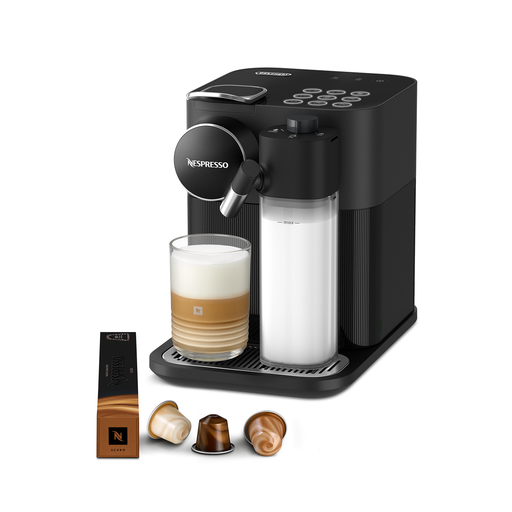
This Original capsule machine is an option if you want to use pre-portioned, compatible decaf.
The product description lists a flat white and a one-touch milk system. Use Original capsules; a rinse cycle is recommended after milk drinks.
 No image available
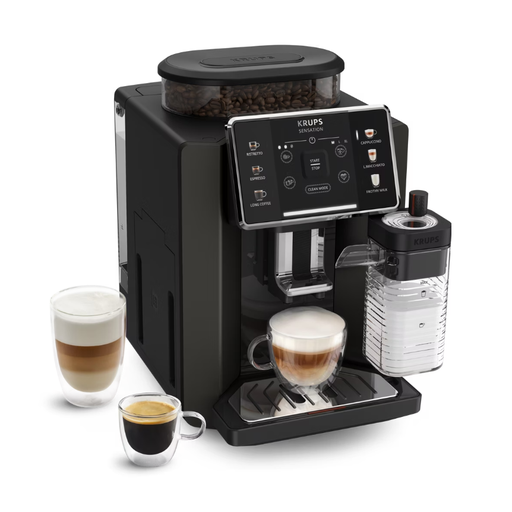
This bean-to-cup machine may suit you if you want to make coffee and milk drinks using a single appliance.
The product description lists adjustable milk froth levels and a removable, dishwasher-safe milk container. Before buying, check which coffee format is intended for making decaf.
 No image available
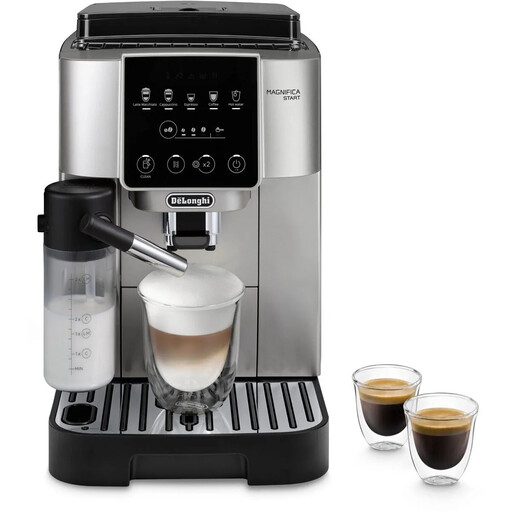
The described second chamber for ground coffee may be useful if you’d rather not use the bean hopper for your decaf.
Espresso and a LatteCrema milk system are listed. Flat white isn’t among the drinks listed for direct preparation, and no dedicated flat white programme is specified.
 No image available
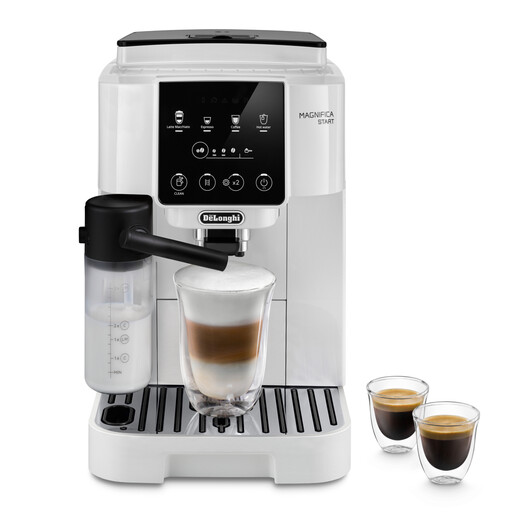
This bean-to-cup machine may suit you if you want to use ground decaf and prepare milk drinks with one appliance.
The product description lists an option for pre-ground coffee and LatteCrema. Flat white isn’t among the drinks listed for direct preparation, and no dedicated flat white programme is specified.
No. The German Federal Centre for Nutrition sets a maximum of one gram of caffeine per kilogram of dry roasted coffee for decaffeinated coffee. So decaffeinated doesn’t mean the coffee is guaranteed to contain no caffeine.
Set aside a suitable place to keep the milk chilled and clean the parts that carry it. The German Federal Institute for Risk Assessment explains that refrigeration slows or stops the growth of most bacteria; Philips recommends cleaning LatteGo after every use.
Allow for decaf in a format compatible with your machine and regular cleaning of the milk system. With a capsule machine, the capsules must match the system. Your ongoing costs will also depend on how often you make coffee.
In Germany, the seller is responsible for your statutory warranty rights, not automatically the manufacturer. Consumer advice centres distinguish this responsibility from a voluntary manufacturer’s guarantee and explain the two-year period during which goods must be free from defects at the time of delivery.
When carrying out market surveillance checks, the German Federal Network Agency considers factors including CE marking, identifiable product and manufacturer details, and German-language instructions with the necessary warnings. This doesn’t prove that any specific appliance mentioned here has been checked or that it’s suitable for every temporary power connection.