For decaf lattes in a shared office, the first things to consider are how decaf and regular coffee are fed into the machine, and who cleans the milk components. A bean-to-cup machine can make it easier to prepare milk drinks repeatedly; an Original capsule machine lets you choose each coffee portion, while a portafilter machine involves more hands-on steps. Melitta notes that the Barista TS Smart may allow a small amount of the previous beans to mix with the new variety after switching. For other machines, too, check the coffee feed and care instructions for the exact model.
Who is looking for a coffee machine for a shared office?
Team members switching to decaf
You want to make decaf lattes while others continue drinking regular coffee. How the different varieties are fed into the machine is key: Melitta notes that the Barista TS Smart may allow a small amount of the previous beans to mix with the new variety after switching.
People responsible for the office kitchen
You’re organising a machine for several users and need to decide who will look after the milk and milk-carrying parts. The German Federal Institute for Risk Assessment explains that refrigeration slows the growth of most bacteria; the German Social Accident Insurance points out that employers are responsible for ensuring electrical appliances are approved for use.
Latte makers with little time between meetings
You’re weighing up whether a one-touch drink, a separate milk frother or manual frothing best suits your office routine. The machine designs documented here differ mainly in the steps involved and the care required afterwards.
What should you look for when buying?
| What matters |
What to look for when buying |
Who is this especially important for? |
| Decaf and regular coffee |
Check the exact model for a bean hopper, a ground coffee option or compatible decaf capsules, and find out how switching between varieties works. |
If you want to offer both types of coffee in the office, it’s important to know exactly how each one is fed into the machine. Around 31% of consumers prioritise keeping the varieties separate. |
| Milk care for a team |
Compare removable milk components, the cleaning instructions and a suitable way to keep milk chilled; make sure responsibilities are clear. |
Anyone planning a shared milk system will want to organise cleaning and storage reliably. Around 25% of consumers prioritise milk hygiene. |
| Ease of use |
Check whether the exact model offers a latte recipe and how many steps it takes to make the finished drink. |
If less experienced team members will also be making drinks, a straightforward process matters. Around 25% of consumers focus primarily on ease of use. |
| Space and ongoing needs |
Consider the space available and access for using the machine, as well as compatible capsules or beans and the care required. |
Anyone planning a shared kitchen will want to keep an eye on space and regular replenishment. Around 19% of consumers give these factors the most weight. |
Which buying and usage mistakes can you avoid?
-
Assuming two bean hoppers guarantee that varieties will stay completely separate
Melitta acknowledges that a small amount of the previous beans may mix with the new variety in the Barista TS Smart after switching.
If keeping the varieties as separate as possible is important, bear this in mind and check how the coffee feed works on the exact model.
-
Assuming a latte button means the machine can feed in decaf appropriately
A milk drink recipe alone doesn’t tell you how decaf coffee is fed into a particular machine.
Check the coffee feed and milk recipe separately, using the full model number and the instructions.
-
Planning only for drink preparation when choosing a milk system
Removable milk parts also need to be cleaned according to the relevant instructions. The German Federal Institute for Risk Assessment explains that refrigeration slows the growth of most bacteria.
In the office kitchen, decide who will keep the milk chilled and look after the milk-carrying parts after use.
-
Comparing capsule machines and bean-to-cup machines based on the appliance alone
With a capsule machine, the routine also involves compatible coffee portions and, potentially, a separate milk frother.
Compare the consumables based on the same expected number of drinks, and factor in the care required for the milk components.
Which brands are worth considering?
Melitta
The Barista TS Smart is a bean-to-cup option for teams that want to have two varieties of beans available.
- Melitta describes how bean chambers can be assigned to recipes.
- Melitta notes that a small amount of the previous beans may mix with the new variety after switching; the milk unit still needs to be cleaned.
De’Longhi
The Magnifica Evo ECAM292.81.B EX:1 combines a latte macchiato recipe with the manufacturer's stated option to use pre-ground coffee.
- A ground coffee option may be useful for occasional decaf portions.
- It isn’t a second bean hopper. Check the instructions for the exact model to see how to make decaf milk drinks.
Philips
The LatteGo 5400 EP5447/90 is designed for one-touch milk drinks and saved preferences.
- Philips lists latte macchiato, four user profiles and a removable LatteGo milk system.
- Don’t assume this model has a separate decaf feed; check the instructions for this specific version.
Nespresso
The Original CitiZ &milk option combines your choice of decaf espresso capsule with milk frothed separately.
- Nespresso offers Arpeggio Decaffeinato for its Original system and describes the CitiZ &milk as featuring an Aeroccino.
- You’ll need compatible capsules and an extra step to clean the frother.
Sage
The Barista Express with a thermal milk jug is a portafilter option for anyone who wants to make their own espresso and milk drinks.
- Sage lists a portafilter, an integrated grinder and manual milk preparation.
- Whether the extra hands-on steps work in a shared office depends on who uses and cleans the machine.
Joybuy products for milk drinks in the office
The following Joybuy machines are bean-to-cup models for coffee and milk drinks. Check how decaf is fed into each machine and what care it needs for the exact model.
 No image available
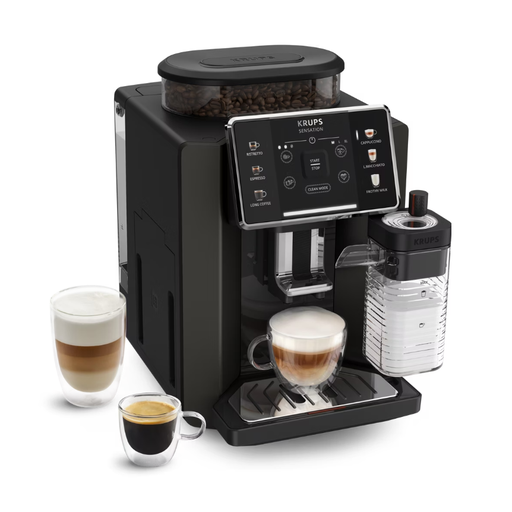
Krups Sensation Milk EA9129
A good option if several people want to choose milk drinks and the office has a plan for looking after the milk system.
Six specialities, adjustable drink settings and a removable milk container which, according to the product description, is dishwasher-safe.
View at Joybuy
 No image available
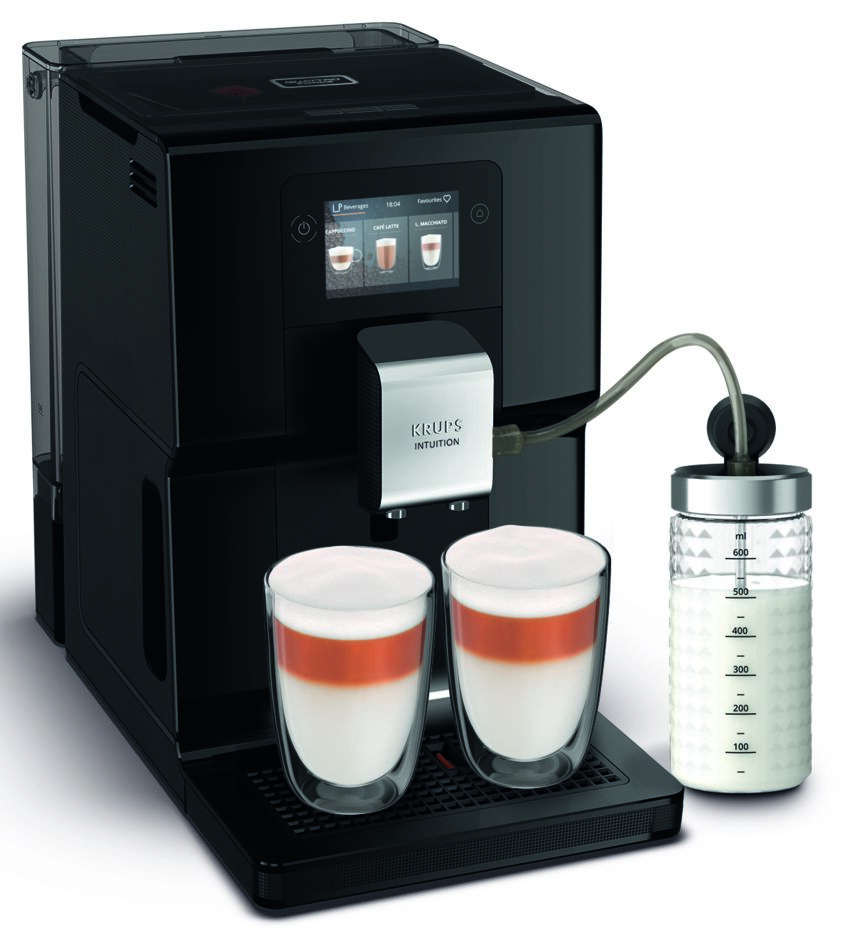
KRUPS Intuition Preference EA8738
Could suit a team of different users who want to choose drinks at the touch of a button and save their recipes.
11 drink options, a one-touch cappuccino system, a 3.5-inch colour touchscreen and up to eight saved recipes, according to the product description.
View at Joybuy
 No image available
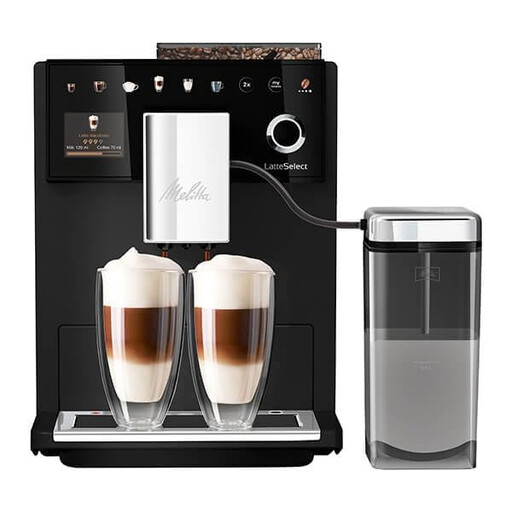
Melitta Latte Select F630-212
An option for teams who want to make latte macchiatos and use saved settings.
12 specialities, up to six user profiles, a 1.8-litre capacity and 1,400 W, according to the product description.
View at Joybuy
 No image available
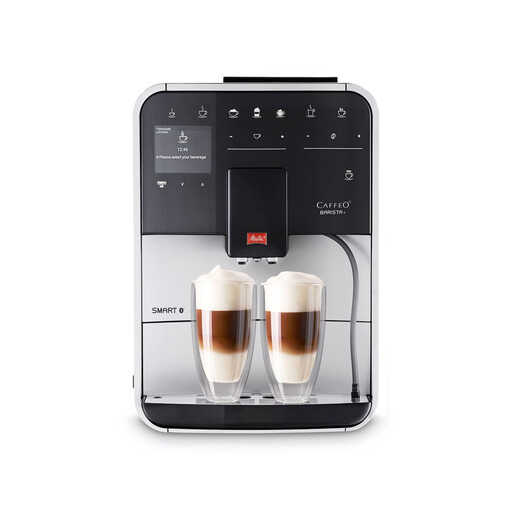
Melitta Barista T Smart F83/1-101
Could be worth considering if your team wants two varieties of beans available; check the instructions to see how switching works on this exact model.
Two bean hoppers, four user profiles and an automatic milk system, according to the product description.
View at Joybuy
 No image available
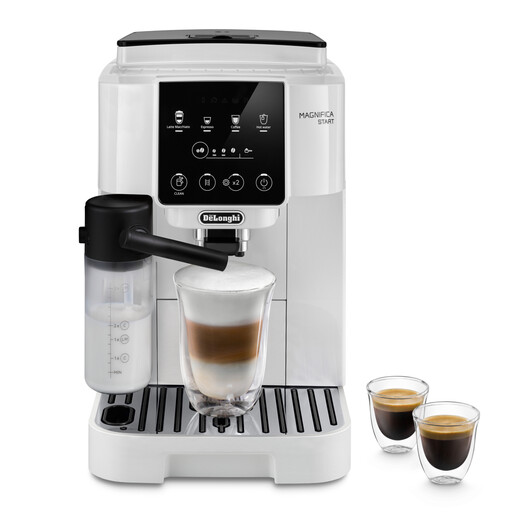
De’Longhi Magnifica Start Milk ECAM220.61.W
Could be useful for making individual decaf drinks with pre-ground coffee; check the instructions for how to prepare your chosen milk drink.
Bypass for pre-ground coffee, LatteCrema system and automatic milk frothing, according to the product description.
View at Joybuy
Frequently asked questions
Do two bean chambers guarantee completely separate decaf?
No, you can’t assume that. Melitta notes that, even after emptying the grinder, a small amount of the previous beans may mix with the new variety when switching on the Barista TS Smart. If even a small amount of carry-over matters, bear this in mind when choosing how coffee is fed into the machine.
What should you organise when using milk in a shared office kitchen?
Decide who will put the milk back in the fridge after use and clean the milk-carrying parts according to the instructions for the specific machine. The German Federal Institute for Risk Assessment explains that refrigeration slows the growth of most bacteria; Melitta describes how to clean the individual parts of its milk unit.
Does a coffee machine used at a German workplace need electrical safety testing?
This depends on how the machine is used and the requirements of the workplace. The German Social Accident Insurance notes that privately owned coffee machines approved for workplace use must also be tested regularly. Section 14 of the German Ordinance on Industrial Safety and Health (BetrSichV) sets out requirements for recurring inspections of work equipment in the circumstances specified there; it does not set a single annual inspection deadline for every office coffee machine.
What ongoing costs and servicing should I check before buying?
For the same expected number of drinks, compare the coffee portions, milk and care products you’ll need, and decide who will organise cleaning and repairs. Philips offers a model-specific support page for the EP5447/90, with instructions, spare parts and information on troubleshooting and repairs.


